

The bus had barely cleared the edge of Graz before the whole jury went quiet and reached for their phones. Green everywhere, hills stacked to the horizon, vineyards combed into every slope, and a sky so bright it looked retouched. I was on my way into Steiermark in April 2024, back at the juror table for the Sauvignon Selection by Concours Mondial de Bruxelles, and I already understood why Austrians guard this corner so closely. Tucked into the southeastern edge of the country, Styria (Steiermark to the locals) gets overshadowed by France, Italy and even its showier Austrian neighbours. It should not be. The wines here are vibrant, precise and unmistakably of their place.
At our table we taste blind and only see the scores afterward. When the sheets came back, Steiermark had walked away with the most medals and the highest marks of anything we poured. These were Sauvignon Blancs good enough to make you forget Grüner Veltliner exists. If you still file Austria under one grape, this region is your correction.
A region built on green
Everywhere the trip took us, the same colour: green fields, green forests, green vineyards, snow only on the highest peaks. The air was clean enough to notice, the views wide enough to lose an afternoon to. The oohs and aahs down the bus were no exaggeration. That landscape is not just scenery. It is the terroir talking, and you taste it later in the glass.
- Steiermark's three winegrowing areas: Südsteiermark, Weststeiermark and Vulkanland. Image: Austrian Wine.
- At the juror table for the Sauvignon Selection by Concours Mondial, April 2024.
The lay of the land
Steiermark is a study in contrast. Slovenia sits to the south, Burgenland to the east, Lower Austria to the north and the Alps to the west, and that frame gives the region its character: a constant interplay of altitude, soil and climate. It splits into three winegrowing areas, Südsteiermark, Weststeiermark and Vulkanland Steiermark, and I was lucky enough to visit all three. Each speaks its own dialect of terroir.

Südsteiermark, the heart of Styrian wine
South Styria is the best known of the three, all rolling hills that spend their early mornings wrapped in mist. The vineyards climb slopes so steep, up to 70 percent in places, that hand-harvesting is not a choice but a requirement. The soils are mostly marl and sandstone, known locally as Opok: well-drained, mineral-rich, and the source of the tension that runs through the wines. Cool Alpine air meets warm currents off the Pannonian Plain here, stretching the growing season and letting the grapes ripen slowly.

Weststeiermark, the land of Schilcher
West Styria is the smallest and most specialised of the three, and it lives and breathes one wine: Schilcher, a bracing rosé made from the indigenous Blauer Wildbacher. The soils are schist and gneiss, acidic and poor in nutrients, which stresses the vines and drives their roots deep. Add the coolest climate of the three, heavily shaped by the Alps, and you get wines that are vibrant, fresh and crisp, built for a warm afternoon. (I have written a full guide to the Schilcher Wine Route, if that grape pulls you in.)
Vulkanland Steiermark, a volcanic legacy
The name says it plainly: Volcano Land. In the southeastern corner of the region, ancient eruptions left behind soils rich in basalt and tuff, and those soils show up in the glass as a distinctive smoky minerality. Vulkanland runs a touch warmer and more humid than its neighbours, again thanks to the Pannonian influence, which lets a wide cast of grapes ripen: Sauvignon Blanc, Pinot Blanc, Traminer. The wines are complex and aromatic, with an earthy, smoky signature that ties them straight back to the ground they came from.

The climate, cool air against warm air
Steiermark's weather is a product of where it sits. The base is a cool continental climate, but the details shift from region to region.
- The Alpine effect. The mountains block harsh northern winds and cast a rain shadow over the southern slopes, keeping the growing season relatively dry and the fruit concentrated.
- Pannonian warmth. Warm air pushing in from the Hungarian plain to the east lengthens the season, ripening grapes fully while the acidity holds.
- Big day-night swings. Cool Alpine nights against warm Pannonian days give the wide diurnal range that builds Styria's aromatic complexity and vibrant acidity.
- Microclimates and vintage swing. Higher, cooler sites bring acidity and minerality; lower, sheltered ones bring riper fruit and softer edges. The weather varies enough year to year that every vintage reads differently, which is exactly what makes these wines fun to follow.
The grapes, a wide palette
Most people outside Austria know Grüner Veltliner and Zweigelt, but Steiermark plays a much larger hand. International names like Sauvignon Blanc and Chardonnay sit alongside indigenous and lesser-known varieties across 5,109 hectares under vine. The headline players:
Sauvignon Blanc, the star
The most-planted grape and the region's calling card: 965 hectares, 19 percent of all plantings. Styria's cool climate and varied soils let it swing from zesty and herbaceous to rich and tropical. In Südsteiermark expect green apple, citrus and freshly cut grass over a crisp, mineral finish; in Vulkanland the volcanic soils add flint, smoke and stone fruit.
Welschriesling, the fresh face
No relation to Riesling, despite the name. In Styria it makes light, crisp, aromatic wines for early drinking, floral and full of green apple, lime and white peach, with lively acidity. It covers 746 hectares, 15 percent of plantings.
Morillon, the Styrian Chardonnay
Morillon is simply the local name for Chardonnay. The cool climate gives it elegance and a subtle minerality, with ripe apple, pear and lemon, a creamy texture and a whisper of oak spice in the better bottlings. 387 hectares, 7.6 percent.

Schilcher, a rosé like no other
Made only from Blauer Wildbacher in Weststeiermark, Schilcher is pure terroir in a pink glass: high acidity, bright red fruit and an herbal lift. Think wild strawberry, raspberry and a flick of white pepper. Blauer Wildbacher is the region's most-planted red at 518 hectares, 10 percent, ahead of Zweigelt at 257 hectares, 5 percent.
Traminer, the aromatic jewel
Traminer, Gewürztraminer included, feels at home in Steiermark, especially in Vulkanland. Intense florals and spice, lychee, rose petal and ginger, in wines that are rich and full-bodied with just enough sweetness to balance the perfume. A small planting at 65 hectares, 1.3 percent.
Other significant plantings round out the picture:
- Pinot Blanc (Weissburgunder), 690 hectares, 13 percent
- Muskateller, 580 hectares, 11 percent
- Müller-Thurgau, 163 hectares, 3.2 percent
- Pinot Gris, 162 hectares, 3.2 percent
- Scheurebe, 135 hectares, 2.6 percent
- Riesling, 72 hectares, 1.4 percent
These figures reflect the plantings recorded in 2024.
- Opok, the marly clay of Südsteiermark.
- Gneiss from Weststeiermark, acidic and nutrient-poor.
- Volcanic tuff from Vulkanland.
- Basalt and calcareous fossils, the volcanic legacy of the east.
Soil, the foundation
Soil is where a lot of Styria's magic hides. Each sub-region carries its own composition, and each leaves a fingerprint on flavour, structure and ageing.
- Opok, the marly marvel of Südsteiermark. Clay and limestone, high in minerals and well-drained. It pushes roots deep and gives wines that are complex, structured and built to age.
- Schist and gneiss, the backbone of Weststeiermark. Acidic and nutrient-poor, forcing the vines to struggle. The reward is concentration, high acidity and the crisp minerality that defines Schilcher.
- Volcanic soils, the soul of Vulkanland. Basalt and tuff, mineral-rich and good at holding heat, which ripens the fruit fully and lends whites like Sauvignon Blanc and Traminer their unmistakable smokiness.
The STK, guardians of the standard
Not everything in Styria is left to nature. The STK, short for Steirische Terroir und Klassik Weingüter, was founded by twelve pioneering estates with one shared goal: protect the region's terroir and hold the line on quality. They act less as producers than as custodians, marrying old traditions to modern precision. Their classification runs like a Burgundy-style pyramid:

- Gebietsweine, regional wines. The broad base, showing the character of the region as a whole.
- Ortsweine, village wines. More focused, tied to a specific village or municipality.
- Riedenweine, single-vineyard wines. The expressive top of the pyramid, sourced from individual top sites.
- Erste STK Ried, the premier cru. Single-vineyard wines from outstanding sites, late-harvested, from vines at least twelve years old.
- Große STK Ried, the grand cru. The peak: exceptional single vineyards, late-harvested, from vines at least fifteen years old.
Sustainability, baked into the rules
The STK estates lean hard into sustainable viticulture, much of it organic or biodynamic, which protects biodiversity and soil health and keeps synthetic chemicals out of the wine. The association's standards go further still: lower yields, hand-harvesting and extended ageing, so only the best wines earn the STK mark.
Proof I did my homework

Weingut Gross Sauvignon Blanc 1997
97/100
Weingut Hannes Sabathi Ried Kranachberg Kreuz Sauvignon Blanc
94/100
Weingut Neumeister Ried Moarfeitl Sauvignon Blanc 2017
93/100
Weingut Tement Ried Sulz 2021 Morillon
96/100
Weingut Sattlerhof Ried Alter Kranachberg 2021
93/100Proof I did my homework: Weingut Gross Sauvignon Blanc 1997 (97/100) · Weingut Hannes Sabathi Ried Kranachberg Kreuz Sauvignon Blanc (94/100) · Weingut Neumeister Ried Moarfeitl Sauvignon Blanc 2017 (93/100) · Weingut Tement Ried Sulz 2021 Morillon (96/100) · Weingut Sattlerhof Ried Alter Kranachberg 2021 (93/100).
The estates behind the wines
Each of the twelve STK members brings its own signature. A few I keep coming back to:
- Weingut Neumeister. A sustainability pioneer, with Sauvignon Blanc marked by intense minerality and bright acidity.
- Weingut Winkler-Hermaden. Robust reds and elegant whites, with a Traminer aged in large wooden casks that picks up a subtle spice.
- Weingut Hannes Sabathi. Terroir-driven and inventive, excelling at expressive Sauvignon Blanc and Morillon with vibrant acidity and volcanic-soil minerality.
- Weingut Gross. Single-vineyard specialists, their Morillon prized for its complexity and ageing potential over a flinty core.
- Weingut Tement. Owners of the monopoly Ried Zieregg, planted on a 16 million-year-old coral reef, where their Sauvignon Blanc gains intense minerality and decades of ageing potential.
- Weingut Sattlerhof. Growing in Gamlitz since 1887 and farming organically, celebrated for age-worthy Sauvignon Blanc from its single vineyards Kranachberg and Pfarrweingarten.
Where Steiermark sits in the wine world
Steiermark is terroir-driven winemaking distilled: diverse soils, a distinctive climate and a broad palette of grapes, all pulling toward wines that taste of exactly where they grew. The minerality of a Südsteiermark Sauvignon Blanc, the crisp bite of a Weststeiermark Schilcher, the aromatic depth of a Vulkanland Traminer, each is its own argument for the region. Austrian drinkers have loved these wines for generations, and the rest of the world is catching up. For anyone who chases a real sense of place, Styria is not a region to overlook. My thanks to Concours Mondial for the invitation back in 2024, and for the company: new faces worth knowing, old friends worth seeing again.

People also ask
Any questions related to this topic? Maybe you can find your answer here. Click here!
Where is Steiermark and what is it known for?
Steiermark, or Styria, sits in the southeastern corner of Austria on the Slovenian border. It is known for terroir-driven white wines, above all Sauvignon Blanc, plus the indigenous Schilcher rosé and aromatic Traminer, grown across steep, green hills.
What are the three wine regions of Steiermark?
Steiermark splits into three: Südsteiermark (South Styria), known for Sauvignon Blanc on marly Opok soils; Weststeiermark (West Styria), home of Schilcher rosé on schist and gneiss; and Vulkanland Steiermark, whose volcanic basalt and tuff soils give smoky, aromatic wines.
What is the main grape of Steiermark?
Sauvignon Blanc is the flagship, at roughly 965 hectares and about 19 percent of the region's plantings. Styria's cool climate and varied soils give it everything from zesty, herbaceous styles to richer, smoky, volcanic-soil expressions.
What is Schilcher wine?
Schilcher is a tart, high-acid rosé made only from the indigenous Blauer Wildbacher grape in Weststeiermark. It tastes of wild strawberry, raspberry and a flick of white pepper, and its crispness comes from the region's cool climate and poor schist soils.
What is the STK in Austrian wine?
The STK, or Steirische Terroir und Klassik Weingüter, is an association of twelve leading Styrian estates that set strict quality standards and a Burgundy-style classification of regional, village and single-vineyard wines, topped by Erste and Große STK Ried.
Resources
- Austrian Wine, the country's official wine body, on the Steiermark region, its climate and grape varieties. https://www.austrianwine.com/our-wine/winegrowing-regions/steiermark
- STK, the Steirische Terroir und Klassik Weingüter association, on its twelve member estates and vineyard classification. https://stk-wein.at/en/
- Sauvignon Selection by Concours Mondial de Bruxelles, the competition behind the April 2024 judging trip. https://sauvignonselection.com/en/
- Wine-Searcher's regional profile of Steiermark, with vineyard area and sub-region detail. https://www.wine-searcher.com/regions-steiermark
- Steiermark's official tourism board on Styrian wine and its winegrowing culture. https://www.steiermark.com/en/Styria/Experience-Styrias-cuisine/Wine
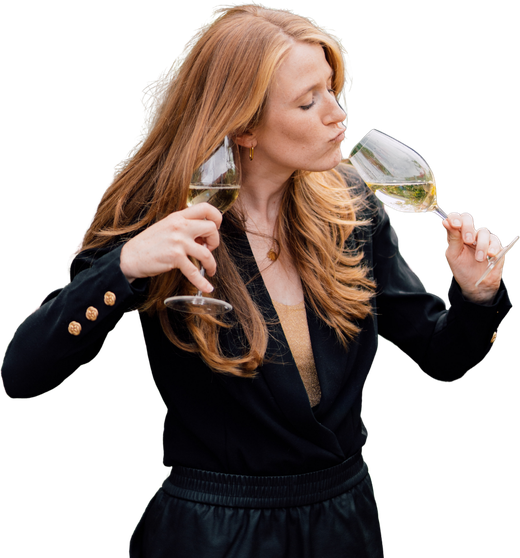
Margot van Lieshout
Wine marketeer, sales expert with over 20 years in the trade, public speaker and international wine judge. Thousands of wines scored from Steiermark to Ningxia, and a trade she knows from the inside out. Wine with Margot is where she helps wine brands tell the stories that sell them.
Want to argue about this? Good.
The conversation about every article happens in the Substack comments, together with the newsletter. Join free and bring opinions.


