

Everyone books Barolo first. They fly into Alba, point the car at La Morra, and burn the best light of the day parked behind a coach full of people photographing the same castle. Twenty minutes north there are hills just as old, wine that takes itself just as seriously, and roads with nobody on them. That is where I would start a Piemonte trip, and after a week driving these back lanes in January, I am not saying it to be contrary. Monferrato and Roero are the two regions that made me fall for this corner of Italy, and almost nobody puts them on day one.
Here is the two-day loop, winery by winery, with a hike and a proper dinner built in, so you can copy it whole or cut it to fit. We start in Monferrato, where a nearly forgotten red grape is having its comeback, and end in Roero, where the whites turn pale, precise, and criminally underpriced.
Start in Castagnole Monferrato, with a grape almost nobody saved
Ruché is the whole reason to point the car at Castagnole Monferrato. It is a semi-aromatic red, which means it smells of roses and violets but drinks bone dry, and for most of the last century it was close to extinct. Only seven communes are allowed to grow it, there are barely 190 hectares of it in the world, and Montalbera farms Ruché in four of those seven communes. A local priest, Don Giacomo Cauda, gets much of the credit for keeping the grape alive, and over lunch his story kept circling back to the table. He arrived in the parish in 1964 and was handed a few semi-abandoned rows of Barbera, Grignolino and Ruché as the parish's dowry. He became the first to vinify Ruché dry and sell it, planted four thousand young vines on a single hectare, and put an angel with open wings on the label of his Ruché del Parroco. That one stubborn priest is the reason the grape did not vanish, and the reason it went on to earn its DOC in 1987 and its DOCG in 2010. Montalbera picked up the thread in 1980 and turned it into a life's work. Worth knowing before you go: they also run four Wine Suites on the estate, so you can stay the night with the vineyards right under your window.

The estate is built around a natural lake, dug back when this was a working farm and the animals needed water. I took the lift down into the cellar and there it was: the first thing that hit me was the scent of wet sand, grape must and damp stones. That on its own brings good memories. That scent is not an accident. The cellar master hoses down the stones under the barrels to hold the humidity, and you can smell every drop hanging in the air.
“Ruché is my weapon against the future.”Svetlana, Montalbera

Svetlana, who poured for us, calls Ruché her weapon against the future, and by the third glass you understand why. Start with the Ruché La Tradizione (90/100), all juicy red cherry, plum and rose, built for the wine bar. Move up to Laccento (89/100), off the higher limestone slopes, which trades some of that prettiness for salinity, white pepper and structure. Then finish on the Riserva Il Fondatore (91/100), picked at night to hold the acidity and aged eighteen months in big barrels: a proper powerhouse at fifteen percent that still tastes of roses. If you have room, the pale, chatty Grignolino Grigne (90/100) earns its place for one line alone, the winemaker's straight-faced verdict that Grignolino is fighting climate change in a good way, because warmer years finally soften its famously ferocious tannins.

- The door down to the cellars at Montalbera.
- Montemagno castle, across the valley from the estate.
- The vault of older Ruché vintages.
- The barrel room.
Have lunch at Vinchio, then walk it off on the Nests Trail
Twenty minutes on, in Vinchio, is a co-op that quietly makes some of the best-value Barbera in Piemonte. Vinchio Vaglio has hundreds of growers behind it and a real obsession with old vines: they will not call a wine old vine unless the vines are at least fifty years old, which in co-op terms is close to a religious position. The flagship I Tre Vescovi Barbera d'Asti Superiore (91/100) runs to 200,000 bottles and still tastes like someone cared, all bramble, plum and dark chocolate with supple tannins. Climb up through Vigne Vecchie 50 (90/100) off those fifty-year vines, the Laudana Nizza (89/100) from the San Michele hill, and the Sei Vigne Insynthesis Riserva (92/100), which will happily age past most people's patience.

There is real history under all that. Nineteen growers in Vinchio and Vaglio Serra pooled their vineyards in 1959 and named the result the Nest of Barbera, and the nest has only grown: close to two hundred grower families now farm around 470 hectares between them. The old-vine talk is not marketing either. Back in 1986 they mapped their oldest parcels and began bottling them on their own as Vigne Vecchie, added a Vigne Vecchie 50 at the fiftieth anniversary, and some of those vines are now pushing eighty and a hundred years old. That track record earned them a place in the Old Vine Conference, the network a pair of British Masters of Wine set up to keep the world's ancient vineyards in the ground. The whole estate carries UNESCO World Heritage status on its hills and runs on solar power and lighter bottles now, which is a lot of conscience for a co-op selling Barbera this honestly priced.
Do not just grab a quick bite here. Vinchio Vaglio runs the kind of days that make you feel like you own the place: guided tastings and masterclasses out in the vineyard, long bagna cauda lunches in season, and picnics laid out among the rows. Book onto one of their events before you come. Then do the thing almost no visitor knows about: the Nests Trail starts right in the cantina courtyard. It is called the Sentiero dei Nidi, it runs about one and a half kilometres with under a hundred metres of climb, and it is gentle enough for a five-year-old. The path winds through woods and vines into the Val Sarmassa nature reserve, 230 hectares of protected forest, and delivers you to Big Bench No. 94.

The Big Bench is exactly what it sounds like: an oversized bench, painted Barbera red, one of a whole family of them scattered across these hills by Chris Bangle, the car designer who fell for Piemonte and never left. Sit on it, let your feet dangle like a kid, and on a clear day the entire Alpine arc lines up on the horizon with Mount Monviso in the middle. It is the cheapest, best view of the trip, and it costs nothing. If you are one of those people who collects the Big Benches, pick up your passport stamp for No. 94 back at the Vinchio Vaglio cantina.
- The Vinchio Vaglio co-op.
- The full flight we tasted.
- The Monferrato hills from the vines.
- A fossil dug straight from the vineyards.
Cross into Roero, where the hills drop into cliffs
Drive west into Roero and the landscape changes under you. The soft Monferrato hills give way to the Rocche del Roero, a run of raw sandy cliffs and canyons carved out when a river changed course thousands of years ago. The soils turn sandy, which is exactly why the whites here are so precise, and the slopes fill up with something you do not expect in wine country: peach orchards. Roero grows some of Italy's best peaches, and half the wine families here funded the vines with fruit for decades.

This is also where you take the longer walk, if your legs are up for it. The Grande Sentiero del Roero, trail marker S1, runs about forty kilometres from Bra to Cisterna d'Asti along the ridge of the Rocche, linking eight hilltop villages that have sat on these cliffs since before the year 1000. You would not do all of it in an afternoon, so pick a stage near Canale, where the woods open into peach orchards. The local ecomuseum publishes free GPS tracks and even a phone audioguide, so you will not get lost.
Meet the family that named itself the wrong way
In Canale, Malvirà is your Roero anchor, and the name is my favourite story of the trip. Generations ago the founding house was built facing north, while every other home in the village faced its garden south. The neighbours decided the man must be a bit wrong in the head, called him male, meaning bad, and the name stuck: Malvirà, the wrong way. The family leaned all the way in and put the tarot Wheel of Fortune on the label, the card where the wheel turns and the bad side comes good.

Behind the good story is a serious estate. Giuseppe Damonte planted the family flag in Canale in 1950, and from 1977 his sons Roberto and Massimo turned a bulk-wine business, with peaches paying the bills in the early years, into one of Roero's benchmark names, one working the cellar and one the vines. A third generation is on the floor now, farming 43 hectares across the region's best-known crus. What they really did was rescue a grape. When they bought the Renesio cru in 1983, Arneis was a nearly forgotten local white, and that single hillside is where the variety was first written down in 1478. Malvirà spent the decades since proving Arneis could carry real minerality, tension and the legs to age. They farm their historic sites organically, added a Barolo cellar over in La Morra in 2007 without ever letting Roero slip as the identity, and put up Villa Tiboldi next door so you can taste, eat and sleep on the estate. If you make room for only one Roero producer, make it this one.

Malvirà is, above all, a temple to Roero Arneis, the white grape that is Roero's calling card. Start with the straight Roero Arneis, all nectarine, peach and orange peel with a zesty bite, then go into the single-vineyard Renesio, which trades body for salinity and finesse. If they open an older Renesio, the 2014 for example, take it: flint, brioche, lemon peel and chamomile, proof that good Arneis ages far better than its reputation suggests.
They also make Roero Nebbiolo, and this is where Giacomo Damonte handed me the line I have quoted a dozen times since.
“If Barolo is a bodybuilder, Roero is a ballerina.”Giacomo Damonte, Malvirà
He is right. Roero Nebbiolo grows on sand, so it comes out paler, lighter on its feet, more about perfume than muscle. Taste it across the Riserve (90/100), Trinita (91/100), Renesio (91/100) and Mombeltramo (90/100), and you get three readings of the same idea. And do not skip the Brut Nature No. Zero (90/100), a sparkling Nebbiolo the family makes deliberately outside the rulebook, just to see what happens. That instinct, to experiment out loud, is the whole personality of the place.
- Giacomo and Roberto Damonte, two generations at Malvirà.
- Fossils from the vineyards.
- Giacomo smelling Barbera straight from the barrel.
- The barrel room.
- Azienda Agricola Malvirà at Canale.
Dinner belongs to a co-op a village priest started
End the day at La Crota in Roddi, where I have stayed the night myself, and it sleeps wonderfully. Ask for the wines of Produttori di Govone. The bottles are good. The backstory is better. After the war, small grape growers around here had no power: a handful of merchants in Alba set the price of grapes, and a family with a few rows of vines took whatever they were given. The people who fixed that were, of all people, the parish priests, often the only ones in a village who could read, write and run the numbers. They organised the growers into cooperatives so they could make and bottle their own wine and set their own price. Most of the co-ops in these hills were founded by a priest, and Govone, in 1957, was one of them.
Today Produttori di Govone is around 250 grower-members farming some 300 hectares, and their top label, Terre Sabaude, is the one to order: a crisp Roero Arneis (90/100) and a Nebbiolo d'Alba (91/100) built from the best parcels. If the table wants something sweet to finish, ask about Birbet, the local low-alcohol Brachetto, all candied cherry and berries. It is the kind of bottle that never leaves the province, which is the best possible reason to drink it while you are here.
- La Crota, the B&B in Roddi where I slept.
- Luca, representing Produttori di Govone.
- Terre Sabaude Barbera on the table.
- Dinner at La Crota.
- Terre Sabaude Roero Arneis Passito to finish.
How to fit it into two days
Base yourself in Roddi or Alba. Both sit right between Monferrato and Roero, so you are never more than half an hour from the next glass.
- Day one, Monferrato. Montalbera in the morning, Vinchio for lunch, and the Nests Trail up to the Big Bench in the afternoon.
- Day two, Roero. A stage of the Grande Sentiero del Roero or a slow drive through the Rocche, Malvirà in the afternoon, and dinner with a co-op like Govone to close it out.
Two practical things. First, book every winery ahead by email, because none of these are drop-in tasting rooms. Second, and this one I learned from a winemaker with a completely straight face: do not come in January or February. The cellars close, the towns shut, and you will drive past locked door after locked door. Aim for spring through autumn, when the vines are awake and so is everyone else.
Barolo will still be there on day three, coach queue and all. You will just arrive having already tasted a rescued grape, walked to a giant red bench, and had dinner poured by a co-op a priest dreamed up in 1957. That is not the warm-up act. That is the part of the trip you will actually tell people about.
Go while these two regions are still the secret the coach tours drive straight past. That quiet is half of what makes them so good, and it will not stay quiet forever.
People also ask
Any questions related to this topic? Maybe you can find your answer here. Click here!
Is Monferrato worth visiting, or should I just go to Barolo?
Monferrato is well worth a day, especially at the start of a Piemonte trip. It sits just north of Alba, its Ruché, Barbera and Grignolino are serious wines and far cheaper than Barolo, and its roads and cellars are far quieter. Treat it as the opening leg and you get better access and better value before you reach the crowds.
What wine is Monferrato known for?
Monferrato is best known for Barbera, the juicy, high-acid red that is the everyday wine of the area, and for Ruché di Castagnole Monferrato, a rare semi-aromatic red that smells floral but drinks dry. You will also find Grignolino, a pale, tannic, food-friendly red with a long local history.
What is Roero Arneis?
Roero Arneis is a dry white wine from the Roero hills of Piemonte, made from the Arneis grape. It is typically pale and aromatic, with notes of peach, nectarine and orange peel and a saline, mineral edge that comes from Roero's sandy soils. Good examples can also age for a decade or more.
Where is the Big Bench near the Vinchio winery?
It is Big Bench No. 94, a giant Barbera-red bench on the hills above Vinchio in Monferrato. You reach it on foot from the Vinchio Vaglio winery courtyard by walking the Sentiero dei Nidi, the Nests Trail, about one and a half kilometres each way, and on a clear day it looks out over the whole Alpine arc.
When is the best time to visit Piemonte wineries?
Spring through autumn is best. Many Piemonte wineries and villages close to visitors in January and February, so those months are the ones to avoid. Whenever you go, book winery visits by email in advance, because most estates receive guests by appointment rather than as walk-in tasting rooms.
Resources
- Vinchio Vaglio, on the Nests Trail (Sentiero dei Nidi): https://vinchio.com/en/the-vinchio-vaglio-nest-trail/
- Big Bench Community Project, Big Bench No. 94 at Vinchio: https://vinchio.com/en/big-bench/
- Ecomuseo delle Rocche del Roero, S1 Grande Sentiero del Roero: https://www.ecomuseodellerocche.it/en/sentieri/20/s1-grande-sentiero-del-roero
- Produttori di Govone, founded 1957, around 250 grower-members and 300 hectares: https://www.produttorigovone.com/en/
- Consorzio del Roero, on Roero Arneis and the region: https://www.consorziodelroero.it/en/
- Wine Scholar Guild, on Don Giacomo Cauda and the rescue of Ruché: https://www.winescholarguild.com/blog/wine-education-careers/ruche-sweet-wine-parish-priests-and-an-unforeseen-comeback-story
- The Old Vine Conference, on Vinchio Vaglio, founded 1959 by nineteen growers, and its old-vine vineyards: https://www.oldvines.org/members/vinchio-vaglio
- Malvirà, on the Damonte family and the estate's history in Canale: https://www.malvira.com/en/winery-roero-canale/past-and-present/
- Montalbera Wine Suites, on-estate stays above the vineyards: https://www.montalbera.it/en/wine-suites/
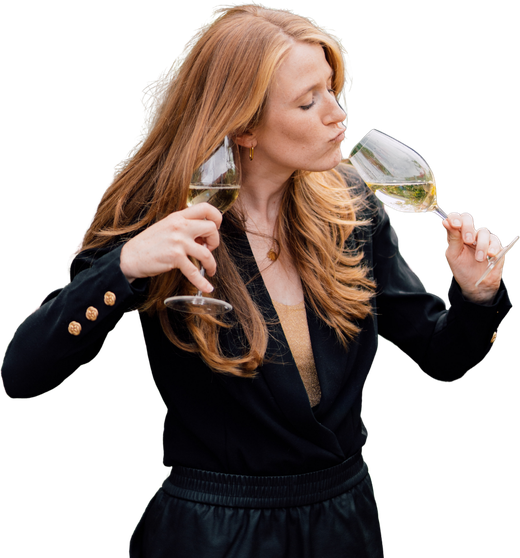
Margot van Lieshout
Wine marketeer, sales expert with over 20 years in the trade, public speaker and international wine judge. Thousands of wines scored from Steiermark to Ningxia, and a trade she knows from the inside out. Wine with Margot is where she helps wine brands tell the stories that sell them.
Want to argue about this? Good.
The conversation about every article happens in the Substack comments, together with the newsletter. Join free and bring opinions.


