

My body was trembling, ice cold, the kind of cold that feels like needles pushing into your legs until you cannot feel your toes anymore. Somewhere in the distance a voice was telling me to keep going, just keep going, and I could not stand it, so I turned back, and as the water pulled away from my legs I felt the life come rushing back into me. Back on the beach, sand and broken seashells between my toes, I watched my friends wade in further, neck deep, going under. And then I thought about it: I have given birth. If I can do that, I can stand the Black Sea closing in on me. So, I took a sprint, ran back in above my knees and plunged, completely under, the breath knocked clean out of me, and I stayed there until my body stopped fighting the cold and simply embraced it.
- The morning of the freezing Black Sea plunge. It was bitterly cold.
- The view from the beach out over the Black Sea, the moment the sun finally came out.
A cold start on the Black Sea
That plunge was the start of my last day in Constanța, and I could not have wished for a better one. I felt energised, wide awake, laughing on the beach with the same bunch of people I have come to call my friends. That is the strange luck of this job: an industry I love, work that keeps surprising me, and people I can be silly with one minute and deep in a serious conversation with the next. I had come here to judge rosé with the Concours Mondial de Bruxelles, which held its 2025 Rosé Session in Constanța that March, and somewhere between the tasting flights I fell for the place itself.
Constanța is a harbour city on the Black Sea, in Dobrogea, the region that fans out across the south-eastern corner of Romania between the Danube and the sea. On paper it is a sun trap, a warm and maritime pocket that claims up to 300 days of sunshine a year. On the days we were there it produced grey skies and a rough, restless sea, which we all found very funny given the brochure. Dobrogea has been growing vines for a very long time and is traditionally known for dry white wines, rosé and sweet whites, though the reds are catching up fast. What follows is the day I would hand you if you ever pointed a car at this coast.
- Herders with their sheep grazing right alongside the road.
- Burned fields stretching out beside the road.
- Local homes, many keeping their own chickens and other livestock to stay self-sufficient, most built from corrugated metal sheeting and giving only basic shelter.
- Row upon row of beehives lining the roadside.
The road out of Constanța gave me the rest of Dobrogea through a bus window. Herders walked their sheep right along the edge of the tarmac, unbothered by the traffic beside them. Fields lay burned black where the stubble had been set alight, and between them stood the homes of local families, many keeping their own chickens and other livestock in the yard to feed themselves. A lot of the houses were built from corrugated metal sheets, shelter and little more, anything but comfortable to my eye. Then came the beehives, hundreds of them stacked in long rows along the verge, more than I could begin to count. It was a quiet, working landscape, and I watched it roll past mile after mile.

Lunch with a Bordeaux soul: Alira
We drove inland, away from the sea, roughly two hours on the long straight highways that Dobrogea does so well, until the flatlands gave way to the Old Danube bending through the fields. That is where Alira sits, near the villages of Aliman and Rasova. The name is a quiet marriage of the two: ALIman and RAsova, the places where the vines are planted.
- Me walking through the Alira vineyards in the rain.
- Cold and wet, but look at that biodiversity.
- We were welcomed into Alira's beautifully equipped tasting room for a lovely tasting. Photo: www.themoment.ro.
- A good lunch straight off the barbecue. Photo: www.themoment.ro.
- Alira's barrel room.
The estate was replanted between 2006 and 2008 and revived by a French winemaker, Marc Dworkin, who fell in love with Romania and brought a Bordeaux way of thinking with him, together with the businessman Dr Karl Heinz Hauptmann. Across 80 hectares the vines are worked and picked by hand: Merlot first to fruit, then Cabernet Sauvignon, and the native Fetească Neagră. Lunch came Dobrogean and generous, plate after plate, poured against the estate's own reds. I loved that a corner of arid Romanian countryside had been coaxed into something so deliberately bordelaise without losing where it stands.
Before we sat down to eat, I walked down through the vineyard on my own. A light, pissing rain was falling, just enough to leave me wet, but the silence out there was so serene, standing among the vines with nothing but the soft grey sky above me, that I did not want to leave. It was a moment to breathe.
 96/100
This was also where I properly met the dark sister. Fetească Neagră, the black maiden, is the brooding one of Romania's three Fetească grapes, smoky and deep. The legend I love says she was born under a blood moon, a daughter of dusk who ripens only when the autumn chill arrives and the veil between worlds grows thin. Folklore aside, she is a serious grape: grown on around 3,312 hectares nationally, resistant to cold and drought, generous with colour and sugar. In the glass she gives blackberry, dark cherry, damson and plum, a whisper of black pepper and, with time in oak, chocolate, vanilla and clove. Of the three sisters she covers the least ground, yet she is the one that stains your memory. Her two pale sisters, Fetească Albă and Fetească Regală, I had already met earlier that week in Murfatlar, where they show a softer, more floral side of the family.
Proof I did my homework

Alira Fetească Neagră 2019 Barrique
93/100
Alira Flamma Sauvignon Blanc 2024
90/100
Alira Aliman Chardonnay Oak 2021
93/100
Alira Aliman Ghiurghiuliu Rosé 2022
91/100
Alira Cuvée Grand Vin Roșu Sec 2019
90/100
Alira Aliman Red Cuvée 2019
93/100Proof I did my homework: Alira Fetească Neagră 2019 Barrique (93/100) · Alira Flamma Sauvignon Blanc 2024 (90/100) · Alira Aliman Chardonnay Oak 2021 (93/100) · Alira Aliman Ghiurghiuliu Rosé 2022 (91/100) · Alira Cuvée Grand Vin Roșu Sec 2019 (90/100) · Alira Aliman Red Cuvée 2019 (93/100).
- The food was already excellent the moment we arrived. Photo: www.themoment.ro.
- Crama Rasova's barrel room.
- Crama Rasova's state-of-the-art winery.
- Crama Rasova Craft Pet Nat Chardonnay Pinot Noir 2021, a fresh sparkling from the cliff cellar. 90/100
- Such fun to spend time with friends on the other side of the world. Photo: www.themoment.ro.
- A pink sunset sky on Vifor Hill above the Danube, the river breeze cooling the slope, and a toast at Rasova.
- Dusk settling over the valley.
- Signing the barrel with 'Wine with Margaret', my previous company name. Photo: www.themoment.ro.
- The evening ended with dancers performing local dances.
The cellar on Vifor Hill: Crama Rasova
Not far from Alira, still following the Danube towards Cernavodă, Crama Rasova climbs Dealul Vifor, Vifor Hill. The site catches more than 2,100 hours of sun a year and is cooled by a steady breeze coming off the Danube River, which is exactly the kind of push and pull a vine likes. The cellar itself is one of the most modern in the country, built for over five million euro and designed with the Igloo architecture studio to follow the natural curve of the cliff, with a capacity of around 402,500 litres.
What stayed with me was the rescue work. Alongside the international names you would expect, Chardonnay, Sauvignon Blanc and Pinot Gris, Rasova grows native Dobrogean grapes that almost nobody outside Romania has tasted, like Columna and Mamaia. The food carried a Macedonian imprint; a small reminder of how many peoples have crossed and settled this corner of the map. Standing on the hill with the Danube below and a glass in hand, I understood why this bank of the river keeps drawing winemakers back to it.
Proof I did my homework

Sur Mer Pinot Gris 2023 Sec
93/100
Nud White
89/100
Sur Mer Pinot Noir
94/100
Imperfect Lecția despre cub Fetească Neagră
93/100
Tortuga White 2020
93/100
Imperfect Fetească Neagră & Syrah 2017 Sec
92/100
Aripi Red Syrah 2020
91/100
Dulce Nebunie Muscat Ottonel Tămâioasă Românească 2019 Dulce
92/100Proof I did my homework: Sur Mer Pinot Gris 2023 Sec (93/100) · Nud White (89/100) · Sur Mer Pinot Noir (94/100) · Imperfect Lecția despre cub Fetească Neagră (93/100) · Tortuga White 2020 (93/100) · Imperfect Fetească Neagră & Syrah 2017 Sec (92/100) · Aripi Red Syrah 2020 (91/100) · Dulce Nebunie Muscat Ottonel Tămâioasă Românească 2019 Dulce (92/100).
- The Golful Pescarilor fishermen's tavern lit up on Agigea beach at dusk.
- The entrance to the Golful Pescarilor fish restaurant, right by the Black Sea.
- A plate of fresh Black Sea catch.
- The wine bar set up for all of us judges, our glasses full of Romanian wine. Photo: www.themoment.ro.
Fish on the sand: Golful Pescarilor Fish Restaurant

By evening we were back near the coast, south of Constanța on Agigea beach, at Golful Pescarilor, the Fishermen's Bay. It keeps the old tradition of the local fishermen and cooks it simply: fresh Black Sea fish and seafood, plate after plate, eaten with the waves breaking a few metres away and the light going soft over the water. After a morning that began by throwing myself into that same sea, there was something neat about ending the day eating what it gives, a cold local white or rosé in the glass and salt still somewhere in my hair.

Where the Greeks landed first: Histria
This coast is old, properly old, in a way that is hard to take in. A little north of Constanța, on the shore of Lake Sinoe, lie the ruins of Histria, or Istros, the oldest city on the territory of modern Romania. Milesian Greeks founded it around 657 BC to trade with the local Getae, and it lived on for some thirteen centuries, Greek then Roman then Byzantine, until the sea silted up its harbour and the town was slowly abandoned. If you follow this itinerary, build a morning around it before the wineries. Walking those low stone walls with the salt in the air is the fastest way to feel how long wine and trade have run together on this shore. I wished I had visited this place myself, so I definitely have reason to come back and see it again.
Worth the cold

Dobrogea never gave me its famous 300 days of sun. Just one afternoon with a few beams of sunshine and those were quickly gone as they came. It gave me grey skies and a wild sea, and I would not trade a minute of it. I came to judge rosé and I left with a whole coastline in my head: a Bordeaux soul on the Danube, a cliff cellar catching the river wind, fish on the sand, ancient Greek stones, and a dark grape born under a blood moon. That freezing plunge was the right way to open it all. Some days you have to go under the cold water before you can really taste the place.
Any questions related to this topic? Maybe you can find your answer here. Click here!
What wine region is Romania's Black Sea coast?
The Black Sea coast belongs to Dobrogea, in south-eastern Romania, between the Danube and the sea. It has a warm, maritime climate with up to 300 days of sun a year and is traditionally known for dry white wines, rosé and sweet whites, with red production from grapes such as Fetească Neagră growing quickly.
Which wineries can you visit near Constanța?
Constanța sits within reach of several Dobrogean estates. Alira, near Aliman and Rasova on the Danube, makes Bordeaux-style reds, and Crama Rasova, on Vifor Hill near Cernavodă, is a modern cliffside cellar. Both are roughly a two-hour drive inland from the coast.
What is Alira winery known for?
Alira is a boutique 80-hectare estate in Dobrogea, revived by French winemaker Marc Dworkin on a Bordeaux philosophy. It is best known for its hand-harvested Merlot, Cabernet Sauvignon and the native Fetească Neagră.
What is Fetească Neagră?
Fetească Neagră, meaning the black maiden, is Romania's leading indigenous red grape, grown on around 3,312 hectares. It gives deeply coloured wines with black fruit, plum and spice, and, with oak ageing, notes of chocolate, vanilla and clove.
What is Histria in Romania?
Histria, also called Istros, is an ancient ruined city on the shore of Lake Sinoe near the Black Sea. Founded by Milesian Greeks around 657 BC, it is the oldest city on the territory of modern Romania and thrived for about thirteen centuries.
Resources
- Concours Mondial de Bruxelles, the international competition whose 2025 Rosé Session was held in Constanța, Dobrogea. https://www.concoursmondial.com
- Wines of Romania on Alira, the boutique Dobrogean estate at Aliman and Rasova revived by winemaker Marc Dworkin. https://winesofromania.com/en/alira-winery/
- Premium Wines of Romania on Alira's 80 hectares, hand harvesting and Bordeaux grape mix of Merlot, Cabernet Sauvignon and Fetească Neagră. https://premiumwinesofromania.com/alira/
- Wines of Romania on Crama Rasova, the modern cliffside cellar on Vifor Hill near Cernavodă and its native Dobrogean grapes. https://winesofromania.com/en/rasova-winery-dobrogea-romania/
- Restaurant Golful Pescarilor on Agigea beach near Constanța, the fishermen's seafood tavern on the Black Sea. https://www.tripadvisor.com/Restaurant_Review-g1077220-d7214739-Reviews-Restaurant_Golful_Pescarilor.html
- Wikipedia on Histria (Istros), the Milesian Greek colony founded around 657 BC and the oldest city in modern Romania. https://en.wikipedia.org/wiki/Histria_(ancient_city)
- VIVC, the Vitis International Variety Catalogue, on Fetească Neagră as an indigenous Romanian variety. https://www.vivc.de
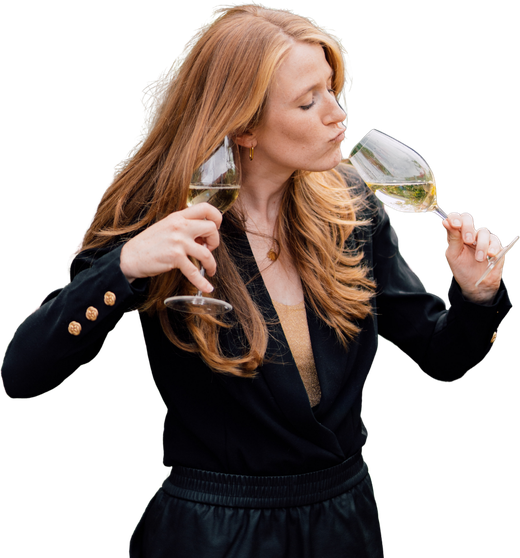
Margot van Lieshout
Wine marketeer, sales expert with over 20 years in the trade, public speaker and international wine judge. Thousands of wines scored from Steiermark to Ningxia, and a trade she knows from the inside out. Wine with Margot is where she helps wine brands tell the stories that sell them.
Want to argue about this? Good.
The conversation about every article happens in the Substack comments, together with the newsletter. Join free and bring opinions.


