

The road out of Constanța runs west and flat, and after a while the sea drops away behind you and the land lifts into low, vine-covered hills. I had spent my mornings on the coast judging rosé, but this was the day we turned inland, into Murfatlar, the heartland of Romanian wine. Its name sits on bottles all across the country, and I wanted to stand on the ground behind it. What I found was a warm limestone plateau between the Danube and the Black Sea, where the grape has been grown for something like six thousand years, and where a single long day can hold a biodynamic lunch, an ancient cellar, a folk band and two thousand years of history.

Lunch among biodynamic vines: Domeniul Bogdan

We began at the table, which is the right way to begin anything in Dobrogea. Domeniul Bogdan is Romania's first biodynamic winery, 154 hectares of vines worked without chemical sprays or synthetic fertiliser, farmed by the lunar calendar and guided in the cellar by the French consultant Stéphane Derenoncourt. The estate was planted from 2011 and its winery opened in 2017, and everything about it leans towards letting the place speak: healthy soil, a living vineyard, as little interference as the growers can manage.
The lunch told the other half of Dobrogea's story. The wines came paired with Tatar and Turkish cooking, a reminder that this corner of Romania has been home to Tatar and Turkish communities for centuries, and that the food here carries the Black Sea and the old Ottoman world in it as much as the Carpathians. I loved the honesty of it: biodynamic wine that tastes of somewhere specific, next to a plate that could only come from this coast.
Proof I did my homework

Domeniul Bogdan Pătrar Fetească Neagră 2020
92/100
Domeniul Bogdan Primordial Chardonnay
91/100
Domeniul Bogdan Primordial Rosé
90/100
Domeniul Bogdan Duh
91/100
Domeniul Bogdan Primordial Elogium Merlot
92/100Proof I did my homework: Domeniul Bogdan Pătrar Fetească Neagră 2020 (92/100) · Domeniul Bogdan Primordial Chardonnay (91/100) · Domeniul Bogdan Primordial Rosé (90/100) · Domeniul Bogdan Duh (91/100) · Domeniul Bogdan Primordial Elogium Merlot (92/100).
- Craning my neck up at the towering steel tanks in the Murfatlar Romania cellar. Photo: www.themoment.ro.
- The barrel room at Murfatlar Romania, oak lined up in the country's largest cellar.
- The pressing tanks at Murfatlar, six thousand years of winemaking still running at state-combine scale.
- A carved barrel head in the Murfatlar cellar.
Six thousand years of vines: Murfatlar Romania
From lunch we drove to the name itself. Murfatlar Romania is the country's largest wine producer, farming more than 3,000 hectares across the Murfatlar, Medgidia and Cernavodă centres, on terraces cut by hand into the limestone. Archaeologists reckon the vine has grown on this plateau for around six thousand years, back to the Bronze Age, when Dobrogea was the Greek Scythia Minor and the shores of the Black Sea were already famous for their wine.
What I did not expect was the walk backwards in time. Push through the doors and the six thousand years fall away and you land somewhere in the 1970s, deep in the old Eastern bloc. The cellars are built at the scale of a state combine: long halls under concrete pillars, white-tiled walls, fat pipes painted a municipal blue, strip lights humming overhead, and everywhere the giant tanks and old oak foudres with their stock numbers stencilled straight onto the wood in flaking white paint. Outside, a stone grape goddess reclines on a plinth in front of a peeling modernist block, all bunched fruit and socialist-realist muscle. Nobody designed it to be beautiful, and it is, and it feels far closer to Ceaușescu's Romania than to Bordeaux.
Standing under one of those steel tanks, craning my neck up like a child, I felt the strange double weight of the place: six thousand years of vines in the ground and half a century of state wine machinery still running around me. Murfatlar built its reputation partly on sweet, late-harvest whites, the golden dessert wines that made the region famous in the twentieth century, but the modern range now runs the full width from crisp dry whites to serious reds, and somewhere in the dark the cellar still guards bottles from decades back. The plateau's trick is its position: warm continental days, the cooling breath of the Black Sea, and limestone underneath to keep the wines fresh. It is a place that has never stopped making wine, through empires, a kingdom and a communist republic, which on a continent this restless is its own kind of miracle.
Proof I did my homework

Murfatlar M1 Arezan Chardonnay
92/100
Murfatlar Aerosoli Fetească Regală
93/100
Murfatlar Tre3 Hectare Fetească Neagră
93/100
Murfatlar M1 Arezan Merlot
92/100
Murfatlar Pinot Gris 1959
92/100
Murfatlar Chardonnay 1977
91/100Proof I did my homework: Murfatlar M1 Arezan Chardonnay (92/100) · Murfatlar Aerosoli Fetească Regală (93/100) · Murfatlar Tre3 Hectare Fetească Neagră (93/100) · Murfatlar M1 Arezan Merlot (92/100) · Murfatlar Pinot Gris 1959 (92/100) · Murfatlar Chardonnay 1977 (91/100).
- Fetească Regală, the royal maiden, Romania's most planted grape. Credit: Unknown.
- Fetească Albă, the white maiden, one of the country's oldest varieties. Credit: Unknown.
- Fetească Neagră, the dark sister, brooding and black-fruited. Credit: Unknown.
Meet the white sisters: Fetească Albă and Regală
Two grapes kept turning up in my glass, and they are sisters. Fetească Albă, the white maiden, is one of Romania's oldest varieties, grown here for more than a thousand years, giving delicate wines of green apple, pear and white flowers. Fetească Regală, the royal maiden, is her younger, crisper relative and Romania's most planted grape, all lime and wildflower and bright acidity. Fetească simply means maiden, and Romanians talk about the family the way you would about people.
The folklore I love says there were three sisters: Albă the fair one, Regală the royal one, and Neagră, the dark one born under a blood moon. The whites are the easy, sunlit sisters, the ones you meet at lunch on a bright day. The dark sister keeps to the reds and to the autumn. I had met Neagră down on the Danube earlier in the trip, brooding and black-fruited, and here on the plateau it was the pale sisters' turn. They made the better company for a table full of Tatar spice and midday sun.
- The barbecue lit at Punctul Turistic Murfatlar.
- Pork and chicken over the coals at the folk dinner.
- Punctul Turistic Murfatlar, the winery's tourist point and our dinner venue.
- Old vintages on the bar at the end of the night: a Pinot Gris from 1959 and a Chardonnay from 1977. Photo: www.themoment.ro.
- Grilled chicken skewers lifted off the barbecue, ready for the table. Photo: www.themoment.ro.
- The live folk band that played most of the evening, first outside and then in.
- Dancers at the Murfatlar dinner, the loud, joyful close of the day.
- Me at Punctul Turistic Murfatlar, hair in the wind just before dinner.
- A well-filled plate of traditional Romanian food.
Folk music and a long table: Punctul Turistic Murfatlar
The day ended, as the good ones do, loudly. Dinner was at Punctul Turistic Murfatlar, hosted by the winery, and it came with everything at once: traditional Romanian food, more Murfatlar wine, and a live folk band that would not let anyone stay in their seat for long. There is a particular kind of joy in a room where the wine, the food and the music all come from the same few kilometres of ground. By the end I had given up on note-taking and simply joined in. Some evenings are for analysis; this one was for the violins.
Older than the vineyards: chalk churches and a Roman trophy
- The Basarabi-Murfatlar cave complex, six small churches cut into the white chalk hill. Photo: Discover Dobrogea.
- Galleries and tombs carved into the soft chalk, used between the ninth and eleventh centuries. Photo: Discover Dobrogea.
- Old Slavic, Greek and Turkic graffiti scratched into the cave church walls. Photo: Discover Dobrogea.
- The Tropaeum Traiani at Adamclisi, Trajan's AD 109 trophy over the Dacians. Photo: Discover Dobrogea.
- Carved panels of Romans and Dacians locked in battle wrap the great stone drum. Photo: Discover Dobrogea.
- The trophy standing alone on the plain, two thousand years older than the vines. Photo: Discover Dobrogea.
I did not get to the history myself. The competition kept me on the coast and in the cellars, and by the time I had hours to spare the light was going. But my local friends would not let me leave it unsaid, so I am passing on what they pointed me to: if you follow this itinerary, keep a few of your own hours for the ground under Murfatlar, because it is some of the oldest Christian and Roman ground in Romania. On the edge of town, cut into a chalk hill, is the Basarabi-Murfatlar cave complex: six small churches, galleries and tombs carved into the soft white rock, used between the ninth and eleventh centuries and covered in graffiti in Old Slavic, Greek and even Turkic runes. Specialists believe it holds the oldest church and the first monastery cells in the country. It was found by accident in 1957, during chalk quarrying, which feels about right for a place this quietly astonishing.
An hour further inland stands the one they told me I could not miss: Adamclisi, where the Tropaeum Traiani rises alone on the plain. The Emperor Trajan raised it in AD 109 to mark his brutal victory over the Dacians, a stone drum some 40 metres across, wrapped in carved panels of Romans and Dacians locked in battle, with a memorial altar nearby that once carried the names of nearly four thousand fallen soldiers. Set against two thousand years like that, the vineyards feel very young. This coast has been fought over, prayed in and planted for a very long time, and the vines are only the most recent thing to grow here. I will stand under it myself next time; consider it the reason I already want to go back.
Worth the drive inland
I came to Romania for the coast and the rosé, and Murfatlar was the day that turned a competition into a country. Inland, away from the Black Sea, I found biodynamic vines and a cellar six thousand years in the making, two pale sisters in the glass and a dark one waiting in the reds, and a folk band that outlasted my notebook. Still waiting just up the road are a chalk hill full of ancient churches and a Roman trophy on an empty plain, the two things my friends swore I have to come back for. If you ever point a car west out of Constanța, give this plateau a whole day. The sea will still be there when you get back, and you will understand the wine far better for having left it.
Any questions related to this topic? Maybe you can find your answer here. Click here!
Where is the Murfatlar wine region in Romania?
Murfatlar is Romania's best-known wine region, on a limestone plateau in Dobrogea between the Danube and the Black Sea, just west of Constanța. It has a warm continental climate cooled by the sea, and the vine has been grown there for around six thousand years.
What is Domeniul Bogdan winery?
Domeniul Bogdan is Romania's first biodynamic winery, with 154 hectares of vines in the Murfatlar region. Founded in 2011, it farms without synthetic chemicals, follows the lunar calendar and works with the French consultant Stéphane Derenoncourt.
What grapes is Murfatlar known for?
Murfatlar built its fame on sweet, late-harvest white wines but today makes everything from crisp dry whites to full reds. Native Romanian grapes such as Fetească Albă and Fetească Regală feature strongly, alongside international varieties.
What are the Basarabi cave churches?
The Basarabi-Murfatlar cave complex is a group of six small churches, galleries and tombs carved into a chalk hill near Murfatlar. Used between the ninth and eleventh centuries and discovered in 1957, it is thought to hold the oldest church in Romania.
What is the Tropaeum Traiani at Adamclisi?
The Tropaeum Traiani is a Roman victory monument at Adamclisi in Dobrogea, raised by the Emperor Trajan in AD 109 to mark his defeat of the Dacians. The great stone trophy, about 40 metres across, is carved with battle scenes and stands near a memorial altar to the fallen.
Resources
- Wines of Romania on Domeniul Bogdan, the first biodynamic winery in the country, in the Murfatlar region. https://winesofromania.com/en/wineries/domeniul-bogdan/
- Wine-Searcher on the Murfatlar region, its six thousand years of vine growing, limestone terraces and Murfatlar Romania as the country's largest producer. https://www.wine-searcher.com/regions-murfatlar
- Murfatlar, the winery, on its vineyards across the Murfatlar, Medgidia and Cernavodă centres. https://www.murfatlarwines.com
- Wikipedia on the Murfatlar (Basarabi) Cave Complex, the ninth to eleventh century rock churches discovered in 1957. https://en.wikipedia.org/wiki/Murfatlar_Cave_Complex
- Wikipedia on the Tropaeum Traiani at Adamclisi, built in AD 109 to mark Trajan's victory over the Dacians. https://en.wikipedia.org/wiki/Tropaeum_Traiani
- VIVC, the Vitis International Variety Catalogue, on Fetească Albă and Fetească Regală as indigenous Romanian varieties. https://www.vivc.de
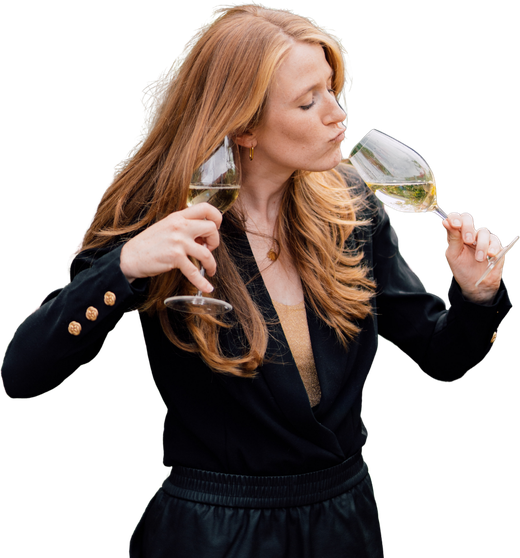
Margot van Lieshout
Wine marketeer, sales expert with over 20 years in the trade, public speaker and international wine judge. Thousands of wines scored from Steiermark to Ningxia, and a trade she knows from the inside out. Wine with Margot is where she helps wine brands tell the stories that sell them.
Want to argue about this? Good.
The conversation about every article happens in the Substack comments, together with the newsletter. Join free and bring opinions.


