

Three times last month, someone asked me the same thing: which alcohol-free wines actually taste good? Not to be polite. They wanted a real answer, because they had spent money on bottles that let them down and drifted back to 0.0 beer and mocktails instead.
I have watched the alcohol-free movement for years. For a while it got filed under trend, the way most inconvenient shifts do. That filing is out of date. In the Netherlands the alcohol-free wine category has recently almost doubled. It is still a small slice of the shelf, but small and ignorable are not the same word, and treating them as the same is how a business gets left behind.
So, I did what I always do when a shift stops being a rumour. I went to look. At ProWein in Dusseldorf I spent my time in the NOLO aisles, No and Low alcohol, instead of the usual suspects, tasting my way through a category most of the trade still waves off. One session stuck with me: When Health and Wellness are Top of Mind, with Courtney Cochran and Felicity Carter. If you have ten minutes, Felicity's short clip on alcohol, health risk and whether wine still earns its place is worth the watch.
What I kept coming back to is that none of this is really about the wine. It is about the person holding the glass, and how much they have quietly changed. So let me start with the thing now strapped to half of their wrists.
Health Freaks With Smartwatches
This part starts with me, a textbook, and a glass of wine I did not really need. During my WSET Diploma I worked out something obvious in hindsight: if I wanted my brain to hold anything, I had to look after the body carrying it. Better sleep, real rest, exercise to keep the tank full through hours of study. So, I bought a smartwatch or better said, my husband bought me one, so I could "really start to work-out" as how he put it.
Late to the party, I know. But coming to it late made me pay attention. Study season left almost no time for me, just endless hours with my books and a glass of wine to stay in theme. One glass hardly became two, but the next day the loop started again, book + glass of wine.

I have never been a heavy drinker. I could count the times I have been properly drunk on one hand. Maybe on 3 fingers even. My watch did not care about that. It handed me the receipt for two glasses of wine in plain language: high stress, poor sleep quality, restless night. On the nights I skipped it: deep sleep, good rest. Plenty of things shape a night's sleep, so this was never a lab result. It was a very clear nudge, every single time.
And when I was trying to shift the last of the pregnancy kilos, being reminded exactly how many calories live in a glass of wine did me no favours either.
Now picture a world where millions of people, younger ones most of all, wear one of these. We are all quietly auditing ourselves. We can see what alcohol does to us, in numbers, the next morning. And we are drinking less because of it. The fit, well-rested crowd who drink little or nothing are not lying awake wondering where wine fits. They have already answered.

Conscious Drinking
Mindful drinking is the tidy name for it, and it genuinely belongs in a healthy life. When you actually choose the glass, you taste it properly. It stops being wallpaper and becomes the point of the evening.
Twenty years ago, as a teenager, the question that ran the night was: whose place are we pre-drinking at? Then off to the bar to keep the momentum going. The question now is quieter: when shall we go for a drink? Gen-Z picks its moments on purpose. The timing has shifted, hard.
Our parents, the boomers, drank wine during or after dinner. Today the glass has moved to the moment people walk in from work. A drink with colleagues, a wind-down, something good on the sofa with a snack, and usually before dinner. Then nothing with the meal. The alcohol clears well before bed, sleep stays intact, and the next morning starts clean. Same drinker, completely different pattern.

Sober Curious
Open any feed and it is right there: sober talks, dry challenges, people who built an entire audience on not drinking, celebrities narrating their years off the booze. Plenty who used to drink hard say these online communities are the thing keeping them steady. There is even a book, Sober Curious, built around loosening alcohol's grip, or dropping it altogether.
Sober curious is not a vow of never again. It is a question you start asking on purpose.
Do you always have a bottle open at home? Is a Friday office drink without alcohol even a proper borrel? What about the pint after the workout? Alcohol is stitched deep into how we mark time together, which is exactly why noticing it feels odd at first.
Being sober curious means putting three plain questions to your own glass. When do I drink? Why do I drink? How much do I drink? Ask them honestly and drinking stops being autopilot. You start paying attention to what the stuff actually does to your body and your head.

The movement loves a benefits list, and it runs long: better mood and more energy, deeper sleep, a steadier immune system, clearer skin, workouts that finally land, better fertility for men and women, a livelier sex life, and the weight that quietly walks off once you stop drinking your calories. Some of that is lifestyle talk, so take it as talk. One line, though, is not up for debate. The World Health Organization is blunt that there is no safe level of alcohol for our health, and ethanol sits in the same top group of carcinogens as tobacco and asbestos, linked to at least seven cancers. Drink less and you lower that risk. That part is not wellness talk, it is the science.
The internet will bury you in tips for a sober-curious life. Strip them back and it is one idea: notice when and why you reach for a glass, and remember you always have a choice. Everything in moderation, and when you do drink, mean it.
Do You Call Yourself a Flex-Drinker?
New trend? Not really. A flex-drinker is someone who drinks now and then, on purpose. Think of the flexitarian: mostly plants, meat or fish once in a while, entirely by choice. Same logic, poured into a glass. A flex-drinker keeps alcohol for the occasions that actually earn it.
Google flex-drinking and you will not find much yet, but the behaviour is climbing fast. Dutch CBS figures show older generations are not cutting back much, at least not yet, while the younger ones are out in front on going alcohol-free altogether. And it is almost always the young who set the next default. This is not a blip. It is the shape of an old industry's next twenty years, with alcohol-free sliding quietly from odd to normal.
Why Wineries Can No Longer Ignore Alcohol-Free
So here is the uncomfortable question for the trade. Should a winery bother with alcohol-free at all? If it wants to still be on the table in ten years, yes. Meeting the shift where it already is does two things at once. It keeps the loyal drinker who now reaches for a zero option on a Tuesday night, and it opens a door to buyers who were never going to choose you before.
The how matters far more than the whether. You do not have to torch your identity to do this. Dealcoholised wines, grape-based drinks, fermented teas, kombucha: there is room to move without pretending to be something you are not.
 93/100
Bortolomiol is the example I keep pointing people to. They built a serious alcohol-free answer to Valdobbiadene Prosecco called Loim, and it does not try to cosplay as wine. It leans into the Glera grape it comes from: exotic on the nose, expressive, properly balanced, and not a sugar bomb. A genuinely exciting glass with nothing to apologise for, which is why it earned 93 points from me. Then look at the label. Clean, current, aimed exactly at the buyer it wants. That is the whole playbook in one bottle. Good liquid, honest positioning, and packaging that knows precisely who it is talking to.
The Rise of Alcohol-Free Is Unstoppable
Alcohol-free is not a niche any more, and it is not a passing mood. It is a real, fast-growing segment with serious room to run. IWSR expects the no-alcohol category alone to add more than four billion US dollars by 2028, growing far quicker than the wine most of us grew up selling. Gen-Z and Millennials put health and awareness first, and the tech on their wrists keeps reinforcing it.
Wineries that want to stay relevant have to take that seriously. Premium dealcoholised wines, clever alternatives, packaging that reads to a modern buyer. The future rewards flexibility, not stubbornness. It stopped being about drinking for the sake of it a while ago. Now it is about drinking on purpose.
Cling to the old model and the market will simply route around you. The flex-drinkers, the sober curious, and the conscious drinkers are drawing the next map of wine. If you are reading this, you still have time to be on it. Go along, or stay behind. That has always been the whole choice.
Any questions related to this topic? Maybe you can find your answer here. Click here!
Is alcohol-free wine a real market or just hype?
It is a real, fast-growing market. IWSR expects the no-alcohol category alone to add more than four billion US dollars in value by 2028, growing far faster than standard wine. In the Netherlands the alcohol-free wine category has recently almost doubled. Small, still, but no longer a rounding error.
Why are younger generations drinking less?
Health and awareness, mostly, reinforced by technology. Smartwatches show Gen-Z the real cost of a couple of glasses in poor sleep and higher stress, the sober-curious movement makes moderation normal, and Dutch CBS figures show the young leading the shift towards drinking little or nothing. It is a deliberate choice, not a phase.
How can a winery add alcohol-free wine without hurting its brand?
Lead with quality and honesty rather than imitation. Dealcoholised wines, grape-based drinks and fermented options like kombucha all work if the liquid is good and the positioning is truthful. Bortolomiol's Loim, an alcohol-free take on Valdobbiadene Prosecco, is a strong example: it leans into its Glera character instead of pretending to be the real thing.
What does sober curious mean?
Sober curious means questioning your drinking on purpose rather than quitting outright. It comes down to three questions: when do I drink, why do I drink, and how much. The point is awareness and choice, so alcohol stops being an automatic habit.
Is there a safe amount of wine to drink?
According to the World Health Organization, no. It states there is no safe level of alcohol for human health, and ethanol is classed among the top group of carcinogens alongside tobacco and asbestos. Drinking less lowers the risk, which is a large part of why mindful and alcohol-free drinking are growing.
Resources
- World Health Organization, on there being no safe level of alcohol consumption for health and alcohol as a leading cause of cancer: https://www.who.int/europe/news/item/04-01-2023-no-level-of-alcohol-consumption-is-safe-for-our-health
- IWSR drinks market analysis, on the long-term rise of no and low alcohol: https://www.theiwsr.com/insight/more-than-moderation-the-long-term-rise-of-no-and-low/
- IWSR drinks market analysis, on the no-alcohol category set to add more than four billion US dollars in value by 2028: https://www.theiwsr.com/insight/growth-of-4bn-expected-from-no-alcohol-category-by-2028/
- CBS Statistics Netherlands, on smoking and alcohol consumption falling since 2014: https://www.cbs.nl/en-gb/news/2025/12/smoking-and-alcohol-consumption-down-since-2014-obesity-unchanged
- Bortolomiol, on the Loim alcohol-free Valdobbiadene made from Glera must: https://www.bortolomiol.com/en/
- When Health and Wellness are Top of Mind, ProWein session with Felicity Carter on alcohol and health: https://www.youtube.com/watch?v=QtJhb12a67E
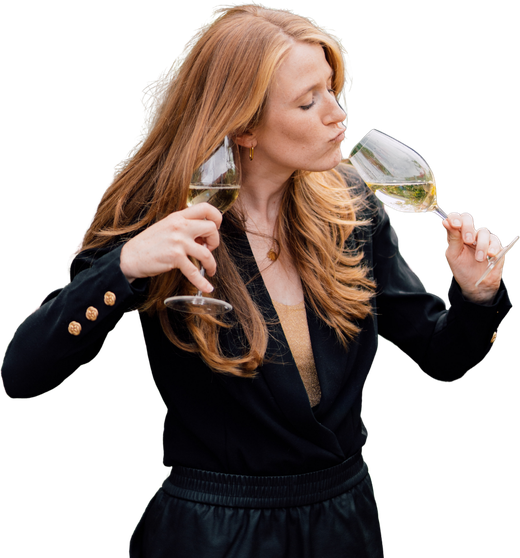
Margot van Lieshout
Wine marketeer, sales expert with over 20 years in the trade, public speaker and international wine judge. Thousands of wines scored from Steiermark to Ningxia, and a trade she knows from the inside out. Wine with Margot is where she helps wine brands tell the stories that sell them.
Want to argue about this? Good.
The conversation about every article happens in the Substack comments, together with the newsletter. Join free and bring opinions.


