

Picture the last time a stranger stood in front of your wine. Not a buyer, not a sommelier, just an ordinary person with a trolley and about eight seconds to spare. They are not weighing your terroir or your third-generation history. They are scanning for one thing: does this taste like something I like, at a price that feels fair, in a bottle I would not be embarrassed to put on the table. The brand story you have poured years into is nowhere in that moment.
That is not an insult. It is the job description of a first purchase, and for the wine trade it is the single most misread moment in the business. We build brands for the boardroom and forget that on the shelf, and now on the screen, people buy in a completely different order than we sell. Get that order right and everything you care about, the loyalty, the margin, the story, finally has somewhere to land. This is Part 3 of From Scroll to Sip.
How a bottle actually gets chosen
For years the shelf ran on two cues: price and promotion. Cheapest decent option wins, bonus points for a yellow sticker. Those have not disappeared, but they have flattened, and taste has climbed up to sit level with them. Here is the part the trade underestimates: most people read taste through grape variety. Not because they are lazy, but because it is the most reliable shortcut they have.
So, in the everyday shopper's head, Chardonnay means an oaked, rounder white. Sauvignon Blanc means fresh and fruit-forward. Merlot is the soft, low-tannin red you can drink without a meal. Cabernet Sauvignon is the bold one you open for dinner. You and I both know a wine pro would never flatten the world like that. But the wine pro is not the one buying the other ninety-odd percent of bottles. When researchers ranked what actually drives choice, grape variety came second only to having tasted the wine before, ahead of brand name, ahead of origin, with the pretty front label near the bottom of the list.
Only after taste and price does the label get its say, and there it does one job: a gut check. Does this look like it belongs in my life. That is a real signal, but it is the third question, not the first.
Where your brand does almost nothing, and where it does everything

On a cold, unfamiliar bottle, brand-as-story does close to nothing. Fine. But look again at what sits at the very top of that ranking: having tasted the wine before. That is not the absence of brand. That is brand doing its most important job while wearing a plain coat. A label you recognise is a shortcut through five hundred options you do not have time to learn. Researchers politely call it a quality-assurance mechanism. You and I call it the safe place.
This is how the great old wine brands were built. They kept the taste, the price, and the promise identical, vintage after vintage, until a whole generation stopped choosing and simply reached. Consistency, not charisma, made them enormous. If you have ever wondered why a giant supermarket brand tastes exactly the same every single year, that is the answer. Sameness is the product, and it is the reason people stayed.
The big brands are shrinking, and it is not who you think
Here is where the safe place turns dangerous. The generation those brands grew up alongside is now leaving the category. Baby Boomers slid from 32 percent of United States wine drinkers in 2023 to 26 percent by late 2025, while Millennials became the largest group at 31 percent and Gen Z climbed from 9 to 14. In the same window the country lost around nine million wine drinkers, from 85 million down to 76 million. Silicon Valley Bank's Rob McMillan, the analyst the whole industry reads, put it bluntly: the market is rotating out of the over-60 drinkers who love wine, and that is a customer acquisition problem you cannot advertise your way out of.
And no, this is not Gen Z quitting alcohol, whatever the headlines told you. New IWSR research found Gen Z now drinks at almost exactly the adult average, 74 percent against 76, while Boomers have quietly become the lightest-drinking group of all. The safe-place brands are not being rejected by the young. They are losing the people they were built for, and they never gave the next generation a reason to reach. That is a whole article on its own, and it is the next one in this series.
Consistency built the old brands. Story is what will build the next ones.
The shelf cannot talk, so the phone does it

Now watch what a curious shopper actually does when a bottle catches their eye and they have more than a minute to spare. They pick it up, photograph the label, and drop it into Google or Vivino to see what strangers think. This is not a niche habit. Vivino has logged more than 2.7 billion label scans across 70 million users. That is billions of tiny moments where the bottle goes silent and the internet answers on its behalf.
This is the hinge of the whole argument. On the shelf your story is invisible. The second that phone comes out, your story is the only thing there is. Whatever they find, or fail to find, decides whether your wine goes in the trolley or back on the shelf.
This is where your story finally lands
So here is the turn. Everything I just said about brand doing nothing at first contact flips the instant someone looks you up. And this is exactly where most wineries lose the sale. Not on the shelf. Three taps later, when the interested shopper lands on a dead Instagram, a website that reads like a printed brochure, and nothing that makes them feel a single thing. The bottle earned the search. The digital presence lost it.
On the shelf your story is invisible. The moment the phone comes out, it is everything.
The work is not louder branding. It is a complete, honest circle that is already in place before anyone comes looking, because they will not wait around while you build it. When the search happens, the whole thing must be there, and it has to say something true. That is the difference between being scrolled past and being sipped.
The Scroll-to-Sip Roadmap: five S's, no skipping
This is the map I use to build that circle. I call it the 5S, and it is deliberately shaped the way people actually decide. Each S is a question your brand answers, and, not by accident, the same question the customer is already asking in their head. Here is how they line up.

Read the roadmap left to right and it runs the same route your customer does. Sense of Place and Standards build clarity, Sentiment and Style build connection, and Story closes the conversion, right through to the sip. The catch is that you need all five alive at once. Drop one or two and the whole thing feels hollow. The shopper cannot always name what is missing, they just feel the wobble and quietly move on. A brand with no Sense of Place is anonymous. One with no Story never earns the choice. Five out of five, or it does not hold.
Where this leaves you

Nobody buys your brand on the shelf. They buy taste, they buy a fair price, and they buy a label that fits their life. If they like what is in the glass, they come back for the safe place you built them. But the moment they go looking, and in a Vivino-and-Google world they always go looking, your story stops being decoration and becomes the entire pitch. A half-built presence hands them a reason to scroll past, and that is a damn shame, because it is the most fixable problem you have.
If you want that full circle built so it actually holds when someone finds you, so the story lands and the sale closes, that is the work I do with wine brands. When you are ready to stop going quiet at the exact moment a customer starts paying attention, you know where to find me.
People also ask
Any questions related to this topic? Maybe you can find your answer here. Click here!
How do wine buyers actually choose a bottle?
For a first, unfamiliar purchase they choose on taste, price, and label, in that order, and brand story barely registers. Most people read taste through grape variety because it is the most reliable shortcut they have, so Chardonnay signals a rounder white and Merlot a soft red. Only after taste and price does the label get a gut check on whether it fits their life.
Does branding actually matter when buying wine?
It does, but not where most wineries think. On a cold bottle a stranger has never tasted, brand-as-story does almost nothing. Brand earns its keep on the second purchase, when a label someone recognises becomes the safe place they reach for without deliberating, and again the moment they look you up online and your story becomes the whole pitch.
Why are big wine brands losing customers?
Because the generation they were built for is leaving the category, not because young people quit wine. Baby Boomers fell from 32 percent of United States wine drinkers in 2023 to 26 percent by late 2025, and the country lost around nine million wine drinkers in that window. The big brands kept their loyal reachers happy but never gave the next generation a reason to choose them.
Why do people scan wine labels with their phone?
Because the bottle on the shelf cannot answer questions, so shoppers ask the internet instead. They photograph the label and drop it into Google or an app like Vivino, which has logged more than 2.7 billion scans across 70 million users, to see what other drinkers think before they commit. It turns a silent bottle into a second opinion in a few seconds.
How do I get my winery found when someone looks up my wine?
Have a complete, honest online presence in place before anyone searches, because they will not wait while you build it. When a shopper looks you up after seeing your bottle, a dead Instagram or a brochure-style website loses the sale the label just earned. A living website, a real voice, and a clear story turn that search into a purchase instead of a scroll-past.
Resources
- https://www.svb.com/globalassets/library/uploadedfiles/wine/svb-state-of-the-us-wine-industry-report-2025.pdf" target="_blank" rel="noopener">SVB State of the US Wine Industry Report 2025, Silicon Valley Bank: Baby Boomers fell from 32 percent of US wine drinkers in 2023 to 26 percent by late 2025, Gen Z rose from 9 to 14 percent, and the country lost around nine million wine drinkers, from 85 million to 76 million, with analyst Rob McMillan framing it as a customer acquisition problem.
- https://winemarketcouncil.com/new-wine-market-council-study-finds-millennials-now-largest-u-s-wine-drinking-cohort/" target="_blank" rel="noopener">Wine Market Council, Millennials now the largest US wine-drinking cohort: Millennials have become the largest wine-drinking generation in the United States at 31 percent, overtaking Baby Boomers.
- https://www.thedrinksbusiness.com/2026/07/iwsr-gen-z-moderation-myth-debunked/" target="_blank" rel="noopener">IWSR, via The Drinks Business, "Gen Z moderation myth debunked": Gen Z drinks at almost exactly the adult average, 74 percent against 76 percent, while Boomers have become the lightest-drinking group.
- https://www.researchgate.net/publication/223452397_Wine_purchase_decisions_and_consumption_behaviours_Insights_from_a_probability_sample_drawn_in_Auckland_New_Zealand" target="_blank" rel="noopener">Wine purchase decisions and consumption behaviours, Auckland New Zealand study: grape variety ranked second only to having tasted the wine before as a driver of choice, ahead of brand name and origin, with the front label near the bottom.
- https://www.vivino.com/en/wine-news/vivino-wine-scanner" target="_blank" rel="noopener">Vivino wine scanner: Vivino has logged more than 2.7 billion label scans across 70 million users.
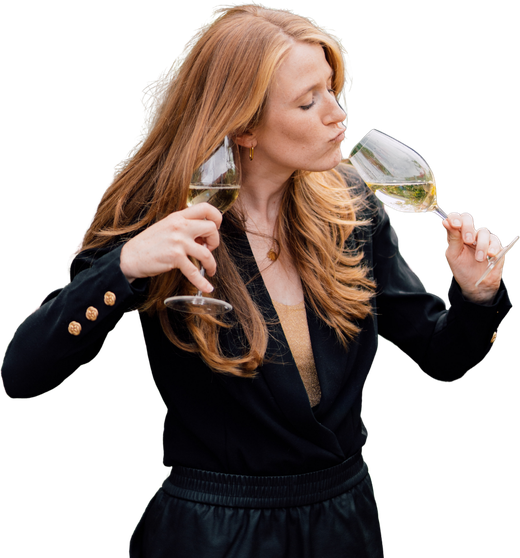
Margot van Lieshout
Wine marketeer, sales expert with over 20 years in the trade, public speaker and international wine judge. Thousands of wines scored from Steiermark to Ningxia, and a trade she knows from the inside out. Wine with Margot is where she helps wine brands tell the stories that sell them.
Want to argue about this? Good.
The conversation about every article happens in the Substack comments, together with the newsletter. Join free and bring opinions.


