

She can be bold, she can be sexy, she can be sophisticated, she can be inspiring, she can be complex, she can be paired, she can be diverse, she can be deep, she can be luscious, she can blended…
I fell deeply in love with Sauvignon Blanc, that one white grape varietal everyone assumes to be dull and boring. That it is just one dimensional, lacking body and complexity, to be drunk right after bottling to catch its best character. Well let me tell you different. Let me challenge you to take a plunge in the amazing shades of Sauvignon Blanc being such a sexy and diverse varietal and I have experienced it first hand.
There are so many sides to this varietal, so many ways a winemaker can decide to grow the vines, how to treat the vines, what decisions to make in the wine cellar (or none at all), to create completely different wines.
We probably all know the moment we took our first wine course class and tasted a glass of Sauvignon Blanc right? I am assuming it was that juicy, zesty, lemony, green apple, bit herbaceous wine that was easy to drink. You either loved it or you were ‘team Chardonnay’. If you were like me back then you would probably had chosen the oaky Chardonnay right? I hear you. You were probably been thought, when discussing in terms of wine styles Sauvignon was always the juicy, lighter wine while Chardonnay was bold and oaked… Needless to say the truth couldn’t be further apart.
The Many Faces Of Sauvignon Blanc
This march (2023), I’ve judged and tasted over 180 Sauvignon Blancs as a judge over the course of three days. Sauvignon Blancs coming from regions all over the world. From Steiermark, Austria to Mexico. From the Western Cape, South Africa to Sancerre, France. From New Zealand to the Chile. All those shades of Sauvignon we had the opportunity to taste and judge, such an experience.
Just to give you an idea on the excitement we encountered in those days, were Sauvignon Blancs being bone dry with a flinty note, fresh yellow fruits with a medium intensity, to those having spend some time on the lees and giving it a creamy character.

Not to mention the ones that spend time in oak, old or new, 20% or 100% oak influence. Sauvignon at its boldest, straight forward and ‘out there'. To those being herbaceous and (overly) green, to again others having ripe tropical or exotic fruits and being very expressive. To those being volatile, aged, being invert, and even those with skin contact.
The ones that had a powerful body, to those being sophisticated. From those being very shy to others being extremely expressive. Others with a juicy character, creamy mouthfeel or those with a tangy bite and tannins when being in contact with the skins.
Upfront we don’t know what we taste, we’ve tasted everything blind, but afterwards you are shown your own tasting notes and scoring, and the wines are presented (by name) to you also. Not to be revealed until the results are out, but they are out now, and you can find them here.
The Sence Of Terroir

Terroir has most definitely a certain amount of influence, on how the varietal will turn out ‘when it grows older’ and made into wine. The ones grown in warmer climates, like Vulkanland or parts of Australia i.a., having that riper fruit character like mango, lemon zest, wild peach. Those grown in a region where the climatical conditions can be moist and sunny at the end of the growing season, causing botrytis to form (Bordeaux i.a.) and the grapes will give you those exceptional dried fruit flavours of raisins, dried apricots and figs. Vines planted close to the coast having a maritime climate, being affected by (moist) ocean winds giving the wines that saline character.
The influence of soils like granite (South Africa i.a.) or Silex (Sancerre i.a.) playing part in that minerality, stony tone we experience on the palate. Soils of loam and clay based can be more powerful, and those on Volcanic soils seem to give a hint of ‘Fumé’. Oh boy, I can keep on going naming all those different styles to be terroir specific.
The different aspects on the slope the vines grow on, to capture the most sunlight or to the vines that grow on the valley plains. The old vines that are dry farmed (more inland) to those being protected by the extreme windy conditions.
Sauvignon Blanc can truly be mesmerizing as she comes in all shapes, sizes and styles.
Your choice or mine?

During our stay, we visited several Districts and Wards in the Coastal region; Durbanville, Constantia én Stellenbosch. Besides the growing regions having some similarities in terroir, they are also different in terms of wine styles. We had the pleasure to have hade guided tastings together with the winemaker or owner from the winery, one tasting session in Constantia and one wine safari in Durbanville and we’ve tasted many other Sauvignon Blancs. Want to see many Sauvignon Blancs I’ve tasted which I didn’t forget to photograph, go to my Instagram and see my reel about Sauvignon Blanc.
Some of you might fancy a Sauvignon Blanc as an apéritif being either a sparkling wine or a wine that’s light on its feet. For others preferring wines being wild fermented or oak aged for some time. Some styles preferred when being slightly green or oxidative, creamy or bold it isn’t all to do with terroir. The choice and style of the winemaker plays such a huge role in the result. Whether you are a boutique winery or a more mass production (which doesn’t necessarily mean bad quality) winery, all depends on the style you as a brand want to represent.
The choices of quality are partially decided by the weather during the growing season, having (over) ripe and healthy grapes or you need to harvest slightly too early due to bad weather coming up. Hand or machine harvest and the time of day when the grapes are harvested. Making a single varietal wine or a (Bordeaux) blend. Many or little to no intervention in the cellar, the choice of yeast strains (wild or ambient), closures at bottling. Making an age worthy wine or one to be drunk now.
When the wines are made they are fermented on colder or moderate temperatures to keep their fresh fruity character, but that is either in stainless steel tanks, amphoras, cement eggs, oak in all shapes and sizes you name it. The decision of being aged on the lees for a few months with or without some stirring to give the wine some more depth and that creamy mouthfeel. Wines that had some oak integration with old oak or (partial) new oak being sophisticated or extremely bold. But bold doesn’t necessarily mean over oaked, but powerful backed up by ripe tropical fruits and good acidity it can give the wines some additional years of ageing to find its peak.
As the winemakers explained it to us there are several different styles on how you can make a Sauvignon Blanc being:
-
On the thiol aromas (grapefruit, passionfruit)
-
Capsicum style (green peppers, grassy)
-
Sweet botrytised styles (dried fruits, hazelnuts)
-
Volatile acidity (nail polish remover)
-
Fumé Blanc styles (oak influence)
The only style which might not be to my personal preference would be wines made in an overly green way, describe with aromas as asparagus, cat pee, and freshly mowed green grass. Or those having so much oak its being out of balance with its fruit which is a shame to my opinion. It is not the case that these wines are faulty, it is not ‘your’ style, which is perfect, because there are so many others out there. Which Sauvignon style are you?
My Personal Tasting Notes 2023
I want to share some of the Sauvignon Blancs which I have tasted over the time that I was there, to show you the diversity this incredible versatile variety can bring. I have shared my most interesting 'discoveries' below sorted per region.
Proof I did my homework

Groot Constantia Sauvignon Blanc 2012
89/100
Klein Constantia Perdeblokke Sauvignon Blanc 2021
91/100
Steenberg Sparkling Sauvignon Blanc
90/100
Altijdgedacht Sauvignon Blanc 2022
91/100
Bloemendal Blanc de Blanc (SB) MCC Brut
92/100
Canto Sauvignon Blanc 2022
92/100
Nitída Wild Child Sauvignon Blanc 2022 (wild ferment)
91/100
Maastricht Sauvignon Blanc 2022
89/100
Diemersdal Sauvignon Blanc Rosé +3% Cabernet Sauvignon
89/100
Warwick Professor Black Sauvignon Blanc 2022
92/100Proof I did my homework: Groot Constantia Sauvignon Blanc 2012 (89/100) · Klein Constantia Perdeblokke Sauvignon Blanc 2021 (91/100) · Steenberg Sparkling Sauvignon Blanc (90/100) · Altijdgedacht Sauvignon Blanc 2022 (91/100) · Bloemendal Blanc de Blanc (SB) MCC Brut (92/100) · Canto Sauvignon Blanc 2022 (92/100) · Nitída Wild Child Sauvignon Blanc 2022 (wild ferment) (91/100) · Maastricht Sauvignon Blanc 2022 (89/100) · Diemersdal Sauvignon Blanc Rosé +3% Cabernet Sauvignon (89/100) · Warwick Professor Black Sauvignon Blanc 2022 (92/100).
Constantia, Coastal Region
-
Groot Constantia Sauvignon Blanc 2012 89/100 Bit oxidative, depth, complex, minerality, creamy, no fruit anymore, reminds like jura wine, waxy on the palate. Wow factor! Mind-blowing.
-
Klein Constantia Perdeblokke Sauvignon Blanc 2021 91/100 Juicy, easy going, fruity, no greens, herbal note, well balanced.
-
Steenberg Sparkling Sauvignon Blanc 90/100 Lemon, gooseberries, green apple, good acidity, well balanced, soft mousse.
Durbanville, Coastal Region
-
Altijdgedacht Sauvignon Blanc 2022 91/100 Lemon zest, blueberries, herbal, apricots, good balance, great concentration and length.
-
Bloemendal Blanc de Blanc (SB) MCC Brut 92/100 Ripe, concentrated, creamy, lemon zest, apricots, fine mousse, good acidity, great length.
-
Canto Sauvignon Blanc 2022 92/100 Lemonpeel, apricots, minerality, blossom, delicate, creamy, brioche. Good concentration of flavours, potential for further development, good integration of acidity. Well balanced, good finish.
-
Nitída Wild Child Sauvignon Blanc 2022 (wild ferment) 91/100 Grassy, asparagus but not overwhelming, quite pleasant. Lime notes, lemon, easy going and yet exciting, well balanced, juicy.
-
Maastricht Sauvignon Blanc 2022 89/100 Green grassy, asparagus, lemonpeel, limezest, green apples, good concentration of flavours. Well balanced acidity. Typical style Sauvignon Blanc, good finish, pleasant wine.
-
Diemersdal Sauvignon Blanc Rosé +3% Cabernet Sauvignon 89/100 Beautiful dry rosé, with blueberries, lemon peel, easy going, good length, crowd pleaser.
Stellenbosch, Coastal Region
-
Warwick Professor Black Sauvignon Blanc 2022 92/100 Floral, elderflower, gooseberries, minerality, lemon peel, lime, cream, biscuits. Good concentration, well integrated acidity, good texture, nice finish.
-
Kings Kloof Family Vineyards Sauvignon Blanc 2022 91/100 Ripe fruit, apricots, pineapple, lemon peel, mango, cream, toasty, gooseberries, flora. Has so much to offer on the nose and on the palate. Good concentration of flavours, good integration of a crisp acidity and a lingering finish.
Südsteiermark - Steiermark - Austria
-
Silberberg Ried Steinbruch Sauvignon Blanc 2021 92/100 Slightly shy on the nose at first, cream, yellow apple, apricots, lemon zest, lime, blossom, oak, showing complexity. Good concentration of flavours, well integration of oak. Good integration of acidity. Well balanced. Good long finish. ‘all fits together’.
-
Sauvignon Blanc Ried Labitschberg 2021 93/100 Blackcurrants, floral, blackcurrant leaf’s, lemon peel, lime zest, fruity. Good concentration of fruit flavours. Great texture. Great balance, well integrated acidity. Has dimension. Lingering in the finish but fresh and fruity with well-integrated oak. Love the expressiveness of this wine.
Vulkanland Steiermark
-
Sauvignon Blanc Silt & Gravel 2021 91/100 Ripe fruit, mango, pineapple, lemon peel, zest, slight subtle oxidation, nutty, hint of vanilla. Good concentration, well balanced acidity, not overpowering, could have had a slight longer finish.
Côtes de Gascogne IGP - South West - France
-
Domaine Les Fumées Blances 2022 92/100 Cream, toasty, vanilla, lemon peel, apricots, wild peach, mango. Good concentration of flavours, great acidity well integrated, good length. Has potential for further development. Complexity, texture, interesting wine.
-
Domaine de l’Herré Sauvignon Blanc 2022 91/100 Minerality, blossom, lemon peel, lime zest, slight green asparagus, leafy. Creamy mouthfeel, good concentration of flavours. Good texture, great body, long finish that lingers. Gastronomic wine. Potential for further ageing.
Val de Loire - France
-
En Travertin 2022 - Pouilly Fumé 90/100 Toasty, brioche, vanilla, lemonpeel, apricots, wild peach. Good concentration, round mouthfeel, good texture, toasty bitters but nice. Great finish of the wine. Has potential for further development, still young.
-
Domaine Gérard Fiou 2022 Sancerre 89/100 Closed on the nose, minerality, flinty, lemon peel, lime, green apples, grapefruit. The concentration is good, the flavours stand out. Lingering finish, crisp and zesty acidity, well integrated, good balance.
Friuli Venezia Giulia - Friuli DOC - Italy
-
Mister Bio Wine Sauvignon Black label 2021 90/100 Cassis, toast, brioche, apricots, lemon peel, blackcurrants, exciting, texture bit drying but not unpleasant, great acidity balances the wine perfectly, has potential.
Mexico - North America
-
Puerta del Lobo Sauvignon Blanc 2022 - Querétaro 90/100 Ripe fruit, pineapple, asparagus, slight bitter, acidity and fruitiness is balanced, grassy, lemon, green apple.
-
Viniltura Sauvignon Blanc 2019 - Querétaro 88/100 Oxidative, lemon zesty, riper fruit, pineapple, minerality, salinity, oak, well balanced, bit grassy still on the palate, still discovering, complexity, length, very interesting wine.
-
Tierra Adentro Sauvignon Blanc 2022 - Zacatecas 89/100 Asparagus, grassy, green, lemon, lime, the green notes are overwhelming on the palate, acidity is good in balance, but lacks in the finish.
Saying Thank You
I just have to say Thank You to Concours Mondial du Sauvignon for inviting me to the Concours to be a judge again. Consider me a true ambassador for Sauvignon Blanc! And Thank You to all those wineries that wanted to share their story, their history, their food and their wines with us. It made me feel very humble to be part of this experience.
Click on the video to watch the experience of the Concours together with me, to give you a slight insight behind the scenes. And if you watch closely, you can spot me 4 times!
Any questions related to this topic? Maybe you can find your answer here. Click here!
Why does Sauvignon Blanc taste so different from bottle to bottle?
Because the variety comes in far more than one style: bone dry and flinty, creamy from lees ageing, bold from oak, herbaceous and green, ripe and tropical, even skin contact versions with a tangy bite. Fifty shades is barely an exaggeration.
What does terroir do to Sauvignon Blanc?
A lot. Warm climates push ripe mango, lemon zest and wild peach, coastal vineyards pick up a saline touch from ocean winds, granite soils in South Africa and silex in Sancerre bring that stony minerality, and volcanic soils add a hint of fumé. In Bordeaux, late season moisture can even invite botrytis for dried apricot and fig flavours.
Is Sauvignon Blanc ever aged in oak?
Yes, and the spectrum is wide: from 20 to 100 percent oak influence, old barrels or new. Oaked Sauvignon is the grape at its boldest, while lees ageing offers a softer route to a creamy mouthfeel without the oak stamp.
What is skin contact Sauvignon Blanc?
A style where the juice ferments or macerates with the grape skins, giving the wine grip, a tangy bite and even gentle tannins. It sits at the adventurous end of the Sauvignon spectrum, next to the volatile, aged and deliberately oxidative expressions.
What is the Concours Mondial du Sauvignon?
An international competition dedicated entirely to Sauvignon Blanc, judged blind by an invited panel. Margot judged the 2023 edition in South Africa, tasting through Durbanville, Constantia and Stellenbosch, and wrote this article from that experience.
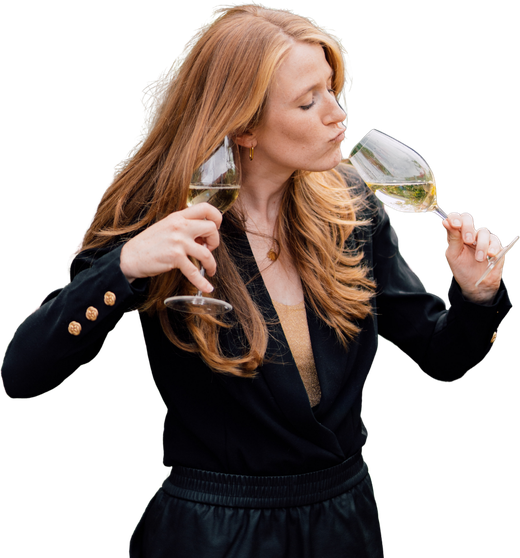
Margot van Lieshout
Wine marketeer, sales expert with over 20 years in the trade, public speaker and international wine judge. Thousands of wines scored from Steiermark to Ningxia, and a trade she knows from the inside out. Wine with Margot is where she helps wine brands tell the stories that sell them.
Want to argue about this? Good.
The conversation about every article happens in the Substack comments, together with the newsletter. Join free and bring opinions.


