

Twenty-five centuries ago, the Etruscans climbed these hills above the Tyrrhenian Sea looking for silver. They cut the ore out of the Donoratico rock, smelted it, and left behind a name that outlived them: argentiera, the silver mine. The silver ran out a long time ago. What the hill produces now, from the same iron-rich soils and the same hard sea light, is wine, and the estate that farms it still wears the miners' word on its label.
Sixty Years From Nowhere
That would be a charming footnote if Bolgheri were an old, settled wine name. It is not. Sixty years ago this stretch of the Tuscan coast grew wheat and grazed sheep, and no serious wine drinker had heard of it. Then Marchese Mario Incisa della Rocchetta planted Bordeaux vines behind his house, and the wine he made, Sassicaia, was quietly beating first-growth clarets in a blind tasting by 1978. The appellation itself only arrived in 1983, and did not even permit red wines until 1994. In two generations, Bolgheri went from nowhere to the most valuable vineyard land in Italy, home to Sassicaia, Ornellaia and a short list of estates that now set the price of Tuscan red.
Planning your own visit?Where to go →Argentiera belongs on that list, and part of the reason is pure geography. At around 200 metres above the water it is one of the highest estates in Bolgheri, and it sits closer to the sea than any of its neighbours: 85 hectares of vineyard folded into a single municipality, Castagneto Carducci, on an amphitheatre of slopes that face south and west toward the coast. The afternoon sun bounces off the sea and reaches the vines a second time. The modern estate was created in 1999 by the Fratini family, Florentine entrepreneurs, on land that had belonged for centuries to the Serristori, the family who took Donoratico in 1512 and built the villa here in 1660.
The project had a powerful godfather. Marchese Piero Antinori, one of the founding fathers of the Bolgheri DOC, lent his experience early on, working alongside the agronomist Federico Zileri Dal Verme, who created the project and is now the estate's CEO. The Bordeaux consultant Stephane Derenoncourt, one of the most influential winemakers in the world for this style, has guided the cellar for years. Then, in 2016, the estate changed hands. Stanislaus Turnauer, an Austrian industrialist who had fallen for Tuscany and moved to Florence, bought it. His line about the place has hardened into a house motto: the difference in views, he says, includes the ability to look far and go further.
I met the wines not on that hill but through a glass, during a virtual tasting hosted by Studio Cru. Four of them, poured in ascending order, from a Vermentino that takes itself seriously to the flagship that carries the estate's name. Here is what was in each glass, and what the estate does to fill it.

The Land, and What the Sea Does to It
Argentiera's soil changes under your feet as you walk it. Up on the high plateau of I Pianali there is marl and shale, cut through with sandstone and siliceous rock. Down near the old Aurelia road there are the red aeolian sands of Donoratico, rich in iron, blown into place over millennia. The estate treats all of this as a puzzle: around 45 separate vineyard lots, each ripening on its own schedule, are picked and vinified apart, then reassembled in the blend.
The hill does something that matters even more than the geology. Argentiera sits barely a kilometre from the sea and among the highest, most sea-facing estates in all of Bolgheri, and on a clear afternoon the light reaches the vines twice, once from the sky and once bouncing straight off the water. A sea breeze climbs the slope all day, and the forest wrapped around the estate breathes cool air back down over the rows at night, so the high parcels can sit a couple of degrees below the valley in high summer. Nobody engineered that. Freshness is simply what this place does, and it is the thread that runs through every wine below. One corner of it is pure romance: on a small limestone rise the team planted the vines in a fan around the hill and named the plot ventaglio, Italian for fan, a tiny, impractical, cinematic patch that tells you more about how this estate thinks than any spec sheet could.
- The sun going down over the Tyrrhenian through the estate's oaks, the light breaking into a starburst.
- A row of vines in full summer leaf, the wooded Bolgheri hills rising behind.
- The iron-rich red soil of the Donoratico ground, close up at the foot of a vine.
- The estate from above, vineyards and woodland interlocking all the way to the horizon.
Single Vineyard: I Pianali
The high plateau at 200 metres, marl and shale over sandstone, always a couple of degrees cooler. Home of the flagship.
Single Vineyard: Donoratico
The old red beach sands down by the Aurelia, iron-rich and warm, where the Mediterranean fruit comes from.
Single Vineyard: Ventaglio
A fan of vines planted around a small limestone rise, barely a hectare, the estate's jewel plot.
- The Ventaglio fan from the air, the rows radiating from a single old tree in a clearing ringed by forest.
- Ventaglio's stony ground, pale limestone at the foot of an old vine.
The winery is built into the hill, most of it underground, both to keep the temperature steady and to keep the building out of the view. Grapes arrive at the top and fall by gravity into the vats below, so no pump ever bruises the fruit. Underground there are steel and concrete vats holding 8,500 hectolitres, roughly 700 small barriques and 220 larger tonneaux. The cellar runs on the same logic as the farming: intervene as little as possible, and let the place do the talking.
- The villa and winery on the I Pianali hill, vines and olives falling toward the coast.
- Looking down on the winery's sunken courtyard, barrels standing in the gravity-fed cellar yard.
The Same Hands Since 2001
- Federico Zileri Dal Verme, who created the estate and now runs it as CEO.
- Stanislaus Turnauer, the owner.
- Leonardo Raspini, general manager, fifteen years at Ornellaia before this.
- Nicolo Carrara, the oenologist who runs the cellar.
What keeps a wine like this consistent from one parcel to the next is not a machine, it is memory. Roughly eighty-five people farm Argentiera, and many of them have been here since the first vintages in 2001. They know which block ripens first, which corner holds the damp, how a given row behaves in a dry year and a wet one. That is knowledge you cannot buy in and cannot hurry, and it exists only because the same people keep coming back to the same vines. Nicolo Carrara, the oenologist who has run the cellar for over a decade after a spell at Chateau Palmer, calls the team a big family, and he means it as a quality claim, not a sentiment: the continuity is why the wines taste deliberate rather than lucky.
You see the same instinct in the cellar itself, where general manager Leonardo Raspini arrived after fifteen years at Ornellaia. The fruit is picked and sorted by hand, then dropped into the vats by gravity instead of being pushed through a pump, because a pump bruises and this estate would rather lose a little time than a little freshness. Fermentations are slow, extraction is done by gentle infusion rather than muscle. There is also the human approach behind, but it is better to stay behind, Carrara says of his own part in it. It is an unusually modest line from a winemaker, and it is the whole philosophy in a breath: let the place and the year do the talking, and keep your fingerprints off the glass.

A White That Means It
The tasting opened with the Scenario Bolgheri Bianco DOC 2024, and it made its point in the first sip: this is not a poolside Vermentino. It is 100 percent Vermentino from the estate's cooler, north-facing parcels, and it is picked deliberately late, the last Vermentino block on the whole estate to come in, on 13 September, so the sugar stays moderate and the acid stays high.
The winemaking is where it turns serious. Part of the wine ferments in spherical 400-litre stoneware vats, the rest in curved, steam-bent oak barrels the estate calls cigars, and it then rests nine months on its fine lees before another fourteen months in bottle. That is white winemaking borrowed from the reference cellars of the world: texture built out of lees and clay rather than fruit alone. The estate calls Scenario the next step in its Vermentino research, and the target is a white that is vertical, mineral and tense rather than soft and fruity.
The Signature
Poggio ai Ginepri, the hill of the junipers, is the wine the estate calls its signature, and it is the one most drinkers meet first. The 2024 is a Bordeaux blend grown on the warm, low ground near the Aurelia: Cabernet Sauvignon 40 percent, Merlot 30 percent, Cabernet Franc 20 percent and Petit Verdot 10 percent, planted on those iron-rich red sands of Donoratico.
This wine is made to drink for pleasure, not for the cellar. Half the wine sees only steel, the other half rests six months in used French barrels, so the oak stays politely in the background. Three months in bottle and it is released, a wine meant to show the Mediterranean character of the place while it is young, bright and open.
The Village Wine

Villa Donoratico is the estate's Bolgheri Rosso DOC, named for the medieval village and the old Serristori villa, and it is the wine where the pieces start to lock together. The 2023 is Cabernet Sauvignon 45 percent, Merlot 30 percent, Cabernet Franc 15 percent and Petit Verdot 10 percent, from the transitional middle ground where clay and silt slow the ripening down and add grip.
It ages twelve months in 500-litre tonneaux, and here is a small detail worth noticing: some of that oak is Austrian, a quiet nod to the man who now owns the place. The result, in the estate's own words, is red-fruited with a slight spice and a cool, mentholated note on the finish. It is a wine you can drink tonight, but it has the frame to hold for a few years yet.
The Flagship

The tasting closed with the wine that carries the estate's name: Argentiera Bolgheri DOC Superiore 2023, drawn from the highest and best parcels up on I Pianali, between roughly 144 and 205 metres, on marl and shale shot through with sandstone. The 2023 blend is Merlot 48 percent, Cabernet Sauvignon 42 percent and Cabernet Franc 10 percent, from a season that was cold and dry through winter, unusually wet in May, then settled into a clean, unhurried ripening that ran to a harvest finishing on 6 October.
This is the estate at full stretch. It ferments in steel and concrete, ages fourteen to sixteen months in a mix of barriques, tonneaux and large casks, drops back into concrete for six months to settle, then spends a year in bottle before release. It is the highest thing this hill can say, structure and aromatic depth held together by the freshness the sea keeps feeding back in from the west.
The View from Here
What holds the four wines together is not a grape or a technique but an attitude, and it belongs to Carrara. He calls what he is after a contemporary version of what Bolgheri can be: reds with all the power the coast will give, but never at the cost of the second glass. Complex and rich, he says, but never opulent. You can taste that discipline across the flight. The entry wine is precise, the flagship stays fresh, and there is real power in these wines with none of it spent on showing off.
It is a strange and satisfying thing, to drink a wine named for silver that ran out before Rome was an empire, made on a hill the sea keeps cooling from the west. That is the kind of place Bolgheri can be, and Argentiera is one of its clearest examples.

Proof I did my homework

Scenario Bolgheri Bianco 2024
94/100
Poggio ai Ginepri 2024
94/100
Villa Donoratico 2023
95/100
Argentiera 2023
95/100Proof I did my homework: Scenario Bolgheri Bianco 2024 (94/100) · Poggio ai Ginepri 2024 (94/100) · Villa Donoratico 2023 (95/100) · Argentiera 2023 (95/100).
My Personal Tasting Notes
1. Scenario Bolgheri Bianco DOC 2024, Tenuta Argentiera | 94 pnt
Comes at you vertical rather than round. Citrus pith, white peach skin, a chalky saline pull straight down the middle. There is a waxy weight across the palate that stops it feeling lean, but the line never softens. Dry, mineral and long on the finish, the sea talking back. Not a poolside white. A sit-up-and-pay-attention one.
2. Poggio ai Ginepri Toscana IGT Rosso 2024, Tenuta Argentiera | 94 pnt
Bramble and dark cherry, a lick of juniper and dried herb, a twist of pepper. Supple and already open, tannins soft, fruit loud. Nothing to wait for and that is the charm. Pour it young, pour it a touch cool, let it be easy.
3. Villa Donoratico Bolgheri Rosso DOC 2023, Tenuta Argentiera | 95 pnt
Red and darker berry with a thread of spice, and that cool mentholated lift on the back of the palate that marks the wine. More grip than the Poggio, but it wears the structure in freshness, not muscle. Drinkable tonight, with enough frame under it to hold a few years.
4. Argentiera Bolgheri DOC Superiore 2023, Tenuta Argentiera | 95 pnt
Layered rather than loud. Dark plum and blackcurrant, graphite, dried violet, a savoury mineral undertow that reads as the site itself. Tannins fine and firm, the kind that frame instead of grip, and the whole thing kept upright by a sea-fed freshness. The flagship, behaving like one. Give it air now, or give it years.
Where to go
Plan a visit to Argentiera
Every spot from this article, in one place.
Scores follow the 100-point wine scoring scale and reflect my own personal assessment during the tasting. This tasting was organised by Studio Cru.
Any questions related to this topic? Maybe you can find your answer here. Click here!
Is Tenuta Argentiera open to visitors?
Yes. The estate on the Bolgheri coast welcomes visitors from April to October, with an Enoteca in a restored farmhouse running guided tastings, cellar tours and vineyard visits, plus private lunches in the cellar and older vintages in the wine shop by reservation. It sits about 200 metres above the sea at Castagneto Carducci, one of the highest and most sea-facing estates in the appellation.
What is Tenuta Argentiera known for?
Argentiera is a benchmark Bolgheri estate known for structured Bordeaux-blend reds that stay fresh, led by its flagship Argentiera Bolgheri Superiore. Its name comes from the Etruscan silver mines once worked on the Donoratico hill, and it is farmed high and close to the sea, which keeps a cool, saline thread running through the wines.
What grapes does Argentiera grow?
Mostly Bordeaux varieties: Cabernet Sauvignon, Merlot, Cabernet Franc and Petit Verdot for the reds, plus Vermentino for its white, Scenario. The reds are drawn from around 45 separate parcels that are vinified apart and then blended, so each wine reflects a different part of the estate.
How good is the Argentiera Bolgheri Superiore 2023?
It is the estate's flagship and its most ageworthy wine, a Merlot-led Bolgheri Superiore from the highest I Pianali parcels. In this tasting Margot van Lieshout scored the 2023 vintage 95 out of 100, for its layered dark fruit, fine firm tannins and sea-fed freshness, a wine to drink with air now or cellar for years.
Resources
- The rise of Bolgheri from coastal backwater to Super Tuscan heartland, Sassicaia's debut and the 1983 DOC (with red wines only added in 1994): https://www.wineenthusiast.com/culture/wine/what-is-super-tuscan-is-term-still-relevant/
- Argentiera's name, drawn from the Etruscan silver mines on the Donoratico hill, and the estate's founding in 1999 by the Florentine Fratini family on the old Serristori lands: https://winealchemy.co.uk/tenuta-argentiera-you-got-the-silver/
- Stanislaus Turnauer's ownership of the estate and its 85 hectares in a single municipality: https://www.wine-searcher.com/merchant/26649
- The winemaking team: Bordeaux consultant Stephane Derenoncourt, general manager Leonardo Raspini (fifteen years at Ornellaia) and oenologist Nicolo Carrara: https://awinestory.com/tenuta-argentiera/
- Tenuta Argentiera's own account of the estate, its vineyards and its wines: https://argentiera.eu/en/the-wines/argentiera/
- Tenuta Argentiera hospitality, tastings and estate visits (April to October): https://www.winearchitecture.it/en/cantine/tenuta-argentiera
- The Etruscan iron and metalworking at Populonia and Baratti, and the slag-darkened beaches of the gulf: https://www.discovertuscany.com/the-etruscan-coast/gulf-of-baratti.html
- The Viale dei Cipressi and Giosue Carducci's 1874 poem, and the naming of Castagneto Carducci: https://www.visittuscany.com/en/attractions/viale-cipressi-bolgheri/
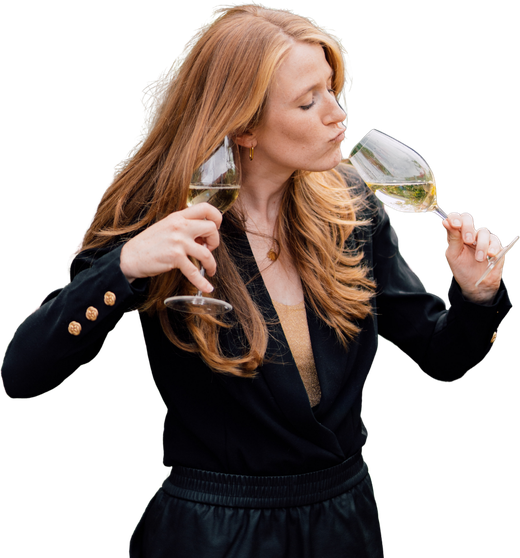
Margot van Lieshout
Wine marketeer, sales expert with over 20 years in the trade, public speaker and international wine judge. Thousands of wines scored from Steiermark to Ningxia, and a trade she knows from the inside out. Wine with Margot is where she helps wine brands tell the stories that sell them.
Want to argue about this? Good.
The conversation about every article happens in the Substack comments, together with the newsletter. Join free and bring opinions.


