

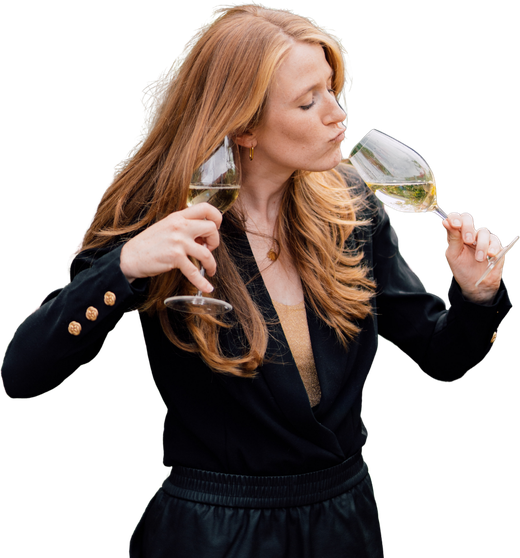
Maybe you look at the top image here and feel offended, don't be, this story has nothing to do with that picture of me on a presstrip to Piemonte, visiting Malvira Winery, in January 2026.
Wine journalism has quietly collapsed into churnalism, and the wine trade has barely noticed, because the output still looks like journalism. Here is what it looks like from the inside. An agency, hired by a winery, is briefed to land coverage in five export markets. So it gathers a roomful of wine writers, ships samples to every doormat, and runs the same one-hour masterclass over and over, once for each market. Every session tells the same story about the same slopes and hands out the same press kit: the same photos, the same tech sheets, the same tasting order, the same tidy estate history. Six weeks later, around thirty near-identical articles go live across those five markets. The winery paid for thirty pieces of coverage and bought one, printed thirty times.
Why does so much wine coverage read the same?
It is tempting to blame lazy writers. That is the wrong target. The press kit is not a shortcut a few journalists abuse, it is exactly what the system is built to produce. Public relations professionals now outnumber journalists by roughly six to one, and newsrooms have been cut to the bone, so a ready-made kit with photos, quotes and a clean tech sheet is not a temptation, it is a lifeline. Hand a drowning writer a finished story and they will file it. Hand that same finished story to every writer across five markets, and you get the same article back thirty times over.
This is not a wine-trade secret, it is a documented collapse. Fabio Piccoli, who runs the trade title Wine Meridian, put it flatly: wine journalism has been reduced to reporting press releases, with the criticism, the scepticism and the actual reporting quietly swept under the rug. The economics explain the rest. At one Wine Media Conference, a speaker asked a room of forty wine writers how many actually made a living from the work. Five hands went up. Underpaid and under-resourced writers handed the same press kit will file the same piece, because they cannot afford to do anything else. And here is the part that should sting the winery signing the invoice: you are paying an agency to make your wine sound like everyone else's.
The incentives all point the same way. The agency reports success in clips, so thirty clips look like a triumph, even when they are the same clip thirty times. The winery paid for coverage and received coverage, so the invoice makes sense. Everyone in the chain hit their number. The only person left out of the equation is the one who was supposed to end up curious enough to buy the bottle, and nobody in that room was writing for them.
Watch who the masterclass is actually trying to impress
I have sat in enough of these masterclasses, digital and in person, to know the performance by heart. A writer asks for the precise slope angle, north-east or south-east, then takes a sip and says, ah, that makes sense now on the palate. It sounds like rigour. It is peacocking. It is wine knowledge performed for other people who already have wine knowledge, and it reaches no one who was ever going to open their wallet.
And it is the same performance on repeat. Sit through a masterclass led by one of the self-proclaimed regional experts, thirty years in a single appellation, and the first time the sheer depth of it is a little intimidating. Go back a second time, and a third, and the seams show. Same lecture, same running order every single time: history, then terroir, then the local and indigenous grapes, then the wines, then the wineries behind them. A different vintage in the glass, maybe, or one new detail because the region just changed a rule. The shape never moves. And in all that knowledge, nobody ever draws the line that actually matters: why this sub-region, why these particular wines, why they stand out instead of blending into the crowd. I will not be loved for saying it, but I have sat through too many to pretend otherwise. Knowing everything about a place is not the same as having something to say about it.
Here is what the whole chain keeps forgetting. The somm, the buyer, the importer, the journalist: not one of them is the destination. Every single one still has to sell your wine onward to the person holding the glass. If the story is built to impress the tasting panel, it stops at the tasting panel. It never survives the trip to the dinner table, because it was never made to travel that far.

Terroir is the raw material, not the story
Soil pH, altitude, clone, hang time, the exact angle of that famous slope: these are real, they matter, and they are ingredients. Ingredients are not a meal. Nobody falls for a list of ingredients. I have written a whole piece on turning facts into something worth repeating, "Your Winery Has a Story. You're Just Not Telling It", so I will not repeat it here, except to say the missing step is almost never more detail. It is a character, a stake, a specific moment, and a turn.
And this is no longer a lone opinion, the industry is turning on terroir-only storytelling itself. Highway 29 Creative, a Napa marketing agency, published a piece bluntly titled "Why Terroir Is Not Enough", and the argument is fair to both camps: terroir speaks volumes to the enthusiast, but to the casual drinker it is only a small whisper. Respect the enthusiast and the casual buyer at once and you land on the same truth. Terroir is the setting. It is not the plot. A setting with no character moving through it is just a nice photograph of some dirt.
And story is not decoration you paint on after the wine is made. It changes the wine. When Caltech researchers scanned people's brains as they drank, simply believing a wine was more expensive lit up the part of the brain that registers pleasure. Same wine in the glass. The framing changed how it actually tasted. Story is not the wrapping paper around the product. It is part of the product, which is exactly why leaving it to chance is such an expensive habit.

Terroir is the flour. Nobody ever fell in love with flour.
Grab the free resource from this article →Why can't most wineries tell their own story?
This is not an insult, it is a near-universal condition. The story that would make a stranger lean closer is invisible to the person who lives it every day. The founder is convinced the interesting part is the new certification or the fresh bit of press. It almost never is. The interesting part is the grandmother who refused to sell, or the plot everyone swore was worthless, or the winemaker who walked out of a banking job to prune vines in the rain. The owner has told those facts so many times they have gone flat in their own mouth.
This is where the agency earns its fee, and it is not by rewriting a tech sheet in nicer words. The real job is excavation: sitting the winery down and mining for the one story they have stopped being able to see, then handing every writer a different way into the same estate. An agency that only prepares a masterclass is running a recital. An agency that runs the extraction first is building something no two writers can help but write differently.

The Ten Doors Method
The fix is not to give your writers less. It is to give each of them a different way in, so no two leave with the same piece. That is the whole idea behind the Ten Doors Method: every estate has at least ten doors, more than enough to hand every writer their own, and your job is to find them before anyone tastes a thing.
Map the ten doors before the masterclass, not during it. A person, a decision, a place, a fight, a first, a failure, a ritual, a rivalry, a change of heart, and the one thing nobody else does. Every estate has at least ten. Write them down before a single sample ships.
Give each writer a different door. One gets the grandmother who would not sell. One gets the abandoned plot. One gets the ex-banker in the rain. And it starts at the invitation: instead of one generic email blasted to the whole list, each chosen writer gets their own door and a briefing written for them alone. Different doors, different pieces, no two competing for the same three sentences.
Hand over story material, not a press kit. Build a story pack, not a spec sheet: the character, the stake, the specific detail, the turn. You do not write it from a blank page either: the Ten Doors Prep Kit below turns your interview notes into a finished story pack in one pass, so this step costs you minutes, not another afternoon. The facts still ride along, they just ride inside something a reader will actually finish.
Build every door to open onto the end consumer. The test for any angle is not whether it will impress the tasting panel. It is whether it survives being retold by a somm to a table of four. If it cannot make that jump, it is trivia, not story, and trivia dies in the room.
Turn the masterclass into the best hour of their week. Stop reciting. Let the winemaker tell the one story they cannot get through without their voice catching. Writers who felt something will each write a different thing. Writers who were lectured will file the same press release, and you already know how that ends.
What changes when you build ten doors
Run it this way and the maths inverts. Same estate, same writers, same five markets, but thirty pieces that do not read like thirty printouts of one document. The winery gets coverage that actually differentiates it instead of blending it into every other press release that month. The agency gets clips it can be proud of, not clips it quietly hopes nobody reads side by side. And for once the story is built to travel, past the journalist, past the buyer, all the way to the person deciding what to open on a Tuesday night.
This is the same argument I keep coming back to. Story is not what you say after the wine is made, it is part of what makes the wine worth buying. I have written about the limits of that too, in "Telling Your Wine's Story Won't Sell It", because a story with no path to purchase is just a nice feeling. It is also why I do not buy the panic in "Gen Z Isn't Killing Wine": that generation is not rejecting wine, it is rejecting wine that nobody ever bothered to make interesting to them.
So the next time an agency sends its writers home with the same folder, be clear about what that folder actually bought: thirty ways to say nothing. You can do better than a press kit. Ten doors, ten stories, and one bottle that finally gets talked about like it matters.

If you want to run your next campaign this way, I built The Ten Doors Prep Kit to do the heavy lifting: two AI prompts and a prep-call checklist that walk a winery or an agency through finding all ten doors before the first sample ships. One prompt mines your own website for angles you have stopped being able to see. One turns a single interview into ten distinct stories. And the checklist keeps the whole prep call on the story instead of the spec sheet. Grab it, and never send out an identical press kit again.
And if you want to take it further, there is a version of this I run with clients directly. The same ten doors, but built into a personalised outreach sequence: one email per journalist, each briefed on their own door, drafted in a single pass instead of one painstaking message at a time. That part is not a download, it is me. If speeding that up sounds useful, get in touch and we will map it onto your next campaign.
People also ask
Any questions related to this topic? Maybe you can find your answer here. Click here!
What is churnalism in wine media?
Churnalism is journalism produced by lightly rewriting press releases and PR material instead of doing original reporting. In wine it shows up when a PR agency runs one masterclass and hands every writer the same press kit, and they all publish near-identical articles. A Cardiff University study found only 12 percent of press stories were reporter-generated, with 60 percent leaning wholly or mainly on wire copy and PR material.
Why do wine press trips and masterclasses produce identical articles?
Because every writer is handed the same press kit, the same tasting order and the same estate history, so they all work from identical raw material. Journalists are outnumbered by PR professionals by roughly six to one and stretched thin, so a ready-made story is a lifeline they file almost verbatim. Run that same masterclass across five export markets and you get around thirty versions of one article. The sameness is by design, not laziness.
How should a winery prepare for a press masterclass?
Prepare a story, not a spec sheet. Find at least ten different angles into the estate before the event, a person, a decision, a place, a fight, a first, a failure, a ritual, a rivalry, a change of heart, and the one thing nobody else does, then give each writer a different one. That way every writer leaves with a distinct piece instead of one press release printed over and over.
What is the Ten Doors Method?
The Ten Doors Method is a way to plan wine press coverage so every writer gets a different way into the same winery. You map ten story doors before the masterclass, assign one door per writer, hand over story material rather than a press kit, and test every angle against whether it survives being retold to an ordinary drinker. It turns identical coverage into coverage that actually differentiates the brand.
Should a winery hire a PR agency to tell its story?
Yes, but the agency's real job is excavation, not distribution. Most winery owners are too close to their own story to see it, so a good agency mines for the story they have stopped noticing and builds material the whole chain can carry to the end consumer. An agency that only prepares a masterclass and hands out a press kit is running a recital, not selling wine.
Margot van Lieshout
Wine marketeer, sales expert with over 20 years in the trade, public speaker and international wine judge. Thousands of wines scored from Steiermark to Ningxia, and a trade she knows from the inside out. Wine with Margot is where she helps wine brands tell the stories that sell them.
Want to argue about this? Good.
The conversation about every article happens in the Substack comments, together with the newsletter. Join free and bring opinions.


