

I have tasted enough Austrian Grüner Veltliner over the years to think I knew what a day in Kremstal would hold. A serious white wine region. A pretty town on the Danube. A morning of tastings, a good lunch, home by dark. What I had not planned for was standing at the top of a vineyard with a glass of sparkling wine in my hand, the whole valley laid out below me, realising how good Austrian Sekt has quietly become, and how little of the trade has caught up. I had clocked it early myself, on a buyers' project on sparkling wine a while back. Most of the market still has not.
Krems sits an hour upriver from Vienna, at the point where the Wachau gorge opens out and the Kremstal begins. I arrived in September, straight off the ÖTW tastings at Grafenegg, with a free afternoon and a guide who clearly loved the place. That is the right way to meet a wine town: on foot, with someone who knows which door to knock on.
- The Piaristenkirche tower rising above the rooftops of Krems old town
- Inside the Piaristenkirche, the Baroque interior painted by Kremser Schmidt
- The narrow old-town spine of Krems, running as a single street
The walk through Krems tells the story for you

You enter Krems through the Steiner Tor, and there is no gentler introduction to a town's whole character. It is the last of four medieval city gates still standing, built around 1480 to keep out the Hungarian troops who had sacked the place three years earlier, then softened into Baroque under Maria Theresa in the 1750s. So, in one archway you get the two things Krems has always been: a fortress that had to defend its wine trade, and a wealthy town that could afford to make even its defences look elegant.
Past the gate, the old town runs as a single narrow spine, and it rewards looking up. The Piaristenkirche climbs above the rooftops, a late Gothic church begun in the thirteenth century and finished in the fifteenth, its plain stone exterior hiding an interior painted by Kremser Schmidt, the Baroque artist the town still claims as its own. My guide walked me through courtyards I would have missed on my own, past merchant houses whose size is a straight readout of how much money once moved through here on the back of wine and river trade.
Nobody had to explain the history. The buildings do it for you.
The river is the reason any of it exists

Everything in Krems eventually points back to the Danube. The river is why the town is here, why the grapes ripen, and why a thousand years of trade chose this bend in the water. Stand anywhere with a view south and you understand the geography in a second: the valley funnels warm Pannonian air up from the east, the water holds the daytime heat and releases it slowly, and the vines on the terraces get exactly the long, even ripening that makes the wines taste the way they do.
Across the valley, impossible to miss, Göttweig Abbey sits on its hill at 422 metres like a full stop on the horizon. The Benedictines have been up there since 1083, and after a fire in 1718 they rebuilt it in the grand Baroque style that earned it the nickname the Austrian Montecassino. Since 2000 it has been part of the UNESCO Wachau cultural landscape, alongside Melk and Krems itself. If you want to understand how central all of this has always been, the abbey is the view that tells you.

And if you want the view the other way round, you go up. People have been floating over this valley in hot air balloons since around 1900, and it is still the way to see Krems at its most theatrical: the vineyards in rows, the river catching the light, the abbey shrinking to a model of itself. It is definitely on my list for next time.

Kremstal is a benchmark hiding behind a louder neighbour
Here is the thing the maps do not tell you. Kremstal shares a border, a river and half a grape list with the Wachau, the region everyone has heard of, and it spends a lot of its time being mistaken for the quieter cousin. It is not. Since 2007 Kremstal has been its own DAC, its own protected origin with its own rules, and the wines have every right to be judged on their own terms.

The soils do most of the talking. Deep loess over compact subsoil holds water beautifully and gives Grüner Veltliner its weight and gentle spice, while the primary rock terraces give Riesling its tension and that cool, mineral edge. Kremstal DAC covers both in a fresh classical style and a fuller reserve style, and the good growers move between the two without losing the thread of where the wine came from.
You do not have to look hard to find those growers. Nigl makes some of the most precise Riesling in the valley, Mantlerhof keeps the rare old Roter Veltliner alive, and names like Türk, Vitikultur Moser, Thiery-Weber, Hermann Moser and J.F. Schmid each farm their own corner of it with the kind of quiet seriousness that never shouts. Many of them sit under the ÖTW banner, the growers' association that has spent years mapping the best single vineyards into Erste and Grosse Lagen, first and grand sites. That work matters, because it puts the emphasis exactly where a wine region's story should sit on the specific piece of ground, not the brand on the label.
The sparkling nobody had warned me about
The part of the day I did not see coming happened at the top of the vineyards. There is a sparkling wine bar set up for a bunch of us, up there, set on the lookout where the terraces run out and the whole valley opens beneath you: the city below, the church tower, the ribbon of the Danube, Göttweig on its hill. Somebody put a glass of Austrian Sekt in my hand, and I had one of those small professional moments where a category you have quietly rated for years suddenly makes complete sense, standing in the place it comes from.
- The improvised Austrian Sekt bar set up at the top of the vineyards
- With Mona Hagenkind at the sparkling wine bar above Krems
- The wineries representing Kremstal and the ÖTW, gathered for the tasting
- The view from the bar over the Danube, the city of Krems and Göttweig Abbey
Because Austrian sparkling wine is not a novelty. It has structure the trade should know about. Sekt Austria carries a PDO, a protected designation, and it is built as a three-tier pyramid. Klassik spends at least nine months on the lees. Reserve spends eighteen, and must be made in the traditional method, the same second fermentation in the bottle that Champagne uses. Grosse Reserve spends at least thirty months on the lees and must come from a single winegrowing community, one named village rather than a whole state. Every bottle passes a sensory exam before it can be sold. That is not a region dabbling. That is a region that has written itself a rulebook and stuck to it.
- Vitikultur Moser Blanc de Blanc 2020 Brut Nature, 96/100
- Stift Goettweig Blanc de Blancs Brut Reserve 2019, 95/100
- Salomon Underhof Rosé Brut Nature 2021, 94/100
- Malat Reserve Brut Nature 2018, 95/100
- Weingut Türk Cabernet Sauvignon Rosé Brut Nature 2017, 95/100
And here is the marketing read, because I simply cannot help myself. Austrian Sekt has the rare good fortune of being genuinely good and still largely unknown outside its home country, which is the exact position every emerging category dreams of. The story practically tells itself: real ageing, real place, real rules, no inflated price to match, and almost nobody has planted a flag in the buyer's mind yet, (well not really that is). If you sell wine for a living, that gap between the quality in the glass and the awareness in the market is not a problem. It is an opening. The regions that name it first will own it.
Dinner was a Buschenschank, and that was the point
I finished the day at a Buschenschank, the Austrian wine tavern where a grower is allowed to pour their own wine alongside simple cold food: bread, spreads, cured meats, whatever the house makes. It is an old tradition with actual rules behind it, and it is the least polished, most honest hospitality in wine. No sommelier theatre. Just the person who grew the grapes, the wine they made, and a wooden table.

That was the right note to end on, and not by accident. Everything Krems and Kremstal do well runs on the same idea. The wine tastes of a specific hill. The town wears its history in plain sight. The sparkling wine has real rules instead of a marketing budget. None of it is trying to be anything other than exactly where it is from, and that turns out to be the most persuasive thing a place can be.

I went to Kremstal expecting a good white wine region and came home thinking about branding, which is more or less what happens every time I travel. The lesson kept repeating itself all day: the strongest story a wine can tell is the true one about where it comes from, and the regions that win are the ones confident enough to let that do the heavy lifting.
If you make or sell wine and you have a story like that sitting unused, a place, a soil, a category nobody has named yet, that is exactly the raw material I help brands turn into something people remember. Kremstal already has it. The only question is who says it out loud first. Go and taste the Sekt while it is still the secret nobody warned you about.
Some wines I tasted during the evening
Proof I did my homework

Geyerhof Furth Grüner Veltliner
95/100
Mantlerhof Ried Wieland Gedersdorf Riesling Kabinett 1989
96/100
Weingut Stadt Krems Ried Grillenparz Riesling 2019
95/100
Weingut Wess Alte Reben Riesling 2022
96/100
Proidl Senftenberg Riesling Alte Reben 2023
94/100
Salomon Undhof Steiner Kögl Riesling Reserve 2015
95/100
Sepp Moser Grüner Veltliner Schnabel 2005
96/100
Malat Ried Gottschelle 1ÖTW
95/100
Vitikultur Moser Von den Terrassen Riesling 2023
95/100Proof I did my homework: Geyerhof Furth Grüner Veltliner (95/100) · Mantlerhof Ried Wieland Gedersdorf Riesling Kabinett 1989 (96/100) · Weingut Stadt Krems Ried Grillenparz Riesling 2019 (95/100) · Weingut Wess Alte Reben Riesling 2022 (96/100) · Proidl Senftenberg Riesling Alte Reben 2023 (94/100) · Salomon Undhof Steiner Kögl Riesling Reserve 2015 (95/100) · Sepp Moser Grüner Veltliner Schnabel 2005 (96/100) · Malat Ried Gottschelle 1ÖTW (95/100) · Vitikultur Moser Von den Terrassen Riesling 2023 (95/100).
People also ask
Any questions related to this topic? Maybe you can find your answer here. Click here!
Is Kremstal a good wine region?
Kremstal is one of Austria's benchmark regions for Grüner Veltliner and Riesling, a DAC in its own right since 2007. Deep loess soils give Grüner Veltliner weight and gentle spice, while primary rock terraces give Riesling tension and a cool, mineral edge. It sits beside the more famous Wachau but stands fully on its own terms.
What is Austrian Sekt and how is it classified?
Austrian Sekt is the country's quality sparkling wine, protected under the Sekt Austria PDO and built as a three-tier pyramid. Klassik spends at least nine months on the lees, Reserve at least eighteen and must use the traditional bottle fermentation method, and Grosse Reserve at least thirty months from a single named winegrowing community. Every bottle passes a sensory exam before it can be sold.
What is the difference between Kremstal and the Wachau?
Kremstal and the Wachau share the Danube, a border and much of their grape list, but Kremstal has been its own DAC with its own rules since 2007. The Wachau is the better known name, yet Kremstal's loess and primary rock terraces produce Grüner Veltliner and Riesling of comparable quality, often at gentler prices.
What is a Buschenschank?
A Buschenschank is a traditional Austrian wine tavern where a grower is licensed to pour their own wine alongside simple cold food such as bread, spreads and cured meats. It runs on real rules and is the least polished, most honest hospitality in wine: the person who grew the grapes, the wine they made, and a wooden table.
Is Krems in Austria worth visiting?
Krems is one of the most rewarding wine towns on the Danube, at the point where the Wachau gorge opens into the Kremstal. You can walk its medieval old town through the Steiner Tor, look across to Göttweig Abbey, taste benchmark Grüner Veltliner and Riesling, and increasingly discover Austrian Sekt at the source.
Resources
- Austrian Wine on the Kremstal DAC, its loess and primary rock soils and the classical and reserve styles of Grüner Veltliner and Riesling: https://www.austrianwine.com/our-wine/strategy-for-origin-marketing/dac-districtus-austriae-controllatus/dac-regions/kremstal-dac
- Austrian Wine on Sekt Austria g.U. and the Klassik, Reserve and Grosse Reserve quality pyramid: https://www.austrianwine.com/austrian-sekt/sekt-austria-pdo
- The Steiner Tor, the last surviving of Krems' four medieval city gates: https://en.wikipedia.org/wiki/Steiner_Tor
- The Piaristenkirche in Krems and its Kremser Schmidt interior, via Lower Austria tourism: https://www.lower-austria.info/excursions/piaristenkirche
- Göttweig Abbey, the Benedictine monastery on the eastern edge of the Wachau: https://www.donau.com/en/excursions/benedictinegoettweig
- The Österreichische Traditionsweingüter (ÖTW) and their classification of Erste and Grosse Lagen: https://www.traditionsweingueter.at
- Weingut Nigl, one of Kremstal's benchmark estates for precise Riesling and Grüner Veltliner: https://www.weingutnigl.at
- Weingut Mantlerhof, among the few Kremstal growers keeping the rare Roter Veltliner alive: https://www.mantlerhof.com/en/varieties/
- Krems tourism on ballooning over the valley and the town's excursions: https://www.krems.info/en
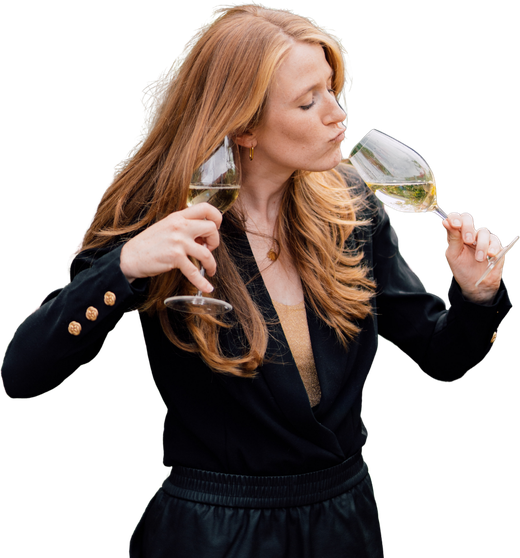
Margot van Lieshout
Wine marketeer, sales expert with over 20 years in the trade, public speaker and international wine judge. Thousands of wines scored from Steiermark to Ningxia, and a trade she knows from the inside out. Wine with Margot is where she helps wine brands tell the stories that sell them.
Want to argue about this? Good.
The conversation about every article happens in the Substack comments, together with the newsletter. Join free and bring opinions.


