

Constanța greets you with salt in the air. On a bright, cold morning I stepped out along the seafront, the Black Sea flat and grey to my right, and let a local guide, Diana Slav, walk me back through two and a half thousand years of it. This is a city that has been Greek, Roman, Ottoman and Romanian in turn, and it wears all those lives at once, sometimes on the same street corner. Out in the tourist harbour a few pirate-themed boats sat waiting to run their dolphin-spotting trips, a little holiday theatre against all that ancient stone. I had come to Romania to judge rosé with the Concours Mondial de Bruxelles, but that morning I was simply a tourist with cold hands, following the old town wherever it wanted to take me.
- This mural was part of peWALL, Constanța's first urban art festival, launched in 2022 under the theme Live, Love, Tech. Romanian artist Wanda Hutira brought her soft, almost watercolour-like style to the city's walls. There is a lovely bit of symbolism here: a wish being blown toward a wall that was itself waiting for something to come true. In a historic centre where beautiful old buildings are still waiting for restoration, "Please come true" feels rather more pointed than it first appears.
- Did you know? The Capitoline Wolf is far more than a Roman legend in Romania. Copies of this famous statue stand in cities across the country because Romanians proudly trace their language and much of their cultural heritage back to the Roman Empire. The she-wolf has become a powerful symbol of Romania's Latin identity.
- On the corner of Bulevardul Tomis and Strada Vasile Alecsandri. Not every grand building in Constanța has been restored yet. This one, draped in tattered protective netting, its cornice cracked and exposed, a stray tree branch growing straight up through what was once a window, sits at the intersection of two of the city's oldest streets. It is a quiet reminder that behind the polished museums and cathedrals, much of Constanța's Belle Époque architecture is still waiting its turn: fenced off, wrapped up, and slowly holding on.
- The Museum of Folk Art is housed in Constanța's first City Hall, built in 1896. The building later became a post and telegraph office before becoming a museum in the 1970s. Look closely at the façade and you will spot an early flirtation with Art Nouveau, mixed with distinctly Romanian architectural details.
- This beautifully carved wooden door belongs to Constanța's Hunchiar Mosque, built in 1868 during the reign of Ottoman Sultan Abdülaziz. The mosque was built for Turkish refugees who had settled in Constanța after the Crimean War. Its name, Hunchiar, means "sovereign" or "ruler", while the mosque is also known as Aziziye after Sultan Abdülaziz.
A morning walk through old Constanța
Diana Slav met us at the edge of the old town and began, of all places, at a wolf. On a quiet corner stands a bronze she-wolf with two small boys reaching up to feed, a copy of the Lupa Capitolina, the wolf who raised Romulus and Remus in the founding legend of Rome. Italy gave the statue to Constanța in 1926, a present between Latin cousins, because Romanians trace their language and their very name back to Rome. A Roman wolf on a Romanian street corner is not a curiosity here. It is a family portrait. I stood with it a while in the morning quiet, that old story cast in metal beside the Black Sea, and it set the tone for everything Diana showed us next: this is a city that has been claimed, over and over, by everyone who ever sailed past it.
We turned into the back streets. Diana walked us past the Museum of Folk Art and let the neighbourhood do the talking, because old Constanța tells its history simply by standing there. One building would be freshly painted, its shutters straight and its stonework scrubbed. The next would be hollow, its windows gone, a tree growing where a room used to be. She pointed out a street sign fixed to a facade that was quietly falling down behind it, and the contrast said more than any plaque could: a grand port that Greece, Rome, the Ottomans and modern Romania each built up in turn, and that time keeps trying to take back.
Then she stopped us at a low wooden door on the Hunchiar Mosque and told us to look closely. Tulips. Rows of them, carved into the grain. Most of us picture the tulip as Dutch, but it reached the Netherlands from the Ottoman Empire, and it was the Ottomans, not the Dutch, who were the great tulip traders of their day. That is why the flower blooms across old Ottoman doorways like this one, worked into the wood long before it ever bloomed in a Dutch garden. Above us the mosque's tower rose thin and pale against the sky. A little further on, a large street mural pulled the walk back into the present, the old town wearing all its layers at once.
- Piața Ovidiu was not always called Ovidiu Square. Until 1947 it was Independence Square, and its name changed after the bronze statue of the Roman poet Ovid was installed here in 1887. Ovid had been exiled to ancient Tomis in AD 8, so the square effectively puts a Roman exile at the heart of modern Constanța. The grand building housing the National Museum of History and Archaeology was originally the city's City Hall, built between 1911 and 1920. Today its collections tell the story of Dobrogea from prehistoric times through Greek and Roman Tomis and into the modern era.
- The bronze statue of the exiled poet Ovid in Ovid Square. Did you know? The Roman poet Ovid spent the last eight years of his life in exile in ancient Tomis, now Constanța. Despite repeatedly pleading with Emperor Augustus to let him return to Rome, he never received a pardon and died on the shores of the Black Sea.
- Even Constanța's manhole covers carry the city's history. This one bears the local coat of arms topped with "ΤΟΜΙΣ" in Greek, the ancient name of the city founded as a Greek colony over 2,500 years ago. The shield below pairs a lighthouse with a sailing ship over stylized waves, a nod to Constanța's identity as a Black Sea port city old and new.
Piața Ovidiu and the poet who was never allowed home
The lane opened onto Piața Ovidiu, the old town's main square, with the National Museum of History and Archaeology filling one side of it. In the middle stands the poet Ovid, cast in bronze, head bowed, cloak gathered around him. Constanța was Tomis when he knew it, a rough frontier outpost at the far edge of the Roman world, and it is where Rome sent him. Emperor Augustus exiled Ovid here around AD 8, for reasons the poet only ever called "a poem and a mistake." He spent eight years writing letters home begging to be recalled, the pardon never came, and he died here on the Black Sea, far from the Rome he never stopped missing. The city that once received him as a punishment now keeps him as its emblem, and his statue is the picture most people carry away from Constanța.
- An ornate, lit interior of the Cathedral of Saints Peter and Paul, chandeliers glowing, a warm counterpoint to the grey seafront.
- Did you know? The Cathedral of Saints Peter and Paul in Constanța is a bridge between eras: built in the 1880s after Romania's independence, it rises above the ancient ruins of Tomis, where Greek, Roman and Byzantine histories meet.
- Looking straight up the 47 metre minaret of the Great Mosque, commissioned by King Carol I in 1910. The climb gives the best view over the Black Sea. Did you know? The Carol I Mosque was among the first reinforced concrete buildings in Romania. Its appearance is inspired by centuries-old Ottoman mosques, but its structure was remarkably modern for the early 20th century, making it both an architectural and an engineering landmark.
- Did you know? When the Constanța Casino opened in 1910, many locals thought its bold Art Nouveau design was far too extravagant and even nicknamed it the "monster on the seafront". Today it is considered Romania's most celebrated Art Nouveau building and one of the country's architectural icons.
- Constanța's Genoese Lighthouse is a little historical cheat sheet. Genoese merchants were trading here as early as the Middle Ages, and a lighthouse is traditionally linked to their presence around 1300. The structure you see today, however, was rebuilt in 1860 to 1861, when Constanța was still Ottoman Kustendje. It stayed operational until 1913, when the newer Carol I lighthouse took over.
The grand seafront: mosque, cathedral, casino and lighthouse
From the square the walk swung towards the water, and the landmarks grew grander with every street. First the Great Mosque, built in the early 1910s under King Carol I, one of the first buildings in Romania raised in reinforced concrete. Its minaret is the reward: a tight spiral of stairs and then the whole city laid out below, the port, the rooftops, the sea running out to the horizon.
A short walk on stands the Cathedral of Saints Peter and Paul, the Orthodox cathedral Constanța built in the 1880s, in the first proud years after Romania won its independence, raised on ground that still holds the ruins of ancient Tomis beneath it. The stone outside is solemn and four-square. Inside, the painted walls and gold glow in the dim light, quiet after the bright street.
Then the seafront itself, and the Constanța Casino, the city's most photographed ghost. Built in flamboyant Art Nouveau in 1910, once the glittering heart of the resort, it has stood empty and weather-beaten for so long that locals took to calling it the monster on the seafront. Even shuttered it is beautiful, all curves and salt-stained glass, staring out at the water it was built to show off. Diana walked us to the Genoese Lighthouse to finish, a slim stone tower raised in 1860 to honour the Genoese merchants who traded here in the Middle Ages, when this coast was a link in the chain that ran all the way back to Italy. We ended the morning where the city has always looked: out to sea.

A table from Transylvania
Back at the hotel, lunch had a theme: Transylvania. It seems a strange pairing at first, a Black Sea coast city and a highland region a long way inland, but the point of the table was to bring the north down to us. The wines were poured by Liliac, Villa Vinèa, Crama La Salina and Familia Darabont, with Jidvei, the giant of Transylvanian wine, keeping our glasses full as it had done all trip.
 94/100
Transylvania sits in the centre of Romania, ringed by the Carpathian Mountains, and its name means quite literally beyond the forest. The vineyards climb the plateau between roughly 400 and 600 metres, where cool continental air and long, gentle autumns make for crisp, fresh, aromatic whites. This was traditionally sweeter wine country, but the growers here have followed the world towards dry, and the results are lovely: high-toned, mineral, built on acidity.
The grape I kept coming back to was Fetească Regală, the royal girl. She is Romania's most planted variety, and she was first identified in the little town of Daneș on the Transylvanian Plateau, about 45 kilometres from Jidvei. The story goes that the name arrived after a visit from King Ferdinand, who was so taken with the wine that royal is what it became. In the glass she is all lime, wildflower and green orchard fruit, fresh and quietly confident. I will come back to her sisters another day, because the Fetească family deserves its own table.

The place I want to go next
I will be honest: sitting there with a Transylvanian white in hand, all I could think was that I wanted to go there. I love a good spine-tingling story, the kind that braids real history with local myth, and no corner of Europe does that quite like Transylvania. This is Dracula country, and the count did not come from nowhere. Bram Stoker never set foot here, but he read enough of the folklore to call the place a whirlpool for the imagination, and in 1897 he dropped his vampire straight into it.
The real shadow behind the legend is Vlad III, Vlad the Impaler, born in 1431 inside the fortified town of Sighișoara, whose medieval walls and clock tower still stand. To the south, Bran Castle guards its narrow mountain pass like a sentinel, storm clouds and all, and although Vlad almost certainly never lived there, it feels like him. And threaded through the peaks is the Transfăgărășan, often called one of the most beautiful mountain roads in the world. None of it did I get to see this time. So, I am doing the thing every good trip leaves you doing already planning the next one, this time up into the forest.
More than Dracula country
For all that romance, the vampire is not why those wines were on my table. Transylvania came to the coast to introduce itself, and it has plenty to say. The region holds more than six thousand hectares of vineyards spread across five growing areas, Târnave, Alba, Sebeș Apold, Aiud and Lechința, with the Târnava valley as its beating heart and one of the coolest wine areas in the whole country. This is a serious, ancient wine region that happens to sit inside the most famous horror story in Europe, and the growers here would quite like you to notice the wine first and the fangs second.
The teaching part is worth a minute. This is a continental climate, warm summers and hard winters, but the plateau earns its reputation on the details. Rain falls somewhere between 500 and 700 millimetres a year, and the Carpathians stand as a wall against the cold northerly and Siberian winds, which is also what gives the region its famous misty mornings. The real prize is the swing between day and night at harvest, often around 12 degrees, which locks acidity and aroma into the fruit. Phylloxera cleared the old vineyards here in the 1880s, and when they were replanted the natives Fetească Albă and Fetească Regală were joined by Sauvignon Blanc, Pinot Noir, Merlot and Chardonnay.
- Jidvei, the giant of Romanian wine, kept our glasses full all trip. Photo: www.themoment.ro.
- Crama La Salina, from the Durgău hills beside the Turda salt mine. Photo: www.themoment.ro.
- Liliac, the Wine of Transylvania, from the Batoș and Lechința hills. Photo: www.themoment.ro.
- Villa Vinèa, the little Tyrol on the Târnava. Photo: www.themoment.ro.
- Familia Darabont, three generations of growers in Bihor County. Photo: www.themoment.ro.
The five wineries that came to pour
Five Transylvanian houses poured for us over the trip, and each made its own case for the region. They are all worth seeking out.
Jidvei is the giant, the largest producer in Romania and a family business run by the Necșulescu family, farming around 2,500 hectares in the Târnave DOC across four sites and turning out something close to 35 million litres a year under more than seventy labels. The vineyards sit low, roughly between 200 and 500 metres, close to the Little and Big Târnava rivers, and that river humidity is exactly what lets the estate make its lovely late-harvest wines. The house is built on aromatic whites, Fetească Regală and Fetească Albă alongside Sauvignon Blanc and Muscat Ottonel, and in 2012 it added two super-premium ranges, Mysterium and Owner's Choice, to sit at the top of the portfolio. It kept a wine bar running at our dinners all week so we could taste beyond the coast, and it was generous and beautifully run.
Villa Vinèa is known as the little Tyrol on the Târnava, planted from 2004 by Heiner Oberrauch of South Tyrol and grown now to around seventy hectares of heavy, silty loam soil packed with limestone and minerals, worked into a gravity-fed cellar. That limestone is the whole point: it is what gives the wines their juicy fruit and their firm mineral spine, and the estate leans into it with slow, temperature-controlled fermentations in stainless steel. It plants a dozen local and international varieties, so alongside the Fetească family you find Gewürztraminer, Rhein Riesling, Muscat Ottonel, Kerner and Pinot Noir. The style is precise and aromatic, all freshness and minerality, and it holds tight to the character of its terroir.
Crama La Salina, founded in 2011, sits on the Durgău hills barely a hundred metres from the Turda salt mine, on ground the Romans planted when the town was called Potaissa. Two investors from Cluj bought a seventy-hectare plot, cleared the old vines and replanted around forty-two hectares with eight varieties, mostly white, from Chardonnay and Sauvignon Blanc to Rhein Riesling, Neuburger and the native Fetească Neagră. This is white-wine country by vocation, and the salty minerality of the place is the fingerprint on everything. Its top wines carry the ISSA name as a tribute to Potaissa, and they are seriously good: the Issa Chardonnay Barrique 2022 was crowned International White Wine Revelation with a Grand Gold at the Concours Mondial de Bruxelles, the very competition that had brought me to Romania.
Liliac simply means bat, and the winery takes the bats that guard its Batoș and Lechința hills as its emblem, a protector of the vines and, whatever the marketing hints, nothing to do with the count. Backed by Austrian investment from 2010 and farming some fifty hectares, it hand-harvests its fruit and makes fresh, fragrant, elegant wines across white, rosé, red and a traditional-method sparkling. That Liliac Sparkling was the glass I kept going back to all week, all fine mousse and a brioche note on the finish. Its real signature, though, is red: it was one of the houses that completed the whole Fetească family, Albă, Regală and Neagră, and its top Fetească Neagră, bottled under the Titan label, is a properly serious, extractive wine. It bottles across a spread of ranges, from the everyday Liliac and Private Selection up to Titan, so there is a bat on the label for most occasions.
Familia Darabont is the family story of the group, three generations of growers in Biharia in Bihor County, a short drive from Oradea, tending more than forty hectares scattered across eighteen small plots of mostly young vines. They grow a long list of grapes, the Fetească trio alongside Furmint, Pinot Gris, Traminer Roz and Chardonnay, and the style is fresh and modern and made to be enjoyed young. Their DA-RA-BO-NT range is exactly that, bright, expansive wines under a screw cap for drinking now, and they have pushed into sparkling with Mezzin and even a canned six per cent spritz. They talk about their wines as the history of their slopes poured into a glass, and they mean it.
Dinner at the Crazy Restaurant
The day ended where a trip like this should, around a long table. Dinner was at the Crazy Restaurant in Constanța, a Mediterranean fusion place with a sense of humour, and the wines kept coming, poured by Jidvei alongside Caii de la Letea, Navigo, De Matei, Olterra and Crama Histria. By the time the plates came round, the table had stopped talking business and started talking like old friends, the way wine people do once the glasses are full. I had walked through two thousand years of history that morning and drunk my way across a mountain region at lunch, and I closed the day on the coast with a full glass and a head full of a country I had barely begun to see.

People also ask
Any questions related to this topic? Maybe you can find your answer here. Click here!
What is there to see in Constanța, Romania?
Constanța's old town packs a lot into a short walk: Ovid Square with its 1887 statue of the exiled poet Ovid, the 1,700-year-old Roman Mosaic Edifice, the Art Nouveau Casino on the cliff, the 1860 Genoese Lighthouse and the Great Mosque built under King Carol I, whose minaret gives the best view over the Black Sea.
What wine is Transylvania known for?
Transylvania, the cool highland region in central Romania ringed by the Carpathians, is best known for crisp, aromatic white wines. Native grapes Fetească Regală and Fetească Albă lead the way, alongside international varieties, with Jidvei the region's largest producer.
What is Fetească Regală?
Fetească Regală, the royal girl, is Romania's most widely planted grape variety. A cool-climate white first identified at Daneș on the Transylvanian Plateau, it makes fresh, aromatic wines with notes of lime, wildflower and green orchard fruit.
Why is Transylvania linked to Dracula?
The Dracula legend blends the real Vlad III, Vlad the Impaler, born in Sighișoara in 1431, with Bram Stoker's 1897 novel, which drew on Romanian folklore. The region's name means beyond the forest, and its castles, mountains and mist have kept the story alive ever since.
Where can you eat well in Constanța?
Constanța has a lively dining scene along the coast. The Crazy Restaurant serves Mediterranean fusion food and is a popular spot for groups, and the city's seafront is lined with places to eat fresh Black Sea fish and local Dobrogean dishes.
Resources
- Romania Tourism, the official tourist board, on Constanța and its old-town landmarks including Ovid Square, the Casino and the Great Mosque. https://romaniatourism.com/constanta.html
- Wikipedia on Constanța, covering the Roman Mosaic Edifice, the Genoese Lighthouse and the city's Greek and Roman history. https://en.wikipedia.org/wiki/Constan%C8%9Ba
- Jidvei, the largest wine producer in Transylvania, on the region's vineyards and native grapes. https://www.jidvei.ro
- VIVC, the Vitis International Variety Catalogue, on Fetească Regală as a natural cross of Fetească Albă and Frâncușă. https://www.vivc.de
- Romania Tourism on Transylvania, its Carpathian setting and the Dracula and Vlad the Impaler heritage at Sighișoara and Bran Castle. https://romaniatourism.com/transylvania.html
- Beverage Trade Network on the Transylvanian Plateau wine region, its area of more than six thousand hectares, plateau elevation and cool continental climate. https://beveragetradenetwork.com/en/resources/wine-regions-118/romania-136/transylvanian-plateau-28.htm
- Villa Vinèa on its founding in 2004 by Heiner Oberrauch of South Tyrol, the little Tyrol on the Târnava, and its limestone-rich gravity-fed cellar. https://villavinea.com
- Crama La Salina on its 2011 founding beside the Turda salt mine, the Roman-era Potaissa and its ISSA range. https://cramalasalina.ro/en/home/
- Crama La Salina on its ISSA range and the Issa Chardonnay Barrique 2022, named International White Wine Revelation with a Grand Gold at the Concours Mondial de Bruxelles. https://cramalasalina.ro/en/wines/
- Liliac, the Wine of Transylvania, on the name meaning bat, its Batoș and Lechința vineyards and its Fetească Neagră. https://www.liliac.com
- Familia Darabont on three generations of growers in Bihor County and more than forty hectares across eighteen plots. https://familiadarabont.ro/en/
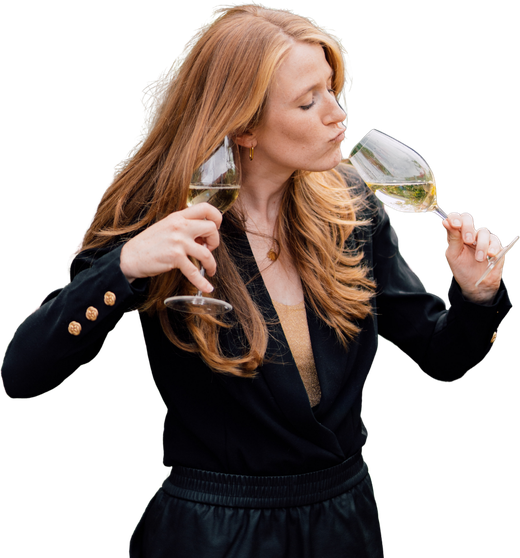
Margot van Lieshout
Wine marketeer, sales expert with over 20 years in the trade, public speaker and international wine judge. Thousands of wines scored from Steiermark to Ningxia, and a trade she knows from the inside out. Wine with Margot is where she helps wine brands tell the stories that sell them.
Want to argue about this? Good.
The conversation about every article happens in the Substack comments, together with the newsletter. Join free and bring opinions.


