

Let's start with a confession. When I signed up for a digital masterclass with the Consorzio Vini Venezia, I had a hypothesis. I expected pleasant wines, good stories, a region with potential. What I didn't expect was to end the session reaching for a 2012 Malanotte DOCG and feeling genuinely annoyed that nobody was talking about it.
That gap, between the quality in the glass and the attention these wines receive internationally, is the whole story. And it starts, as all good wine stories do, a very long time ago.

The Ground Beneath the Vines: Why Caranto Changes Everything
You cannot understand these wines without understanding the soil, and the soil here has a name: Caranto.
A dark ochre alluvial clay, streaked with white calcium carbonate deposits, found at 30 to 70 centimetres beneath the surface of the Piave plain. It is not a glamorous soil. It doesn't have the drama of volcanic basalt or the romance of limestone. But what it does, quietly and reliably, is concentrate minerals in the root zone in a way that expresses directly in the glass, enriching the aromatic content of the grapes. Building structure into the wines and producing that characteristic finish of bitter almond that appears repeatedly across the region's best bottles. White and red alike.
This bitterness is not a flaw. I think it is their fingerprint. Once you know to look for it, you'll find it in the Lison Classico, in the Manzoni Bianco, and, most dramatically, in the Raboso-based reds. Caranto is the connective tissue between the five denominations. It is, in a very real sense, what makes the region coherent.
The Piave river itself completes the picture: alluvial deposits of gravel and sand in the north, shifting to the heavier clay plains further south, creating distinct sub-zones within the same DOC. The climate sits between continental and Adriatic: warm enough for the reds to ripen fully, cool enough for the whites to retain their freshness. It is not a complicated terroir to like, once you understand what it's doing. The soil is only half the story. What the growers built on top of it is the other half, and it looks like nothing else in Italy.


The Bellussera: When a Vine Training System Becomes a Landscape
In the late 19th century, on a farm in Tezze di Piave, two brothers named Bellussi faced a problem threatening vineyards across the Veneto: downy mildew, creeping up from the damp, spring-fed soils along the Piave. Their solution? Was to raise the vines entirely, up to four metres off the ground, trained around central poles and connected by iron wire spokes into a vast geometric canopy. At height, the disease couldn't reach them. Air circulated freely. And between the wide corridors of elevated vine, there was room for other crops, for livestock, for the kind of integrated small-scale farming that sustained entire families under the old sharecropping system. The result, viewed from above, looks like a honeycomb. At ground level, locals call it 'the hanging gardens of the Piave.' This on its own would make me want to go and visit the region myself. Unfortunately, for now, I have to settle for the pictures instead.

Bellussera is a protected method today, and while modern mechanisation has largely replaced it for commercial viticulture, a handful of producers continue to maintain it, and not just for heritage reasons, though the heritage is real. Ca' di Rajo, who we were lucky to digitally meet, manages around 20 hectares of Bellussera-trained vines, some over 70 years old, with roots deep in Caranto soils and a canopy geometry that maximises sun exposure in a way no modern trellis replicates.
 90/100
These vines produce the wine we were tasting, the Nina Manzoni Bianco 2023. If you want to understand why that matters, the wine makes its case more eloquently than I ever can. Pineapple, grapefruit, peaches, a minerality that gives it real backbone, and a touch of four months in barrique that makes everything rounder and more elegant without tipping into oak territory. At 9.70 euro a bottle, it is quietly devastating proof that what happens above ground (the geometry of the canopy, the age of the vine, the logic of a 19th century solution to a fungal problem) ends up directly in your glass.
There is no other wine territory in Italy (possibly in the world even) with this growing method, this soil type, and these grape varieties in combination. It is not marketing. That is just the fact of this place. Which is exactly the objection I get next, so let me take it head on.
Isn't Bellussera Just Another Name for Pergola-Trained Vines?
Well, good question. The Bellussera is the region's most iconic growing method, and it shares the Piave plain with the pergola-trained vines: a training system widespread across northern Italy, from Trentino to Verona, in which vines are guided up vertical posts and out along an inclined or horizontal canopy of wire. The pergola is practical, well-adapted to fertile lowland soils, and effective at managing vigour. What it is not, is distinctive. Walk through a pergola vineyard and you could be in half a dozen Italian regions. Walk through a Bellussera vineyard, with its cathedral-like canopy of spoke-trained vines rising four metres off the ground, each pole supporting four plants radiating outward like a wheel, and you are, unambiguously, in the Piave. That is the difference. Both systems do a job. Only one of them is irreplaceable.
And People Have Been Farming This Land Since When, Exactly?
Here's the detail that tends to stop a conversation: the Paleoveneti, the Indo-European people who settled this corner of northeastern Italy from the middle of the second millennium BC. They were already cultivating vines here before Rome was even a republic. Wine was not an afterthought for them. It was currency, ritual, and commerce. The Romans expanded what was already there. Then came La Serenissima, the Most Serene Republic of Venice, which for nearly five centuries controlled not just canals and trade routes but the wine culture of an entire region, importing wines from Greek islands, distributing them across the continent, and building an agricultural economy in its hinterland that outlasted the Republic itself.
After the fall of La Serenissima in 1797, the land kept producing. And in 1876, the Royal School of Viticulture and Oenology opened in Conegliano: a technical institution that would shape the region's grape varieties, growing methods, and winemaking philosophy for generations. That school, incidentally, is where Manzoni Bianco was born.
So, when someone tells you this is an 'emerging' wine region, just smile politely. The vines have been here longer than most countries.
The Grapes: Four Varieties Worth Knowing
The Consorzio Vini Venezia's five denominations permit a surprisingly broad cast of 47 varieties. From international workhorses like Merlot and Pinot Grigio to a collection of native grapes that most wine drinkers couldn't name if you spotted them the first letter (neither could I). But it's the natives that interest me here.

Here's what I keep coming back to with Manzoni Bianco: it shouldn't work as well as it does. A 20th century crossing (think Riesling meets Pinot Blanc) created at the Conegliano school might sound like a footnote, but it's not. In the glass it feels like anything but. Floral, structured, fresh enough to keep you reaching. I'd be curious whether it lands the same way for you, or whether you'd push it further toward the aromatic end. Because there's an argument either way.
Tai (Friulano) is the mineral backbone of Lison. There's a naming story here that tells you something about how the wine world works. This grape used to be called Tocai Friulano until the EU ruled that the name was too close to Hungary's Tokaji and banned it. So Veneto producers rebranded it to 'Tai', Friuli kept Friulano, and a grape with centuries of history in northeastern Italy found itself explaining its own name at every turn. It hasn't slowed the wine down. It has, arguably, made it easier to overlook, which is a shame, because Tai in the Lison Classico DOCG is one of the most quietly compelling whites in Italy. At least that is what I think.
It thrives here in a way that feels almost pre-arranged. The calcium-rich Caranto soils press a mineral precision into it that you don't find in the same grape grown elsewhere: white flowers, a focused citrus thread, and that characteristic bitter almond finish that arrives reliably at the end, like the soil signing its name. It is not a grape that performs. It builds a case, glass after glass, and the case is a good one.
Acacia blossom, pear and grapefruit · a bright citrusy edge · the bitter-almond finish the Caranto insists on leaving behind
The Ai Galli Lison Classico DOCG 2024 (13.5%) is the proof. Tasted blind, you might reach for Sauvignon Blanc as a reference point, with that same crackling, expressive quality on the nose, except this wine isn't borrowing from anyone. Acacia blossom, pear, grapefruit, a citrusy edge that keeps everything bright, and then right at the finish, that almond note the Caranto soil insists on leaving behind. Medium-plus acidity, clean and focused all the way through. We finished the bottle the same night. It didn't give us much choice.
And here's what makes that more remarkable: Lison DOCG is tiny in production, almost invisible on export wine lists, and priced as though nobody has noticed it yet. For now, they haven't. That won't last forever, and at just 11.30 euro a bottle, you might want to get there first.

Then the reds arrive and the whole conversation shifts register. Raboso Piave is not subtle. High acidity, firm tannins, the kind of grip that makes you put the glass down and sit on it for a while. Mario Soldati called it 'a wine full of mystery'. I'd add that the mystery is partly whether you have the patience for it. I did. I think you might too, especially with a few years on it.
 91/100
The Castello di Roncade Raboso del Piave DOC 2020 (13.5%) makes the point better than I can. Dark fruit, blackberries, brambles, sour cherry, dried violets on the nose. And then the tannins arrive like a firm handshake. Aged 36 months in large oak casks, it still feels remarkably fresh at six years old. There's a hint of oak peaking around the corner, subtle enough to balance rather than dominate. This wine does not perform for you. It waits for you to meet it halfway, and when you do, preferably with something slow braised on the plate, it delivers completely. Either you have the patience for Raboso, or you don't. If you do, this is your entry point.
Refosco is where I'd start if I were bringing someone to this region for the first time. Dark berries, an herbal edge, freshness that makes it feel current without trying too hard. It doesn't demand anything. It just shows up and does the job. And somehow that feels like the most underrated quality a wine can have.
The Five Denominations, and What Each One Is Actually For
Five denominations sit under the Consorzio, and they are not five takes on the same wine. Piave DOC is the broad foundation, the everyday Raboso and Manzoni Bianco already in your glass. Venezia DOC is the wide front door. Lison-Pramaggiore DOC is the bilingual strip along the Friuli border. Lison DOCG is the white crown. And one red sits above all of them, which is where I want to start.
- Filming the Raboso as it dries on wooden racks in an old stone loft, the appassimento the Malanotte method depends on.
- Trays of Raboso resting through the winter, the fruit slowly raisining before it is pressed.
- Partially dried Raboso bunches on the cane racks, concentrated and ready for the cellar.
- Winter pruning in the Piave vineyards, bare canes tied down against a cold blue sky.
Malanotte del Piave DOCG

And then there is Malanotte del Piave DOCG, the region's prestige red and the reason I ended the masterclass slightly annoyed on its behalf. It is a partially dried interpretation of Raboso: between 15 and 30 percent of the grapes are laid out to raisin for a few months before pressing, which concentrates everything Raboso already has and softens the edges that make young Raboso such hard work. The result is a wine with the structure of a serious red, the depth of an appassimento, and a price that sits well below comparable quality from better-known regions, arguably the most underpriced prestige red in Italy if you ask me.
Fig, dark plum and dried raisins · a subtle floral lift and warm spice · tannins softened to velvet over eight years
The Anna Spinato 2017 (20% dried grapes, 24 months in large oak) showed exactly what the method is reaching for. Fig, dark plum, dried raisins, a subtle floral lift, spice that gives it a kick, and tannins that have softened into something close to velvety over eight years. It reminded me of a good Amarone. The comparison is not accidental, the philosophy is the same: concentration through drying, complexity through time. Malanotte simply does it with Raboso, on Caranto soils, in a region most people still haven't discovered.

And then there is the Antonio Facchin 'Unno' 2012. Thirty percent dried grapes, 24 months in stainless steel, 36 in large Slavonian oak, 12 in bottle. Fourteen years old and wearing every one of them beautifully. Tobacco leaf, Morello cherry preserve, blackcurrants, dried rose petals, balsamic notes, a spine of acidity that keeps everything alive. Savoury, a little austere, with a tannin structure that feels earned rather than imposed. Nobody outside this region is talking about it. That is, frankly, baffling.
Piave DOC

Under that prestige red sits the appellation it climbs out of. Piave DOC is the broad foundation of the whole place, the everyday tier that carries the two native grapes the region is actually built on. On the white side, Manzoni Bianco: a Riesling and Pinot Bianco cross bred at the Conegliano wine school a century ago, aromatic enough to be interesting and structured enough to hold food, the modern white this region should be printing on its business cards. On the red side, Raboso: high acid, firm tannin, written off for years as too rustic, and completely alive in the right hands. Both opened this tasting, and both made the same quiet case, that the everyday tier here is already serious business. Malanotte is what that Raboso becomes when it dries and concentrates. Piave DOC is where it starts, and there is nothing entry-level about the starting line.
Venezia DOC

Venezia DOC is the region's front door, and a wide one. At 2,815 hectares it is by far the largest of the five, sprawling across the provinces of Venice and Treviso and waving in both the international grapes and the natives. Breadth like that usually means a wine with nothing in particular to say. Here it earns its keep: this is the bottle that gets a curious stranger into the room, the by-the-glass pour easy enough for a Tuesday and interesting enough that whoever is drinking it asks a second question. Underrate it at your own risk.
 90/100
The Bosco del Merlo Refosco Riserva 2020 (14.5%) made a strong case for why this appellation deserves more than its entry-level reputation suggests. Leathery notes, forest floor, sweet-sour cherries, candied apples (those ones you get at a carnival), blackberry jam, dried plums and figs, and a hint of graphite that makes the finish linger with a kind of revealing curiosity. Elegant and bold at the same time. Six years old and the juiciness is still remarkable. I'd start drinking it now rather than waiting. It is at that perfect point where freshness and complexity are still holding hands, and that does not last forever.
Lison-Pramaggiore DOC

Lison-Pramaggiore DOC covers 174 hectares along the eastern edge of the Veneto, right where it bleeds into Friuli, and the grape list gives the game away: Friulano, Pinot Grigio, Chardonnay, Verduzzo and Pinot Bianco on the white side, then Refosco, Merlot, Cabernet Franc, Cabernet Sauvignon, Carmenere and Malbec on the red. That is not a region hedging its bets. That is a border town that learned to speak two wine languages and stopped apologising for either. The Adriatic sits close enough to cool the nights, and those swings between warm days and cool evenings keep the whites nervy and the reds fresh. Put the whites next to the local seafood and the reds next to the inland meat, and you understand the place in two courses.
 89/100
Le Carline's organic Refosco 2022 was the appellation in a glass. Younger and more rustic than the Bosco del Merlo Riserva, but honest in a way that earns its place at the table. Wild cherries, crushed herbs, chocolate, earthiness, blackberries, prunes, brambles. The acidity is crisp, the dark fruit lingers, and there is already a layer of development that makes it more interesting than its age suggests. Give it another five years and it will be a different conversation entirely. Right now, it is already good enough to enjoy, which is its own kind of argument.
Lison DOCG

Lison DOCG is the white crown, and the most quietly remarkable number in the entire Consorzio: just 44 hectares of vines, producing around 120,000 to 180,000 bottles a year. That is almost nothing for an entire appellation. Minimum 85% Friulano, usually the full 100%. It is one of Italy's smallest and least known DOCGs, and the only one that refuses to pick a side of the regional border: it straddles Veneto and Friuli-Venezia Giulia. The Classico subzone is tighter still, pinned to the handful of hamlets where the Caranto runs deepest. Prices stay modest, usually 11 to 18 euro a bottle, which makes the quality-to-value ratio here almost impossible to say out loud to anyone who hasn't tasted it. It sounds like a misprint.
Mazzolada La Braghina's 'L'Eugenia '63' was the quieter revelation of the entire tasting. Freshly picked apples, chamomile flowers, peach, a touch of vanilla and almond, and a citrus thread pulling through to a long dry finish. I already knew I loved Friulano. This reminded me why, and then showed me something I hadn't expected to find in it. It is anything but expected. Just give it your try.
Freshly picked apples and chamomile flowers · peach with a touch of vanilla and almond · a citrus thread pulling to a long dry finish
So: Is This Italy's Next Serious Wine Region?
So, is this Italy's next serious wine region? Wrong question. It already is one. The only thing still up for debate is how long the rest of the world takes to notice. Taste across the full range, the whites through to the prestige reds, and what lands is the coherence of the place. The Caranto runs under all of it. The Paleoveneti were working these fields three thousand years ago. The Bellussera vines at Ca' di Rajo are seventy years old and still earning their keep. The Facchin Malanotte 2012 is resting in someone's cellar right now, and it belongs on the best restaurant lists in Europe.
None of that is potential waiting to be realised. It is already real, already in the bottle. And in a wine world where the interesting drinkers are hunting for exactly this, a wine with a real place and a real story behind it, worth more than one more familiar label on the shelf, this region already holds every card it needs. It just needs more people to look for it.
A place that grows Raboso, ripens Manzoni Bianco, sits on Caranto and hangs its vines in the Bellussera gardens has no business being anyone's insider secret.
So let's stop treating it like one. Pull the cork, pour it for someone who is sure they already know Italian wine, and watch their face when you tell them where it is from. Salute.
About the Consorzio Vini Venezia
Established in 2011, the Consorzio protects and promotes five denominations: Piave DOC, Malanotte del Piave DOCG, Venezia DOC, Lison-Pramaggiore DOC, and Lison DOCG. Members number over 200 producers across the historic Venice hinterland.
People also ask
Any questions related to this topic? Maybe you can find your answer here. Click here!
What is Caranto soil and why does it matter for Veneto wine?
Caranto is a calcium-rich alluvial clay found 30 to 70 centimetres beneath the Piave plain in the Consorzio Vini Venezia. It concentrates minerals in the root zone, building structure and leaving a signature bitter-almond finish that runs through both the whites and the reds. It is the single feature that makes the region's five denominations taste like one coherent place.
What is the Bellussera vine training system?
The Bellussera is a 19th-century training method from Tezze di Piave that lifts vines up to four metres off the ground, fanned across wires between living support trees into a vast geometric canopy. It was invented to escape the downy mildew rising from the damp Piave soils, and locals call it 'the hanging gardens of the Piave.' A handful of producers such as Ca' di Rajo still work it on vines more than seventy years old.
What is Malanotte del Piave DOCG?
Malanotte del Piave DOCG is the prestige red of the Consorzio Vini Venezia, made from partially dried Raboso grapes: 15 to 30 percent of the harvest is laid out to raisin before pressing. The drying concentrates the fruit and softens the fierce tannins of young Raboso, giving a structured, age-worthy wine in the appassimento style. It is arguably one of the most underpriced prestige reds in Italy.
What grapes does the Consorzio Vini Venezia grow?
The five denominations permit 47 varieties, from international grapes like Merlot and Pinot Grigio to the natives that define the region. The ones worth knowing are Manzoni Bianco, a Riesling and Pinot Bianco cross, along with Tai (Friulano), Raboso Piave and Refosco. The whites bring mineral precision and the reds bring structure and acidity built to age.
Where is the Lison DOCG wine region?
Lison DOCG straddles the border of Veneto and Friuli-Venezia Giulia in northeastern Italy, and is one of the country's smallest DOCGs at just 44 hectares. It produces around 120,000 to 180,000 bottles a year, made from a minimum 85 percent Friulano and usually 100 percent. The tighter Classico subzone sits over the hamlets where the Caranto clay runs deepest.
Resources
- Consorzio Vini Venezia, on the five denominations, the 2011 establishment and the 200-plus member producers: https://www.consorziovinivenezia.it
- Ca' di Rajo, on the Bellussera training method and its 70-year-old vines: https://www.cadirajo.it/en/bellussera/
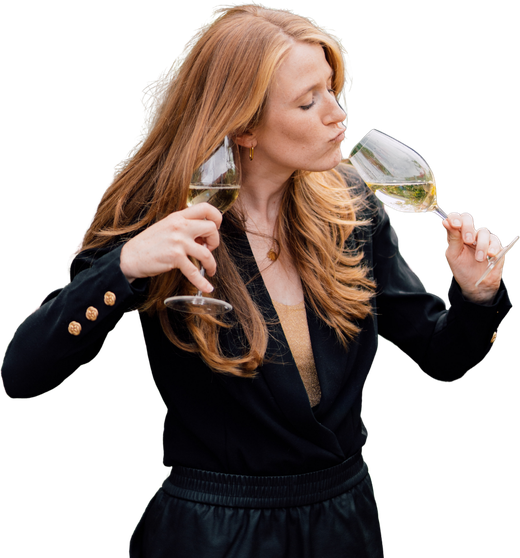
Margot van Lieshout
Wine marketeer, sales expert with over 20 years in the trade, public speaker and international wine judge. Thousands of wines scored from Steiermark to Ningxia, and a trade she knows from the inside out. Wine with Margot is where she helps wine brands tell the stories that sell them.
Want to argue about this? Good.
The conversation about every article happens in the Substack comments, together with the newsletter. Join free and bring opinions.


