

I went looking for Carnuntum in my WSET Diploma books before the trip and found almost nothing: a shape on the Austrian wine map with no name attached, and not a single line of text to go with it. That gap is the whole story. Carnuntum has been growing wine for two thousand years, sits barely half an hour from Vienna, and still travels under the radar of almost everyone outside Austria. So, when the Österreichische Traditionsweingüter invited me to their Single Vineyard Summit in September 2024, I said yes before I had finished reading the email.
What I found over the next two days was a region quietly making some of Austria's most exciting reds, with a wind, a river and a forest all conspiring to make it possible. Let me take you along, tractor ride included.
En route to Carnuntum

It was roasting, 32 degrees and windy, the day we drove out of Vienna toward Carnuntum, a busload of wine journalists from Norway to China and everywhere in between. Heat and wind are not the first things that come to mind when you picture Austria, and that little surprise turned out to be the whole point of the region.
We pulled in at Weingut Netzl, where producers from across Carnuntum had gathered to pour a regional overview tasting. The reds stopped me in my tracks: Zweigelt and Blaufränkisch, the two local heroes, sometimes solo, sometimes blended with a little Merlot or Cabernet Sauvignon. There is even some Syrah in the ground here, planted back when it had a moment in the early nineties. In my wildest dreams I would not have guessed Austria for Syrah.

Where Carnuntum fits in Austria's DAC pyramid
A quick word on how Austrian quality wine is organised, because it makes the rest of the trip read better. The DAC system is built on defined terroirs, and it climbs in three steps: Gebietswein, the regional wines at the base, Ortswein, the village wines in the middle, and Riedenwein, the single-vineyard wines at the top. It was the Riedenwein, and the tier just above it, that made me sit up.
Carnuntum has six Ortswein villages: Stixneusiedl, Göttlesbrunn, Höflein, Petronell-Carnuntum, Hainburg and Prellenkirchen. Between them they hold around 39 named single vineyards, and nine of those carry the highest badge of all, the Erste Lagen, the region's grand-cru sites. Each one has its own soil and its own character, which is exactly why the wines taste so different from one village to the next. Tasting through the Erste Lagen back-to-back, I kept thinking the same thing: this region deserves a podium.
Here is the part that still surprises people. For all that history and quality, Carnuntum only earned its own DAC with the 2019 vintage. For decades it was treated as the southern tail of the Weinviertel, a place for easy, everyday drinking rather than one worth mapping vineyard by vineyard. A winemaker named Pitnauer started pushing back against that as early as 1992, convinced the region had age-worthy, site-specific wine in it. He was right. The paperwork just took a while to catch up.
- These are traditional wine cellar houses, known in Austria as Presshäuser (press houses) that sit above underground wine cellars, and together they form a Kellergasse (cellar lane). They are one of the defining architectural features of eastern Austria's wine regions, including Carnuntum.
- A dragonfly landed on my tasting notes booklet.
- Margot smiling while being driven around through Carnuntum.
A tractor ride through the vineyards
While I was deep in conversation about Carnuntum's reds with my Norwegian colleague Mona Haugen-Kind from VinArena, I spotted a dragonfly trapped in the tasting room and carried it back outside to the vines. Good timing, as it turned out, because we were all being called out for a surprise. Waiting in the vineyard was a line of tractors, engines running, ready to drive us through the vines.
A childhood dream and I grinned the whole way. The wind in my hair, the sun overhead, the company excellent, my son back home no doubt jealous of the ride. And that wind kept nagging at me, so a few of us asked whether it was normal for the region. The answer turned out to explain almost everything about how Carnuntum makes wine.
St. Ulrich, the church built on a Roman fort
Somewhere on the ride a church came into view on a hilltop above the vines, and I could not stop looking at it. It is the Pfarrkirche St. Ulrich, sitting high over the vineyards around Höflein, and it is one of those landmarks you can pick out from right across the region. A square tower topped with an octagonal spire and a clock, ringed by a low stone wall, with a single road winding up to it through the vines. The tractor tours around Höflein and Göttlesbrunn pass directly beneath it, which is exactly how we came upon it.

What makes the church more than pretty is what it is built on. St. Ulrich stands on the foundations of a Roman fort, a Kleinkastell, and the defensive wall around its cemetery still has Roman stonework set into it. The same hands that raised Roman Carnuntum down the road left their stones up here too. The church itself goes back to around the twelfth century, Romanesque at its core, with an early Gothic tower and a Baroque refit inside from later on.
From the tractor it was the whole story of Carnuntum in a single frame: Roman foundations, medieval stone, vineyards falling away on every side and the rolling Arbesthaler Hills behind. If you ever want one photograph that explains why this region is worth the trip, it is the view up to St. Ulrich.
The Kellergasse, a village without chimneys
Between two vineyards the tractor turned off the track and took us down a Kellergasse, a narrow lane lined on one side by small, whitewashed houses standing shoulder to shoulder. With a view over the vineyards. It looked like a miniature village, except nobody lives here and no smoke ever rises from the roofs. These are the Presshäuser, the press houses, and the lane they sit on is one of the oldest habits in Austrian wine.
Each little house is really three things in one. At the front is the Presshaus, the room above ground where the grapes were pressed and the year's work happened. Behind it runs the Kellerhals, the cellar neck, a cool passage that leads you back and down. And beneath the whole thing lies the cellar itself, dug into the loess, where the wine rested away from the heat. Walk the lane and you are looking at the front doors of dozens of tiny wineries, with all the real business going on underground.
- Traditional whitewashed Presshäuser (wine press houses) line a quiet cellar lane in Carnuntum. Used for centuries to press grapes and store wine in underground cellars, they remain an iconic part of the region's winemaking heritage. Image: Anna Stöcher, Austrian Wine.
- Just below Pfarrkirche St. Ulrich, a tractor passes through Carnuntum's historic cellar lane, where whitewashed press houses and vineyards reflect the region's long-standing wine traditions.
The whitewash is not only for looks. The lime coating kept mould off the walls, bounced the summer sun back so the cellars below stayed cool, and cost almost nothing to reapply each year, so every grower could keep their house bright. Row after row of these lime-white fronts, and not a single chimney between them, because nobody cooked or slept here. It was a working street, not a place to live, which is why locals still call a Kellergasse a village without chimneys.
The lanes themselves tell you how Carnuntum grew up. For a long time, the growers here handed their grapes to the big aristocratic estates and never made wine under their own name. It was only through the land reforms of the nineteenth century that ordinary families won the right to press and cellar their own fruit, and when they did, they built these press houses on the edge of the village, side by side, until a whole lane had formed. You can still drive down them in places like Prellenkirchen, Arbesthal and Edelstal, and standing among them you feel the moment Carnuntum stopped being someone else's vineyard and started being its own.

The wind that makes the wine
The Danube runs just behind the hills of Carnuntum, and the region works like a funnel for the air moving over the river. That constant breeze is the secret weapon. It cools the grapes through the hot summers, so they hold on to their acidity, and it dries the vines fast after rain, which keeps disease pressure remarkably low. It is also why the ridgelines bristle with windmills, turning all that moving air into power.
- Margot together with Martin Netzl sitting at the back of the tractor.
- Netzl pointing out the route and the large green Maria Ellender forest on the map.
The hills themselves are gravel, dumped here by the Danube over millennia. Vineyards climb from around 180 metres up to the Schüttersberg at 284 metres, the highest point, and most of the hilltops wear a cap of trees: the Maria Ellender forest, roughly 2000 hectares of it. That forest is a quiet guardian, shielding the south-facing vines from the harshest river winds and holding the daytime temperature steady, because the air under the canopy stays cool. Carnuntum is one of the warmest corners of Austria, easily hitting 34 degrees in summer, so that moderation matters.
There is rain enough, too, and it comes from an unusual direction: Hungary, to the east. The weather that reaches most of Austria arrives from the west, but the Alpine ranges wring it dry long before it gets this far, so Carnuntum takes its water from the other side.
And then there is the dirt, which is where I get properly nerdy. The soils here were laid down by the ancient Pannonian Sea, and they change every fifty metres or so: river deposits, deep loess, clay, quartz-rich terraces, granite and gneiss, even pockets of poor limestone, with loam down on the valley floor. Riding through it with Martin Netzl narrating his own vineyards, climate and soils, I understood the region in a way no textbook had managed. There is something a grower can tell you about their own land that a book never will.
- Windy Margot at the back of the tractor with the windmills behind.
- Mona Haugen-Kind looking to where Netzl points out the origins of Carnuntum's history, behind the hills where the Danube lies.
Two thousand years of vines
Bumping along on the tractor, Martin Netzl pointed past the hills to where Carnuntum's story began. The name comes from the Roman city of Carnuntum, a busy military outpost and trading hub on the Danube, and wine has been made on this land for over two thousand years. You can still read that heritage in the archaeological sites and old terraces scattered across the region, the thread running unbroken from Roman cellars to the bottles being poured today.

From the Leitha Range to the Hundsheimer Mountains
Carnuntum falls into three distinct stretches, running southwest to east, each with its own feel:
- The Leitha Range in the southwest, where west-facing vineyards sit sheltered from the climatic pull of the Neusiedlersee.
- The Arbesthaler Hills at the heart of the region, home to the celebrated wine villages of Stixneusiedl, Göttlesbrunn, Höflein and Arbesthal. Protected by the Maria Ellender forest, the south-facing vineyards here soak up over 2000 hours of sunshine a year.
- The Hundsheimer Mountains in the east, rising to the region's highest point at 480 metres, their vineyards cooled by the forest edges around them.

The wines of Carnuntum: a red powerhouse with rising whites

Austria is famous the world over for Grüner Veltliner and Riesling, but Carnuntum sets itself apart as red-wine country. The signatures are that juicy, red-fruited Zweigelt and its darker, more structured cousin Blaufränkisch, tannic and built to age, both thoroughly at home in this warm, windy climate. The whites are the region's quiet strength. I asked Johannes Pitnauer whether whites were on the rise here, given how the market keeps drifting toward lighter styles, and he told me the reds still make Carnuntum's name, but demand for its whites is climbing steadily. The best of them come from Grüner Veltliner and Chardonnay.
I will save my tasting notes, and the top ten wines I picked out alongside Johannes Fiala, for a dedicated piece coming soon. Fiala publishes Austria's Weisswein and Rotwein guides every year, scoring the new releases, and he is worth following if you want to go deeper on Carnuntum.
Why Carnuntum belongs on your wine radar
Carnuntum will never be Austria's loudest wine name, and honestly that is part of the charm. It is one of the country's genuinely underrated treasures: two thousand years of history, a terroir that shifts under your feet every fifty metres, and a new wave of growers with something to prove. Whether you are drawn to the fruit-driven Zweigelt, the age-worthy Blaufränkisch or those quietly excellent whites, there is a wine here with your name on it.
I met this region the best possible way, hobbling through the vines on the back of a tractor, notebook bouncing, wind everywhere. If you seek out the hidden corners of the wine world, put Carnuntum on your list. It is having its moment, and you want to be early. When you go, come back and tell me how it went.
People also ask
Any questions related to this topic? Maybe you can find your answer here. Click here!
Where is the Carnuntum wine region?
Carnuntum is a wine region in Lower Austria (Niederösterreich), just southeast of Vienna along the Danube and close to the Slovak and Hungarian borders. It sits roughly half an hour from the capital, which makes it an easy trip for anyone based in or visiting Vienna.
What wines is Carnuntum known for?
Carnuntum is Austria's red-wine specialist. Its signature grapes are Zweigelt, juicy and red-fruited, and Blaufränkisch, structured and age-worthy, bottled on their own or blended with a little Merlot or Cabernet Sauvignon. Whites from Grüner Veltliner and Chardonnay are a fast-growing strength.
When did Carnuntum become a DAC?
Carnuntum defined its own DAC regulations with the 2019 vintage, giving the region a protected origin of its own after decades of being treated as an extension of the Weinviertel. The system recognises six Ortswein villages, around 39 single vineyards and nine top Erste Lagen sites.
Why is it so windy in Carnuntum?
The Danube runs behind the region's hills, and Carnuntum acts as a funnel for the air moving over the river. That constant wind cools the grapes in summer, dries the vines quickly after rain to keep disease pressure low, and is the reason the ridgelines are dotted with windmills.
Is Carnuntum worth visiting?
Yes. Carnuntum is one of Austria's most underrated wine regions, barely half an hour from Vienna, with two thousand years of winemaking history, excellent reds and a landscape shaped by wind, river and forest. Many estates welcome visitors for tastings and vineyard tours.
Resources
- Austrian Wine, the country's official wine body, on the Carnuntum region, its DAC and its terroir. https://www.austrianwine.com/our-wine/winegrowing-regions/niederoesterreich-lower-austria/carnuntum
- Österreichische Traditionsweingüter (ÖTW), host of the Single Vineyard Summit and keeper of the Erste Lage classification. https://www.traditionsweingueter.at/
- Wine and Partners, on the long road to identity and the thirty years it took Carnuntum to win its own 2019 DAC. https://wine-partners.at/en/news/carnuntum-thirty-years
- Weingut Netzl, the family estate that hosted the regional overview tasting on the trip. https://www.netzl.net/
- Weingut Pitnauer, the family that championed a DAC of Carnuntum's own from the early nineties. https://www.pitnauer.com/en
- Johannes Fiala's Austrian Wine Guide, the annual Weisswein and Rotwein guides scoring the new releases. https://weinguide.at/
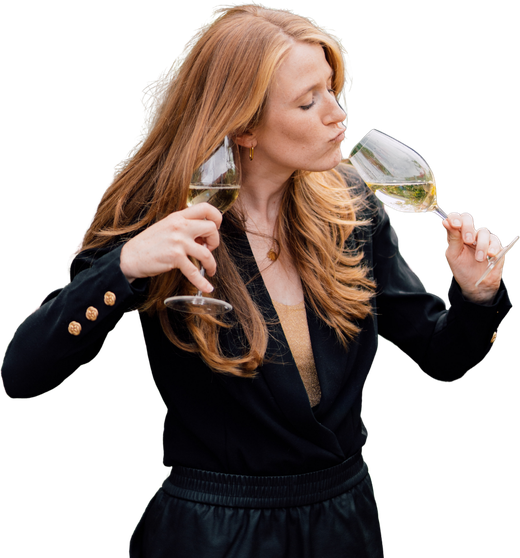
Margot van Lieshout
Wine marketeer, sales expert with over 20 years in the trade, public speaker and international wine judge. Thousands of wines scored from Steiermark to Ningxia, and a trade she knows from the inside out. Wine with Margot is where she helps wine brands tell the stories that sell them.
Want to argue about this? Good.
The conversation about every article happens in the Substack comments, together with the newsletter. Join free and bring opinions.


