

The last flight of the day should have been routine. Another line-up of Grüner Veltliner, perhaps a Blaufränkisch or two, a polite nod to Sauvignon Blanc, then the tram home through a rainy Amsterdam evening. Instead, that final series of glasses at the Austrian wine tasting on 27 October at the Amstel Boathouse felt like a controlled detonation of old assumptions.
The tasting was a collaboration between Austrian Wine and Advantage Austria (WKO), with writer and educator Simon J. Woolf as the architect of the line-up. Simon has lived in Austria for around a decade, and it shows. He has grown deeply fond of the country, its people and its wines, and his particular expertise in natural and orange wines was woven through the day with quiet precision. If you had not known his background, you might have assumed this was a regular trade tasting. Natural and low-intervention wines were threaded seamlessly into the flights, with only two dedicated orange flights signalling that something different was happening beneath the surface.

In front of me were wines that did not fit the tired clichés of crisp Grüner and sturdy reds. They were textural, sometimes raw, sometimes polished, often unapologetically different. In a silent tasting format that stripped away storytelling and sales pitches, the wines themselves had to do the talking. And what they said, very clearly, is that Austria is no longer content to be defined by a single grape or a single style.
What follows is not a neat summary of an event, but a snapshot of where Austria is heading right now: a market in transition, driven by a new generation of winemakers, shifting consumer expectations and regions that are tired of being underestimated.
Natural Austria has moved from the fringe table to the main flight
Natural wine in Austria is no longer a side-show reserved for the fringe tables at a fair. At this tasting, the natural and low-intervention segment felt less like a rebellion and more like a confident parallel track within the broader Austrian offer. At one point I overheard an Austrian importer sum up his impressions: the natural wines were good, but he still could not see them being sold, because people just do not know what to do with them.

It is a familiar refrain, and it says far more about the trade's reluctance than about consumer capability. If we can sell skin-contact whites, pet-nat spritzes and orange negronis, we can sell clean, characterful natural Austrian wines. The problem is rarely that guests do not know what to do with it. The problem is that too many gatekeepers still do not know how to frame, position and stand behind these wines themselves.
Simon's approach to the line-up made that painfully clear. He had quietly added a natural wine to each flight. I could pick them out almost every time: a slight raw edge, an energy that to me signals natural, yet they were all pure, precise and confident within their own class. No mouse, no chaos, no excuses. By placing them inside a conventional tasting structure rather than on a separate experimental table, he did more to normalise natural Austria than a dozen panel discussions. In Steiermark in particular, a region I wrote about in my earlier piece on the natural wine movement there, the old tension between coexistence and conflict felt more resolved. These wines were not trying to shock. They were trying to be good.
The wines are ready. It is the mindset of the market that is lagging behind.

The two dedicated orange flights made the same point through skin contact, the technique of leaving white grape juice on its skins so it takes on colour, tannin and grip. Extended maceration gave these wines gentle tannins, tea-like texture and a weight that pulled them firmly into food territory, from citrus-driven and lifted to herbal and stone-fruited. Producers like Gernot Heinrich, Gerhard Pittnauer and Johannes Zillinger are not dabbling. They are building a category that deserves to be listed and priced with the same confidence as Austria's classic whites. There is far more to say here than one section allows, which is why the natural and orange story has its own deep dive. For now, the takeaway is simple: what Austria itself still files on paper under "alternative wines" is already behaving, in the room, like the main offer.
Austria's Seven Elements, and the eighth one the glass is quietly adding

Austrian Wine likes to frame its message around Seven Elements that define the country's wines: climate, land, grapes, culture, nature, value for money and flavour. It is a neat, export-ready story, and the Amsterdam tasting confirmed most of it. The climate tension showed in the freshness of the whites, the diversity of soils showed in the gap between Steiermark and Carnuntum, indigenous grapes held their own beside international ones, and the value in the 10-to-20-euro band remains one of Austria's strongest cards.
But the wines are now adding an eighth element the resources do not mention: a willingness to bend their own rules. From natural and orange wines woven into conventional flights to volcanic expressions from Vulkanland and reds that prioritise energy over oak, Austria is no longer just delivering on its official seven. It is testing how far that framework can stretch without losing its core.
Steiermark overdelivered on Sauvignon Blanc, PIWI and volcanic Vulkanland
 92/100
If one region overdelivered, it was Steiermark. The Sauvignon Blanc was a masterclass in how far the style has come and how little the international conversation has caught up. While global attention still gravitates to the Loire and New Zealand, Steiermark is crafting Sauvignon that is textural, mineral and refreshingly free of caricatured thiol fireworks. These wines are not imitating anyone. They are more savoury than tropical, with a strong sense of site and a clear line of acidity, and they offer buyers a third way beyond the tired Old World versus Marlborough binary.
 90/100
The region is also where PIWI varieties, the fungus-resistant grapes bred to need far less spraying, are taken seriously rather than treated as a curiosity. The best examples I tasted were clean, precise and quietly ambitious, with no sense of compromise. Within Steiermark, Vulkanland remains the most intriguing subplot: volcanic wines with salinity, grip and a quiet power that builds on the palate rather than shouting from the nose. Volcanic terroir and sustainable viticulture are two of the most relevant conversations in wine right now, and Steiermark lets you plug into both with styles that still feel genuinely undiscovered.
Blaufränkisch and Zweigelt are shedding their old skins
 89/100
If your mental model of Austrian reds is dark, oak-laden Blaufränkisch and plush, crowd-pleasing Zweigelt, the new wave will feel like a reset. Blaufränkisch showed its other side with real consistency: more fruit-forward, juicy, high in acidity and far less reliant on heavy oak as a quality signal. That said, it was also Simon's personal choice to make sure this style of Blaufränkisch was shown throughout the tasting, and I think he succeeds. The shift is strategic, not just stylistic. Younger winemakers are less interested in chasing an international big-red aesthetic and more focused on Blaufränkisch as a cool-climate, gastronomic variety, with oak as a supporting actor rather than the lead.
Zweigelt is going through a similar rethink. The classic style is still there, all dark cherry, plum and soft spice, easy to like and easy to sell. But I also tasted a very different expression: closer to Beaujolais in spirit, with lactic notes, bright raspberry and strawberry, a lighter frame and a clear drink-me-now energy. These are reds you want slightly chilled, poured by the glass and matched with bistro food. For buyers, that opens up placements the old barrel-driven style never could. Austria's core red grapes are no longer a one-note proposition.
Schilcher rosé is the secret that should not be a secret anymore
 90/100
Schilcher rosé remains one of Austria's most under-communicated treasures. Seeing Stefan Langmann's Schilcher on the table in Amsterdam felt like a reunion as much as an evaluation. I visited him two years ago (2023) and wrote about the Schilcher wine route as one of Austria's best-kept secrets. Much of the Austrian rosé aimed at the broader market still chases a Provence template: very pale, gently fruited, soft and clean, pleasant but rarely the wine anyone remembers the next day. Schilcher, made from the Blauer Wildbacher grape of Western Steiermark, sits at the opposite end. Razor-sharp acidity, a wild-berry profile and an electric, tonic-like snap make it a natural fit for today's more gastronomic rosé market: redcurrant, sour cherry, wild strawberry, a style that refuses to be background noise.
Darker rosés from Blaufränkisch are joining that conversation too, with more colour, more structure and flavours of sour cherry and pomegranate. For importers and sommeliers this is a classic first-mover advantage: position Schilcher and structured Blaufränkisch rosé as the antidote to generic Provence imitators and use their acidity and grip as selling points rather than obstacles.
Carnuntum and Weinviertel are rewriting their own reputations
 91/100
Two regions showed how much of Austria's next chapter is about image, not liquid. Carnuntum has been pushing hard for recognition, and its reds made the case: structured without being heavy, ripe without tipping into jam, and increasingly precise with oak. Zweigelt and Blaufränkisch here can show an architectural clarity that is rare at their price point. The challenge is not the wines; it is the storytelling. Carnuntum needs advocates willing to present it as a central pillar of Austria's reds, not a footnote.
Weinviertel has the opposite problem. Long saddled with a bulk-wine label, it is now home to a growing cohort of producers working at a genuinely premium level. The tasting reflected that duality: clean, simple whites that will keep filling entry-level lists on one side, and precise, site-driven wines with real depth on the other. Even within Austria, not everyone is ready to let go of the old narrative, which creates a kind of identity lag the trade should get ahead of. Seek out the producers clearly playing in the premium space, price them with confidence, and tell the story of a region in transition.
Beyond Grüner: the risk of a single-grape story
 90/100
Ask an average consumer what Austrian wine means and you will still hear Grüner Veltliner more often than not. That single association has been both a blessing and a limitation. Grüner opened doors and gave Austria a clear identity in export markets, but it also risks flattening the country's complexity into one flavour profile. To be clear, the Grüners at this event were excellent, and I still love the grape for its versatility and its peppery lift. The real narrative arc of the day, though, lay in everything that was not Grüner.
One trend sat just outside the silent tasting but came up repeatedly in conversation afterwards: serious blends of Riesling and Grüner Veltliner. On paper they sit in a kind of regulatory limbo, outside the neat DAC categories the market has been trained to expect. In the glass, the best of them use Riesling's drive to sharpen and stretch Grüner's peppery breadth into something both familiar and quietly subversive. When the most future-facing wines in a category are technically outsiders to the system built to certify quality, that is worth paying attention to. For the trade the question is simple: are you still selling Austria as Grüner plus a few extras, or are you ready to present it as a multi-dimensional, regionally driven proposition? The market is mature enough for the latter. The wines certainly are.
A glass of Morillon, and a quiet realisation

 92/100
By the time I reached my final glass, the room had settled into the particular hush only a silent tasting creates. No music, no speeches, just the soft clink of glassware and the rustle of paper. In my glass was a Morillon, the Styrian name for Chardonnay, that captured much of what the day had revealed: familiar in its varietal markers, subtly different in execution, oak present but restrained, acidity quietly insistent. It felt like a wine that knew exactly what it wanted to be without needing to shout about it.
That is where Austria is right now. A wine country confident enough to experiment outside its own rules, to let regions step out of their historical roles, and to let Blaufränkisch, Sauvignon Blanc and even Schilcher share the stage with Grüner. The revolution is not loud. It is happening in silent tasting rooms, in blends that do not yet fit the DAC mould, in regions refusing to accept the limits of their old image. For those of us in the trade, the choice is simple: keep selling the Austria we think we know or listen more closely to what is already in the glass.
If you import, list or sell Austrian wine and you want help telling that fuller story in a way buyers and drinkers actually feel, that is exactly the work I do at Wine with Margot. And if you want to go deeper on the part of the evening that surprised me most, the natural and orange wines have their own piece.
Frequently asked questions
Any questions related to this topic? Maybe you can find your answer here. Click here!
What happened at the Austrian wine tasting in Amsterdam in October 2025?
On 27 October 2025, Austrian Wine and Advantage Austria held a silent trade tasting at the Amstel Boathouse in Amsterdam, with the line-up curated by wine writer Simon J. Woolf. The silent format removed sales pitches so the wines spoke for themselves, and natural and orange wines were threaded through the flights alongside classic styles rather than shown on a separate table.
Is Austrian wine only Grüner Veltliner?
No. Grüner Veltliner is Austria's most famous grape and remains excellent, but the country also produces textural Sauvignon Blanc from Steiermark, fresher and more gastronomic Blaufränkisch and Zweigelt, distinctive Schilcher rosé, and a fast-maturing category of natural and orange wines. Reducing Austria to Grüner misses most of what is interesting there now.
What is Austrian orange wine?
Orange wine, also called skin-contact white, is white wine made like a red, with the juice left in contact with the grape skins so it takes on colour and tannin. The best Austrian examples show gentle tannins, tea-like grip and a food-friendly weight, ranging from citrus-driven and lifted to herbal and stone-fruited. Producers such as Gernot Heinrich, Gerhard Pittnauer and Johannes Zillinger are among those driving the category.
What are Austria's Seven Elements of wine?
Seven Elements is how Austrian Wine, the country's marketing board, frames its identity: climate, land, grapes, culture, nature, value for money and flavour. It is designed as an export-friendly summary, though the current generation of wines increasingly stretches that framework by bending stylistic rules.
What is Schilcher wine?
Schilcher is a distinctive rosé from Western Steiermark made from the Blauer Wildbacher grape. It is known for razor-sharp acidity and a wild-berry profile of redcurrant, sour cherry and wild strawberry, which makes it far more food-friendly and memorable than the pale, neutral rosé it is often shelved beside.
Resources
- Austrian Wine (Österreich Wein Marketing), the Seven Elements and Austrian wine styles: https://www.austrianwine.com
- Advantage Austria (WKO), the trade body that co-hosted the Amsterdam Flight Tasting 2025 on 27 October 2025, line-up by Simon J. Woolf: https://www.advantageaustria.org
- Simon J. Woolf, wine writer and author of Amber Revolution, at The Morning Claret: https://www.themorningclaret.com
- Wine with Margot, the natural wine movement in Steiermark: https://www.winewithmargot.com/wine-journal/the-natural-wine-movement-in-steiermark-coexistence-or-conflict
- Wine with Margot, the Schilcher wine route: https://www.winewithmargot.com/wine-journal/the-schilcher-wine-route-austrias-best-kept-secret
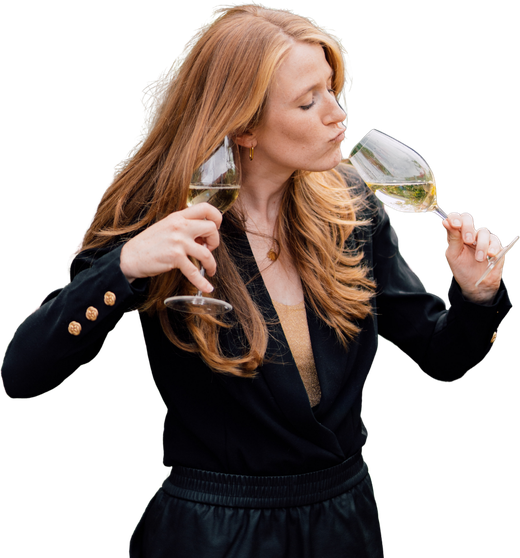
Margot van Lieshout
Wine marketeer, sales expert with over 20 years in the trade, public speaker and international wine judge. Thousands of wines scored from Steiermark to Ningxia, and a trade she knows from the inside out. Wine with Margot is where she helps wine brands tell the stories that sell them.
Want to argue about this? Good.
The conversation about every article happens in the Substack comments, together with the newsletter. Join free and bring opinions.


