

Somewhere out there is a winery with a gorgeous story. Fifth generation, hand-harvested, a grandmother's recipe and a hillside that catches the last of the evening sun. It is all true, it is beautifully shot, and it is sitting on an Instagram grid that sells almost nothing. The story is not the problem. The story is doing exactly what stories do. It just was never asked to do the one thing the winery actually needs.
That gap has a name, and almost nobody in wine uses it. There is telling a story, and there is storyselling, and confusing the two is why so much lovely wine content gets admired and ignored in the same breath.
The difference the wine trade keeps missing

Storytelling and storyselling are not the same job, and they were never meant to be. Storytelling builds connection. It says, in effect, let me bring you closer. It works on emotion, on shared experience, on the small human moment that makes a stranger think, I feel that too. The goal of a story is trust. Not action. Trust.
Storyselling uses a story to guide someone toward a decision. It still feels human, it still carries emotion, but it has somewhere to go. Its quiet message is not let me bring you closer, it is let me help you decide. The story points at something. A bottle, a tasting, a reason to reach for you instead of the label sitting next to you.
Most wine brands are fluent in the first and completely mute in the second. They tell beautiful stories with no direction, or they post offers with no feeling, and then wonder why the content gets love but no orders, or why the sales posts feel forced and faintly desperate. The issue is almost never the story itself. It is timing and intention.
Why your beautiful story earns attention and stops there
Here is the uncomfortable part for anyone who has poured months into a brand film. A story with no destination is doing brand work, and brand work is slow. This is not an opinion I invented over a glass of something. When Les Binet and Peter Field went through the IPA's databank of 996 campaigns, they found that emotional, story-led campaigns were almost twice as likely to produce large profit growth over the long term than rational, feature-led ones.
So the beautiful story is not wasted. It is one of the most powerful things you can do for the brand over years. But the same research is just as clear about the other half: emotional content builds the brand, and rational, direct content drives the actual purchase. The famous split is roughly 60 percent brand-building to 40 percent activation. Storytelling and storyselling, in other words, sitting in the same strategy on purpose.
The wine trade tends to do the first 60 with real love and skip the 40 entirely, because selling feels gauche next to a sunset over the vines. That instinct is quietly costing you the sale.
Storyselling is not being salesy

Let me kill the fear right here, because it is the thing that stops good wine people from ever doing this. Storyselling is not shouting buy now. It is not yellow-discount-sticker energy. It is the same warmth as your best story, aimed at a decision.
The difference is direction. Telling a story sounds like, here is my experience. Storyselling sounds like, here is what this means for you. One is self-focused, however charming. The other quietly makes the reader the hero of the thing. A winery telling its own story is pleasant. A winery telling a story that ends with the reader picturing that bottle open on their own table on a Friday night has done something else entirely. The story now points somewhere, and it points at them.
The brain will not act until the story earns it

This is where the two halves stop being a tidy framework and start being neuroscience. Paul Zak, who has spent a career wiring people up to watch what stories do to them, found that character-driven stories with real tension trigger the brain to release oxytocin, the chemical of trust and empathy. And the amount of oxytocin a story produces predicts what people do next. In his lab, a model built from the body's response to a story predicted whether someone would actually part with money, with 82 percent accuracy.
Read that again, because it is the whole argument in one sentence. Connection came first, and action followed it. The story had to build tension and earn the trust before anyone was moved to do a single thing. No connection, no action. This is exactly why the pure sales post falls flat and the pure story post goes nowhere. One skips the trust. The other never asks for the decision. What you need is the arc that does both: connection first, then a clear place for it to land.
What this looks like on an actual bottle

Wine has a gift here that most industries would envy. The story is already true. There is a place, a person, a season, a set of hands. The trouble is that wineries tell that story as autobiography instead of aiming it at the person holding the glass.
And the story genuinely moves money. In a 2026 Washington State University study, simply telling shoppers a wine was made by a woman winemaker raised women's intention to buy it, and nudged up what they were willing to pay for it. Same wine. Different story, pointed at the right person. That is storyselling in one clean example: not a fabrication, just a true story turned outward so the buyer sees themselves in it.
The winery version is not, our family has farmed this slope since 1912. It is, this is the bottle you open when you want dinner to feel like an occasion without trying too hard, and it comes from a slope one family has refused to give up on for over a century. Same facts. One is a plaque on a wall. The other is a reason to reach.
The fix is not a better story
If your wine content is getting seen and not selling, the answer is almost never write a better story. You are probably already good at that part. The gap is intention. You are telling, when the moment called for telling with a destination.
So before you post, ask one question of every piece: is this just a story, or is it a story that helps someone decide. Both belong in your wine marketing, in roughly that 60/40 rhythm, because one feeds the other. The stories build the trust that makes the selling feel like a warm recommendation instead of a cold pitch. Skip the stories and every offer sounds like a flyer. Skip the selling and your loveliest work quietly earns nothing, which is a damn waste given how good most of it is.
Telling your wine's story will make people feel something. That matters, and it is where everything starts. But feeling something and reaching for the wallet are two different moments, and the space between them is exactly the work most wine brands never finish. Close that gap on purpose, and the story you have been telling all along finally has somewhere to go. That, to me, is what wine storytelling is actually for.

That is the work I do with wine brands: taking the story you already have and pointing it at the sale, without losing a drop of what made it worth telling. When you are ready for your content to do more than get admired, you know where to find me.
People also ask
Any questions related to this topic? Maybe you can find your answer here. Click here!
What is the difference between storytelling and storyselling?
Storytelling builds connection: it uses emotion and shared experience to make someone trust you, and its goal is trust rather than action. Storyselling uses that same warmth to guide the person toward a decision, so the story has somewhere to go, like a bottle to reach for or a tasting to book. Most wine brands are fluent in the first and mute in the second, which is why their content gets admired but rarely ordered.
Why does my wine content get likes but no sales?
Usually because it is telling a story with no destination. A beautiful, direction-less story does brand-building work, which is powerful but slow, and it rarely moves this month's cases on its own. The fix is not a better story, it is adding intention: point the story at a clear decision so the reader knows what to do with the feeling it gave them.
Is storyselling just being salesy?
No. Storyselling is not shouting buy now or discount-sticker energy. It is the same warmth as your best story, simply aimed at a choice, so it sounds like here is what this means for you rather than here is my experience. Done well it feels like a recommendation from someone you trust, not a pitch.
How much of my wine marketing should be storytelling versus selling?
A useful rule of thumb is roughly 60 percent brand-building storytelling to 40 percent direct, decision-focused selling, mirroring the split Les Binet and Peter Field found across the IPA databank of 996 campaigns. The two are not rivals: the stories build the trust that makes the selling feel like a warm recommendation instead of a cold flyer. Skip either half and the other stops working.
Does storytelling actually increase wine sales?
The evidence says yes, but only when the story earns trust first. Paul Zak's neuroscience research found that character-driven stories release oxytocin, and the amount predicted whether people would part with money with 82 percent accuracy. And a 2026 Washington State University study showed that simply telling shoppers a wine was made by a woman winemaker raised purchase intent and willingness to pay, proof that a true story pointed at the right person moves money.
Resources
- https://ipa.co.uk/knowledge/effectiveness-research-analysis/les-binet-peter-field" target="_blank" rel="noopener">Les Binet and Peter Field, "The Long and the Short of It," IPA Databank of 996 campaigns: emotional, story-led campaigns are almost twice as likely to drive large long-term profit growth, with a roughly 60/40 brand-building to activation split.
- https://neuroeconomicstudies.org/wp-content/uploads/2017/07/dana-org-Why-Inspiring-Stories-Make-Us-React-The-Neuroscience-of-Narrative-2.pdf" target="_blank" rel="noopener">Paul J. Zak, "Why Inspiring Stories Make Us React: The Neuroscience of Narrative," Cerebrum, Dana Foundation: character-driven stories release oxytocin, and a model of the body's response predicted giving with 82 percent accuracy.
- https://news.wsu.edu/press-release/2026/02/25/women-more-likely-to-choose-wine-from-female-winemakers/" target="_blank" rel="noopener">Washington State University, 2026: telling shoppers a wine was made by a woman winemaker raised purchase intent and willingness to pay.
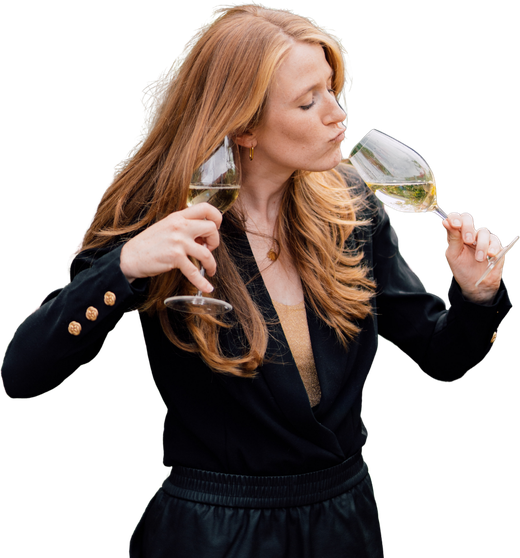
Margot van Lieshout
Wine marketeer, sales expert with over 20 years in the trade, public speaker and international wine judge. Thousands of wines scored from Steiermark to Ningxia, and a trade she knows from the inside out. Wine with Margot is where she helps wine brands tell the stories that sell them.
Want to argue about this? Good.
The conversation about every article happens in the Substack comments, together with the newsletter. Join free and bring opinions.


