

You wrote one good post, published the exact same thing on all four platforms, and only one of them did anything. That is not bad luck, and your content is probably not the problem. You walked into four different rooms and said the same sentence in each one, then wondered why three of them went quiet.
This is a reference piece, so keep it somewhere you can find it. Phase one of being online was Google and your website. Phase two is social, and it is where most of the wine trade still lives. The trouble is that most of the trade treats social media as one channel with four logos. It is not. LinkedIn, Instagram, Facebook and TikTok are four separate rooms, each with its own language, its own crowd, and its own reason people walked in. Here is how they actually differ in 2026, and why that difference decides whether your content works or disappears.
Why do the same posts work on one platform and flop on another?
Because each platform has a native language, and the algorithm rewards fluency in that language far more than it rewards effort. A native language is the format, tone and pace its users expect by default: what they scroll for, what they skip, and what makes them stop. On one platform a polished brand film feels right. On another the same footage reads like an ad and gets flicked past in half a second. Same content, different room, opposite result. Once you see social as four rooms sharing a hallway rather than one megaphone, everything about your strategy changes.
| Platform | Native language | Why people are there | What actually wins |
|---|---|---|---|
| Professional, useful, credible | To build a career and do business | Insight, expertise, a clear point of view | |
| Visual, aspirational, polished | To be inspired and entertained | Beautiful images, story, behind the scenes | |
| Familiar, communal, conversational | To stay connected and belong | Community, events, word of mouth | |
| TikTok | Fast, raw, entertaining | To be entertained and to discover | Personality, strong hooks, native video |

LinkedIn: the professional's room

LinkedIn is where people show up in work mode, so it rewards expertise, opinion and usefulness over polish. It is a business room, not a lifestyle one. LinkedIn reports around 1.43 billion members, the 25 to 34 age group makes up roughly 60 percent of users, and the audience skews male at about 61 percent. People spend only around 17 minutes a day here, which sounds tiny until you remember why they came: to learn, to hire, to be hired, to do deals.
For a wine business, this is the room where importers, distributors, buyers and sommeliers make actual decisions. You do not sell a bottle here. You prove you know your trade. A post explaining why a lesser-known region is worth their attention, or how you solved a real supply headache, does more for you than any glossy vineyard shot. The native language is written insight, so lead with the thinking, not the photography.

Instagram: the shop window
Instagram is a visual-first room where people come to be inspired, so beautiful images and a consistent aesthetic do the heavy lifting. It reaches close to 3 billion users, leans female at about 58 percent, and its core is young: the 25 to 34 bracket at roughly 32 percent and the 18 to 24 bracket at nearly 30 percent. People stay around 55 minutes a day. It is the closest thing wine has to a global shop window.
The key difference from LinkedIn is mood. Nobody on Instagram is filing a purchase order. They are browsing for pleasure, so your job is to make them feel something about the bottle, the place and the people before you ever ask them to buy. Harvest mornings, the human faces behind the label, the light on the hills at pressing time. This room runs on aspiration, not spreadsheets.

Facebook: the community hall
Facebook is the community room, built around groups, events and word of mouth, and it skews noticeably older than the rest. It is still the largest platform in the world at about 3.07 billion users, with a broad age spread that reaches Gen X and Boomers far better than TikTok or Instagram do, and a near-even gender split at roughly 54 percent men. People spend around 33 minutes a day.
Wineries underrate this room, and that is a mistake. Facebook is where events get filled, tasting announcements get shared, and a loyal local following actually gathers. It also happens to be where your older, often higher-spending customers genuinely spend their time. This is less about reach and more about belonging, which makes it the natural home for a wine club or a regular tasting series.

TikTok: the open-mic night
TikTok is an entertainment-first room that rewards personality and raw, native video over anything that looks like an advert. It reaches around 1.99 billion users and is the single most engaged platform by time, at roughly 95 minutes a day. Its core sits at 25 to 34 (about 35 percent) and 18 to 24 (about 31 percent), and it skews slightly female at 54 percent. The fastest-growing group is now the over-50s, up 240 percent since 2023, so the idea that TikTok is just for teenagers is already out of date.
What wins here is not production value. It is a hook in the first second and a real human being who is worth watching. Polish actively loses. For a winery, that means the winemaker talking straight to camera, dirt still on their hands, will beat the cinematic brand film every time. Speak the native language, which is honesty at speed, or do not bother showing up.

Do your social posts affect your search results?

Yes, and far more than most wine businesses have clocked: social is no longer separate from search. Your LinkedIn articles, posts and even your comments get pulled into AI search answers, and your Instagram captions and image alt texts are read by Google and AI tools the same way a web page is. So every good post now does two jobs at once. It speaks to the room it is in, and it quietly feeds your findability everywhere else. Post well on social and you are not just reaching today's audience, you are teaching the machines who to name when a buyer asks about wine like yours.
This is where phase two and phase three start to merge, and it is a bigger shift than it looks from the feed. If you want the full mechanics of how search, AI answers and your content actually fit together, I laid it all out in the companion piece, SEO, GEO, AEO: What the Three Acronyms Actually Mean, and Which One Wins You Business. Read that one next. It is the map for everything this article touches on the search side.
Don't post everywhere. Belong somewhere.
So which room should your winery actually be in? You do not need to be everywhere. You need to be fluent where your buyers already are, and speak each platform's native language once you get there. That is the whole point of understanding these four rooms. It is not to clone yourself four times and blast the same square photo into all of them, which is exactly what most of the wine trade is doing while quietly wondering why the numbers are flat.

Take one story and translate it. The insight goes long on LinkedIn. The image leads on Instagram. The invitation lives on Facebook. The person carries it on TikTok. Same truth, four native languages. That is a workload you can actually sustain, and it beats four disconnected strategies every time. Choosing the right two or three rooms for your specific buyers matters far more than being present in all four.
The winery that wins is not the one shouting loudest across every platform. It is the one that reads the room. Match your message to the platform's native language, the audience actually standing in front of you, and the reason they opened the app in the first place, and your content stops competing with the feed and starts belonging in it. That is when social finally starts paying you back.
If you want help deciding which rooms your wine brand belongs in, and what to actually say once you are there, that is the work I do at Wine with Margot. We build your platform strategy around where your buyers are, not where everyone else happens to be posting.
People also ask
Any questions related to this topic? Maybe you can find your answer here. Click here!
What is the difference between LinkedIn, Instagram, Facebook and TikTok for marketing?
Each platform has its own native language and its own reason people show up. LinkedIn is for professional insight and doing business, Instagram for visual aspiration, Facebook for community and events, and TikTok for fast, raw, entertaining video. The same post rarely wins on all four because each audience arrived in a completely different mood.
Which social media platform is best for a winery?
There is no single best platform, it depends on where your buyers already are. LinkedIn reaches importers, distributors and buyers in decision mode, Instagram works as a global shop window, Facebook fills events and wine clubs with an older, higher-spending crowd, and TikTok rewards a real person on camera. Most wineries do better choosing two or three rooms and speaking each one's language well than posting everywhere at once.
Can I post the same content on every social media platform?
You can, but it usually underperforms, because each platform rewards a different format, tone and pace. A polished brand film that fits Instagram can read like an ad on TikTok and get skipped in half a second. The stronger move is to take one story and translate it into each platform's native language rather than copy and paste it four times.
Do social media posts affect SEO and search results?
Yes. Social content is increasingly pulled into search and AI answers: LinkedIn posts and comments get cited by AI tools, and Instagram captions and image alt texts are read much like a web page. A good post now does two jobs at once, speaking to its audience and feeding your findability everywhere else.
How much time do people spend on each social media platform per day?
On average, users spend around 95 minutes a day on TikTok, about 55 on Instagram, roughly 33 on Facebook and only around 17 on LinkedIn. Reach and attention are not the same thing: Facebook has the most users, but TikTok holds each one nearly three times longer per day.
Resources
- Backlinko, Social Network Usage and Growth Statistics (2026): platform user figures, with Facebook around 3.07 billion, Instagram close to 3 billion, TikTok around 1.99 billion and LinkedIn around 1.43 billion.
- DemandSage, Average Time Spent on Social Media Per Day (2026): daily minutes per platform, roughly 95 on TikTok, 55 on Instagram, 33 on Facebook and 17 on LinkedIn.
- Sprout Social, Social Media Demographics to Inform Your 2026 Strategy: age and gender splits per platform, including LinkedIn skewing male at about 61 percent, Instagram female at about 58 percent, and TikTok's over-50s up 240 percent since 2023.
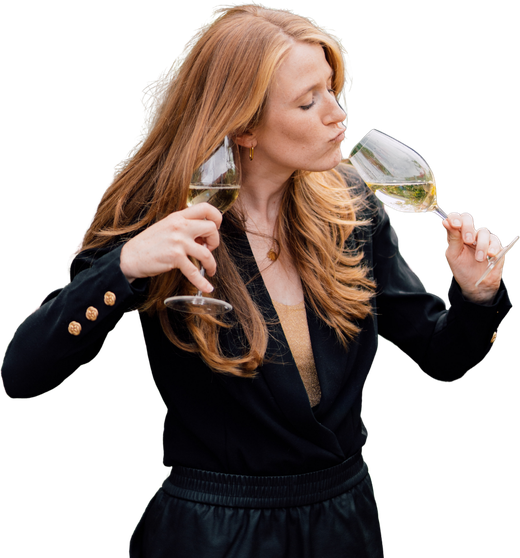
Margot van Lieshout
Wine marketeer, sales expert with over 20 years in the trade, public speaker and international wine judge. Thousands of wines scored from Steiermark to Ningxia, and a trade she knows from the inside out. Wine with Margot is where she helps wine brands tell the stories that sell them.
Want to argue about this? Good.
The conversation about every article happens in the Substack comments, together with the newsletter. Join free and bring opinions.


